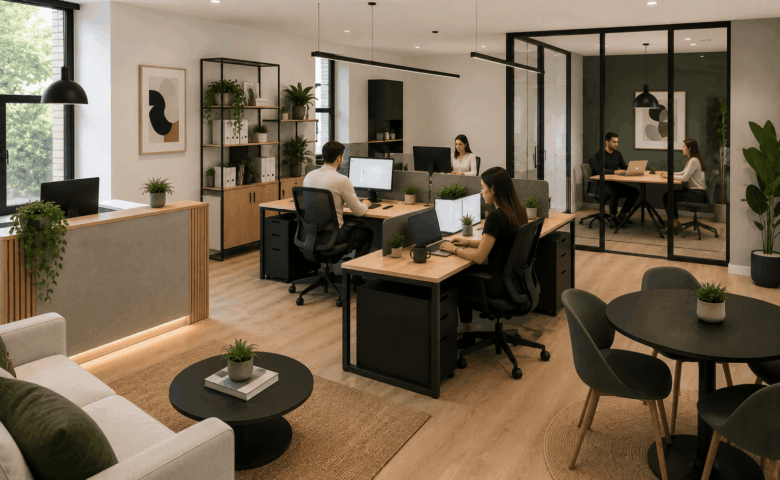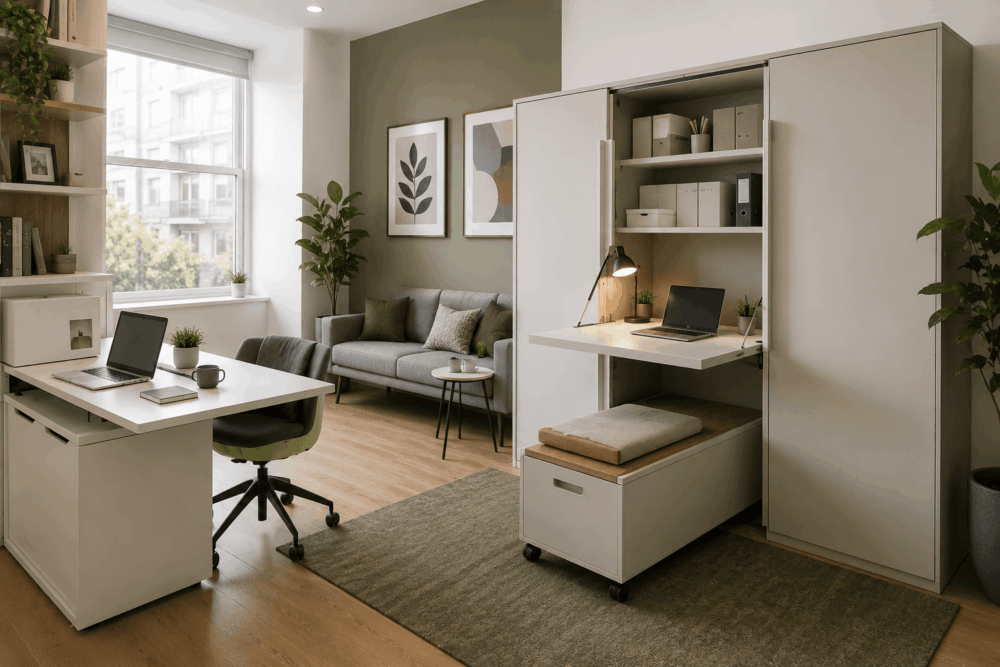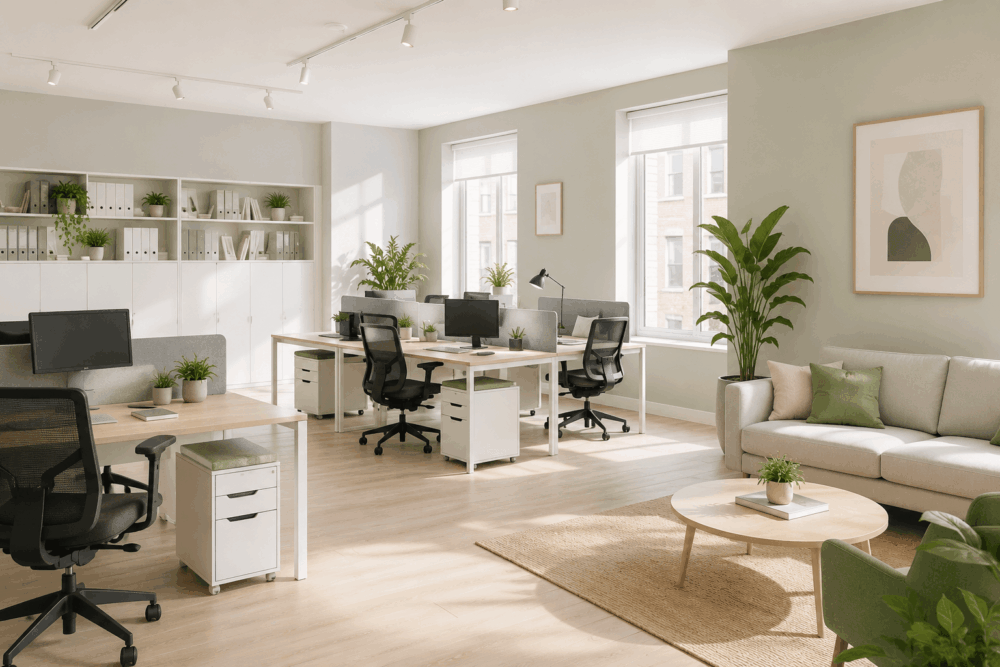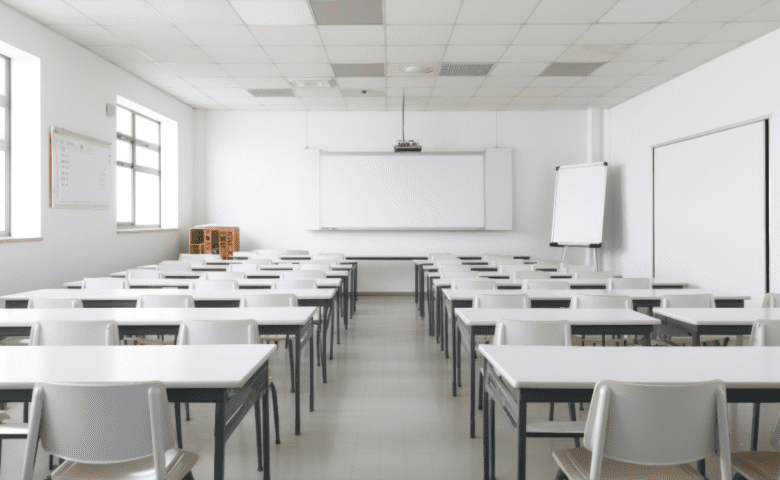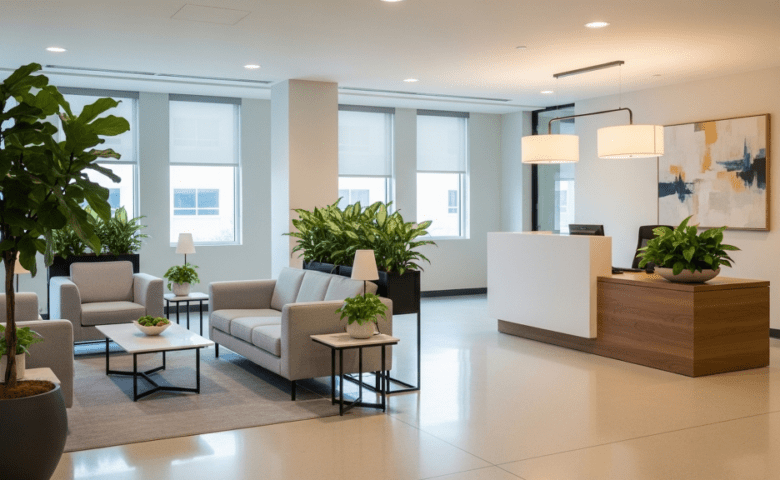
A wellness space filled with beautiful furniture that gets no employee engagement is like a gym no one uses visually impressive, but functionally empty
Wellness rooms have become a visual hallmark of modern company culture. Scroll through any corporate Instagram feed and you’ll see dreamy images of softly lit rooms filled with spa music, essential oil diffusers and reclining massage chairs. They’re often used to attract new recruits and showcase a progressive approach to employee wellbeing. But for many organisations, especially those without large budgets this can feel out of reach or, worse, out of touch.
For businesses operating with tighter margins and less square footage, the idea of a wellness room doesn’t have to be an all-or-nothing luxury. In fact, with the right planning and practical support from dealers, effective wellness spaces can be created affordably, without sacrificing functionality or stealing space from business-critical areas.
More Than Mood Lighting: Understanding the Purpose
One of the most common mistakes organisations make is equating wellness with decor. A couple of beanbags and a salt lamp don’t create a meaningful wellness experience. To design a space that truly supports mental and physical recovery, the starting point should be a conversation. Dealers should ask their customers: What does wellness look like for your team?
For example, a high-stress, fast-paced retail or customer-facing environment may benefit most from a quiet, calming space to decompress, a room that offers employees a sensory break from noise, screens and human interaction. In contrast, a mentally demanding workplace such as a law firm, healthcare office, or accounting practice might need a space that fosters mental clarity, reflection and mindfulness practices.
Fitting Wellness Into the Real World
Once the purpose is clear, the next step is figuring out where it can happen. Does the customer have a dedicated room? Or are they trying to carve out space in a shared environment?
If a separate room is available, dealers can offer all-in-one wellness room packages that include lounge seating, soft lighting, acoustic wall panels and modular storage units to keep the space tidy and calm. Acoustic chairs can also provide enclosed seating that supports solitude and quiet. In many cases, space will be shared, a corner of a breakroom or multi-purpose room. This makes it even more essential to create physical and visual boundaries. Encourage customers to use moveable partitions, acoustic panels, colour-coded rugs or vinyl flooring and vertical storage to zone off a wellness corner. Add natural elements like potted plants or greenery walls to increase comfort and calm. Sound masking machines or white noise units can further block out the bustle of a busy environment.
If No One Uses it, it’s Just Decor
Designing a wellness space is only half the job. If employees don’t feel comfortable or encouraged to use it, the space becomes nothing more than aesthetic. Leaders must make it clear that taking a moment to recharge is not just allowed but supported. Wellness spaces should not become yet another box to tick on a company culture checklist. They need to be embraced, lived in and built into the rhythm of the workday. The more people interact with the space, the more value it delivers.
Dealers can guide customers in curating not only the layout but also the content of the room. Add accessible activities that draw people in, headphones with relaxing playlists or nature sounds, tactile elements like stress balls or puzzles to support mental reset. These small additions make the space come alive, transforming it from a set of chairs and mood lighting into a living, usable part of the workplace culture.
The future of workplace wellbeing won’t be measured by how luxurious a space looks, but by how intentionally it’s used. With the right furniture, space planning and employee engagement strategies, wellness rooms become more than just quiet places. They become essential tools for morale and long-term performance.
Maintaining a comfortable workplace temperature is crucial for productivity here’s how office managers can help find the right solutions to keep employees comfortable and operations running smoothly:
The British summer is famously unpredictable, making it difficult to maintain a consistent and comfortable working environment. Sudden changes in weather, coupled with individual temperature preferences, can significantly impact productivity. Research has shown that temperature fluctuations can reduce worker efficiency by up to 10%, with excessive heat leading to fatigue, lack of concentration and increased errors. Conversely, being too cold can lead to discomfort, distraction and higher rates of absenteeism due to illness.
To create a comfortable working environment, businesses must invest in flexible temperature control solutions. Below, we explore various products that dealers should recommend helping workers manage heat at individual workstations, as well as throughout the entire workplace.
Personalised Control Solutions
Providing employees with personalised temperature control options is one of the most effective ways to ensure comfort without excessive energy use. Personal desk fans and air conditioners allow employees to control airflow at their workstations while under-desk heating solutions, such as heated footrests or under-desk heaters, ensure that warmth is focused on the individual rather than the entire office, reducing overall energy consumption. Wearable cooling and heating accessories, such as neck coolers, cooling wristbands and heated clothing, provide employees with personal temperature control, helping to improve comfort.
These solutions also provide an affordable alternative to costly full-office air conditioning or heating systems where employees gain greater autonomy over their work environment, improving morale and productivity.
Natural Light Solutions
Harnessing natural light and heat can make a significant difference in workplace comfort and energy efficiency. Reflectors and light panels can be positioned and angled to direct natural heat where it is needed most. For example, they can warm entryways where cool air is trapped or keep meeting areas cool and airy by reflecting heat away. Reflective window films also reduce glare and redirect sunlight, preventing excessive heat buildup in offices and making cooling more efficient. Smart blinds and curtains that adjust based on external temperatures provide insulation during colder months and block heat during warmer periods, further optimizing energy use.
These natural light solutions offer several advantages for businesses. By reducing reliance on artificial heating and cooling systems, they help cut energy costs. They also provide greater control over office temperatures without requiring major infrastructure changes.
Smart Technology Solutions
Smart technology can greatly improve workplace temperature management, allowing businesses to heat and cool spaces more efficiently based on occupancy and usage patterns. Air sensors monitor office temperature and air quality in real-time, adjusting heating and cooling systems accordingly to maintain optimal conditions. This is particularly useful for meeting rooms or shared workspaces that are occupied infrequently.
By ensuring energy is only used when necessary, they help reduce heating and cooling costs. They also offer a seamless and automated solution, eliminating the need for manual adjustments. Most importantly, they improve workplace efficiency by maintaining a stable and comfortable environment for employees.
A comfortable workforce is a productive workforce. By implementing targeted temperature control solutions, businesses can reduce energy costs, improve employee wellbeing and create a more efficient working environment. For dealers, encouraging businesses to invest in smarter, more personalized heating and cooling solutions enhances workplace comfort while ensuring long-term energy efficiency and productivity gains.
When you walk into a great classroom you can feel it straight away. The space is bright, welcoming and most importantly, set up so pupils and teachers can focus on learning rather than fighting against the furniture. At Wave Office Ltd, educational environments are our speciality, and we’ve spent decades perfecting three core product families that make the biggest difference:
Robust, ergonomic school tables
Comfort-first student chairs
All-in-one TeacherWalls that give educators the control centre they deserve
Below, we unpack why each element matters and how Wave Office’s design know-how turns everyday classrooms into flexible, future-ready spaces.
1. The Science (and Art) of the School Table
A classroom table takes more punishment in one term than most office desks see in a year. Spilt paint, kicked chair legs, impromptu science experiments your tables need to take it all in their stride.
Frame strength: We use fully-welded steel frames with corner bracing, so there’s no wobble on day one or year ten.
Surface durability: High-pressure laminate tops resist scratches and chemicals; edge banding is heat-sealed so it won’t peel.
Flexible footprints: Rectangular, trapezoidal, curved “wave” and even kite-shaped options allow you to re-configure for group work, exams or STEM layout in minutes.
Height matters: Our junior and senior ranges follow BS EN 1729 height guidance, so posture is supported as pupils grow.
Why it matters: A stable, correctly sized work surface helps students maintain attention and reduces fatigue. Teachers spend less time rearranging the room and more time teaching.
2. Chairs that Care About Posture
Ask any teacher: fidgety students often equal drifting focus. The right chair can make a surprising difference.
Ergonomic shell design supports the natural ‘S’ curve of the spine, encouraging healthy sitting habits from Reception to Sixth Form.
Lightweight but tough: Injection-moulded polypropylene seats with a one-piece design mean no screws to loosen and no joints to fail.
Stackable & colour-coded: Stack 15 high to reclaim floor space at the end of the day, and pick colours that match year groups or subject zones for easy organisation.
Optional extras: Glide feet to protect polished floors, integrated book baskets, and height-adjustable gas-lift stools for science labs or art rooms.
Why it matters: When pupils sit comfortably, concentration goes up and back complaints go down. For staff, lightweight stackability slashes setup time between lessons.
3. TeacherWalls The Command Centre of Modern Teaching
Think of a TeacherWall as the Swiss Army Knife of classroom storage and presentation. One seamless installation combines:
Feature
Benefit
Interactive panel space (or whiteboard)
Central focal point for lessons, cabled neatly behind the fascia
Lockable cupboards & trays
Secure laptops, STEM kits or confidential coursework
Open shelving
Keep teaching aids visible and within arm’s reach
Cable management & power modules
End the trip-hazard spaghetti under desks
Acoustic panels (optional)
Soften noise and improve speech intelligibility
Wave Office designs Teacher Walls to your exact wall dimensions, integrating existing smartboards or specifying new AV if needed. With everything in one place, transitions are faster and classroom floors stay uncluttered.
Built-In Sustainability
Parents, governors and pupils alike increasingly ask how furniture choices affect the planet. Our commitment:
FSC-certified wood across all TeachingWall carcasses
Made in the UK to minimise transport miles and support local jobs
Consultation, Delivery, After-Care Handled
Furniture is only half the story; getting it in on time and trouble-free matters just as much. Wave Office’s turnkey service includes:
Free space planning & 3-D layouts so you can visualise before you buy.
Staged deliveries during holidays or weekends to avoid lesson disruption.
Certified installation teams who work cleanly and safely (and are DBS-checked, of course).
Five-year warranty with real people at the end of the phone if something goes wrong.
Ready to Refresh Your Learning Spaces?
Whether you’re fitting out a brand-new academy or breathing new life into a much-loved Victorian school hall, Wave Office Ltd is here to help. From indestructible tables and posture-perfect chairs to show-stopping Teacher Walls, we bring the expertise, products and passion that let education flourish.
Let’s start the conversation reach us on 01293 510 553 or web@waveoffice.co.uk, and see how tomorrow’s classrooms begin with today’s furniture choices.
Why Your Office Furniture Matters More Than You Think
At Wave Office, we believe that your office isn't just a place where work happens it's a dynamic environment that profoundly impacts productivity, creativity, and the well-being of your team. And at the heart of that environment? Your office furniture.
It might seem like a straightforward decision, but the truth is, investing in the right office furniture is one of the smartest moves you can make for your business. It's not just about filling a space; it's about crafting an experience.
Beyond the Basics: Why Good Office Furniture is a Game-Changer
Forget the days of uncomfortable, one-size-fits-all desks and drab chairs. Modern office furniture, especially the kind we champion at Wave Office, is designed with a multitude of benefits in mind:
Boosted Productivity: Ever tried to concentrate when your back aches or your monitor is at the wrong height? Uncomfortable furniture is a major distraction. Ergonomic chairs, height-adjustable desks, and well-designed storage solutions minimize physical strain and allow your team to focus on their tasks, not their discomfort.
Enhanced Well-being and Morale: A comfortable and aesthetically pleasing workspace shows your employees you value them. It contributes to a positive atmosphere, reduces stress, and can even decrease absenteeism. Happy employees are engaged employees!
Sparking Collaboration & Creativity: The right furniture can actively encourage interaction. Breakout areas with comfortable seating, collaborative tables, and adaptable meeting spaces foster idea-sharing and teamwork.
Reflecting Your Brand & Culture: Your office is a physical manifestation of your brand. Modern, stylish, and functional furniture communicates professionalism, innovation, and attention to detail. It helps create an impression that resonates with clients and attracts top talent.
Maximizing Space Efficiency: Cleverly designed furniture, including modular systems and smart storage, can help you make the most of every square foot, especially in today's often compact office environments.
Wave Office: Your Partner in Workspace Transformation
At Wave Office, we don't just sell furniture; we offer solutions. We understand that every business is unique, with its own specific needs, budget, and aesthetic preferences. That's why we pride ourselves on:
A Curated Selection: We offer a wide range of high-quality, durable, and stylish office furniture, from ergonomic seating and executive desks to collaborative tables and innovative storage solutions. We handpick pieces that combine functionality with contemporary design.
Ergonomic Expertise: We champion ergonomic principles because we know they lead to healthier, happier, and more productive employees. We can guide you through choosing furniture that supports good posture and reduces strain.
Design & Layout Consultation: Not sure where to start? Our team can help you plan your office layout, ensuring optimal flow, functionality, and aesthetics. We can help you envision a space that truly works for you.
Exceptional Service: From initial consultation to delivery and installation, we're committed to providing a seamless and stress-free experience. Your satisfaction is our priority.
Ready to Make a Splash?
Don't underestimate the power of great office furniture. It's an investment in your team, your brand, and your future. Let Wave Office help you create a workspace that inspires, supports, and propels your business forward.
Contact us today to discuss your office furniture needs and let's ride the wave to a better workspace, together!
As we step further into the digital age, the dynamics of the workplace continue to evolve, influencing everything from technology to office culture. One aspect that often goes overlooked but significantly impacts productivity, creativity, and employee well-being is office furniture. In 2024, we're witnessing a fascinating shift in office furniture trends, driven by a fusion of technological advancements, sustainability concerns, and a growing focus on employee comfort and flexibility. Let's delve into some of the prominent trends reshaping our workspaces this year.
Ergonomic Designs for Enhanced Comfort
In today's fast-paced work environment, where employees spend long hours seated at their desks, prioritizing comfort is paramount. Ergonomic furniture designs are gaining momentum, aimed at reducing strain and improving posture. Expect to see chairs with adjustable lumbar support, height-adjustable desks, and accessories like keyboard trays and monitor arms, all geared towards promoting a healthier and more comfortable work experience.
Multi-functional and Flexible Furniture
Flexibility is the name of the game in modern office design. With the rise of remote work and hybrid models, offices need furniture that can adapt to varying needs and spaces. Multi-functional pieces such as modular desks, convertible tables, and storage units with flexible configurations are becoming increasingly popular. These versatile solutions allow for easy reconfiguration of spaces, fostering collaboration and accommodating diverse work styles.
Sustainable Materials and Eco-friendly Practices
As environmental consciousness continues to grow, so does the demand for sustainable office furniture. Companies are increasingly opting for furniture made from recycled materials, responsibly sourced wood, and low-emission finishes. Additionally, there's a shift towards circular economy principles, with more emphasis on refurbishing and repurposing existing furniture to extend their lifespan. Expect to see an abundance of eco-friendly options that not only reduce environmental impact but also contribute to a healthier workspace.
Tech-Integrated Furniture for Seamless Connectivity
In an era dominated by technology, office furniture is getting smarter. Integration of technology into furniture pieces is on the rise, with features like built-in power outlets, wireless charging pads, and USB ports becoming standard. This seamless connectivity allows employees to stay powered up and connected without the hassle of tangled cords, enhancing productivity and efficiency in the workplace.
Biophilic Design Elements for Wellness
Bringing elements of nature into the office has been shown to have numerous benefits, from reducing stress to improving productivity and creativity. In 2024, biophilic design principles are being integrated into office furniture to create a more harmonious and wellness-oriented workspace. Expect to see furniture adorned with natural materials like wood and stone, as well as incorporating elements such as living walls, greenery, and natural lighting to blur the boundaries between indoor and outdoor environments.
Personalized and Customizable Solutions
Recognizing that one size does not fit all, office furniture manufacturers are offering more personalized and customizable solutions to cater to individual preferences and needs. From adjustable desks that can be tailored to specific height requirements to chairs with customizable upholstery options, employees are empowered to create workspaces that reflect their unique tastes and promote a sense of ownership and comfort.
In conclusion, the office furniture landscape in 2024 is characterized by a blend of functionality, sustainability, and employee-centric design. As workplaces continue to evolve, furniture trends will likely continue to adapt to meet the changing needs of modern workers. By embracing these trends, organizations can create environments that not only foster productivity and collaboration but also prioritize the well-being and satisfaction of their employees.
COVID-19 has officially swept the nation, and now home offices are becoming the new normal. Many people have adapted to changes, but some are still finding it difficult to create an efficient working space at their homes. And without the right furniture or space, working from home can seem like a chore rather than a refreshing experience. Here at Wave Office, we are the experts of office furniture and know what essentials you need to help you be the most productive.
From office chairs to desks, storage solutions and more, we can help you find the right furniture to suit your needs. With the right environment and office furniture, working from home will seem like a breeze. Keep reading on and find out what furniture items you should have in your home office
The Right Chair Finding the right chair for your home office is very important, as you are going to spend a lot of time there. Most office chairs will be comfortable for the first few hours but after they can cause a lot of discomfort throughout the day. That isn’t ideal especially since you will be spending around 7-8 hours at your desk each day. A comfortable chair you should consider is an Ergonomic chair. Ergonomic chairs provide amazing comfort and will feel comfortable throughout the whole day. They can also be adjusted to suit the height of your desks and length of your arms, so you won’t need to lean forward every two seconds.
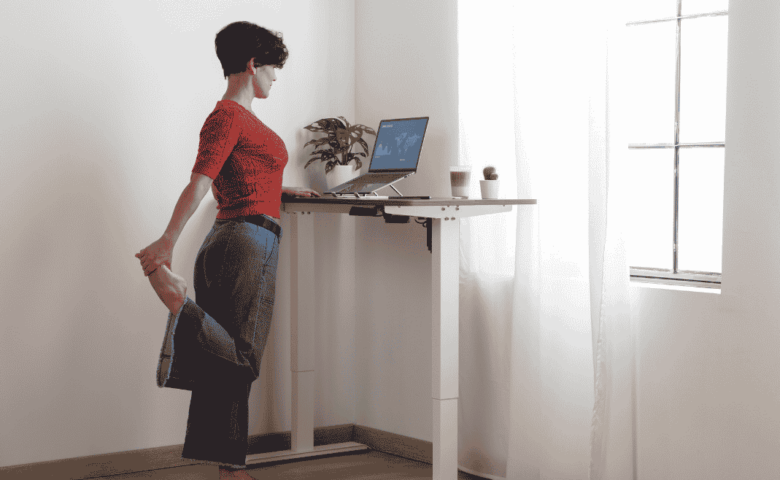
A Flexible Desk One of the most important furniture pieces in your home office is your desk. You want to choose one that suits your workload, style and colour scheme. Plus, you want a desk that offers flexibility and boosts your productivity. The perfect desk for this would be a height-adjustable one. These desks are very versatile and give you a break from sitting down. In addition, standing desks also boost your productivity as it keeps you more focussed and alert on the task at hand. Standing desks come in a variety of sizes, so you can easily choose one that will suit your workload as well.
Appropriate Storage
An essential item that always gets overlooked in home offices is storage and it definitely shouldn’t! Unlike commercial working spaces, home offices are usually smaller. Which makes investing in storage units a smart idea. Cabinets and storage units can make your home office look more professional and attractive. Plus, file cabinets and other storage units will ensure that important files are kept safe while at home.
An Organized Bookcase Getting an attractive book-case for your home office will give it the colour, style and wow-factor it needs. This piece of furniture can be a focal point in your office and be a place for you to keep books, magazines and other work items. Some bookcases come with additional storage draws as well, which can be extremely beneficial.
Attractive Office Accessories
At most commercial workplaces, they have an abundance of office accessories, such as accessory trays, pencil trays, monitor arms and more. These accessories are also essential for home offices as they keep stationery, files and the overall desk organised. You can also get accessories such as chair mats that help moving around your desk easier. So, think about your day to day tasks and what files or actions you will be doing. Then you can determine what accessories you need to streamline your work and finish off your home office.
Here at Wave Office Ltd. we have been helping many people design their home office with quality furniture. We understand these times are uncertain, and we will always be here to help. From chairs to desks, accessories and more, Wave have everything you need for your home office. With us, you can design an efficient home office with quality furniture that will boost your productivity and make your work feel easy. You can check out our wide range of home office furniture on our site, or you can call our friendly team on 01293 510553
Hot desking can have many benefits for your business and can be especially useful for companies that have smaller offices or for organisations who promote flexible working. However, there can be a variety of barriers to the successful implementation of hot desking. Here we aim to highlight the biggest of those hot desking problems and provide some tips and insight into how you can avoid any big issues.
Have a system in place that allows employees to "reserve a desk"
Some days will require more desk based work than other. Having the option to make sure a desk is available when needed is a great way to help the implementation of hot desking seem less scary and more functional for staff. It also helps to keep tensions and competition for space low and makes it easy for people to plan their working day efficiently.
Reservation systems could be as simple as having an office manager or receptionist place a note or dry-wipe board message on a desk stating that the space is reserved for "x", accompanied by the time the desk is reserved from and to. For larger organisations a desk reservation software may be more suitable.
Whichever reservation method is chosen, it is crucial that all staff are briefed on the system, how it works and the importance of following it.
Make sure ample storage solutions are available
If your company is looking into hot desking, its is vital that suitable storage solutions are not forgotten. Adequate and functional storage can be the difference between the success and failure of your hot desking system.
It may be a good idea to ask your employees to fill out a questionnaire about the items they regularly bring in to work and what type of storage they feel would suit them best. For example, if people regularly bring a gym kit or change of clothes to work, larger storage options such as lockers should be made available.
An effective and secure filing system is also important when people no longer have a personal desk to occupy. There are many mobile pedestal options now available on the market and these can be a great solution for storing documents and other items that staff require to carry out their job effectively. Alternatively, a move towards a paperless office could also be implemented around the same time as the start of your hot desking plans.
It's also a good idea to place coat racks and hooks near each set of desks to allow people to keep bags, coats and other bulky items away from their working area but within sight and reach.
Have awareness for how others work
Some companies organise their hot desking system into different zones or departments throughout the building. For example, you may choose to have a silent working area, a more relaxed area and a zone for people who regularly make or take calls.
Alternatively, staff should be encouraged to respect others around them, such as stepping outside to speak on the phone if other colleagues are working quietly.
Keep desks clean and tidy
This is an important factor of hot desking success. Firstly, staff will become frustrated if they have to rearrange or tidy a desk before they can use it and secondly, colds and other illnesses are easily spread when desks, keyboards, phones and mice are shared by many people, so good hygiene is paramount for staff health.
Make it quick and simple for staff to keep desks clean and clear by placing a bin next to each desk or set of desks and antibacterial wipes within easy reach for wiping down the desk and shared accessories. You could also consider placing sanitising hand gel dispensers near each set of desks to help to stop the spread of germs.
Create spaces where staff can relax, socialise and collaborate
Hot desking offers a range of benefits, however, having alternative spaces that allow staff to break away from their work are crucial to the success of a desk sharing environment.
Staff need time to relax, meet with other colleagues and eat and drink in order to be productive, alert and creative. Depending on the way you choose to implement your hot desk system, it may not be possible to achieve these things at a shared desk. Without accessibility to spaces that cater for these types of activities, staff will quickly become frustrated with the system and become rapidly demotivated and unproductive.
Interior design trends are clearly showing that kitchens are becoming the new domestic hub. This trend is now spilling over to the work place and it's easy to see why.
A well designed kitchen area, breakout space or canteen, provides a much needed break from screen time and allows employees to rest, recharge and socialise with colleagues. These areas are fast becoming the collaboration hubs of the office, where creative ideas are conceived and cross-department relationships are formed.
Kitchens and breakout areas provide employees with space for a no-obligation rest, chat or meeting. It's an environment where ideas can be sparked, problems solved and morale boosted, all without any pressure. If these things happen in this space, it's a bonus, but the space is primarily accepted and respected as a space that allows time away from work. However, it is often found that without the same pressures that are found in meeting rooms or behind desks, ideas and problem solving become much more creative, inclusive and frequent, even without a set intention or agenda.
What makes a great space?
The best functioning kitchen and breakout areas are equipped with modern appliances and conveniences such as coffee machines, microwaves and refrigerators which allow staff to bring in healthy meals from home and easily recharge their bodies while they rest their minds.
Furniture is also hugely important to the functionality and enjoyment of these spaces. Comfortable lounge areas with sofas and soft seating are important for those who want to sit down and recharge. Ergonomic chairs and tables are ideal for staff who wish to work away from their desk in a less formal environment. Large tables and comfortable seating provide a space for groups to gather and chat or collaborate, whilst smaller tables and high quality canteen chairs are great for those who simply want to sit and eat.
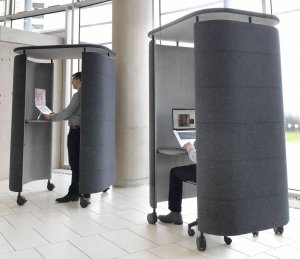
Acoustic pods and booths can be invaluable in this type of environment as it means those who prefer a little more quiet can still enjoy the culture and opportunity that these spaces provide, without having to completely isolate themselves from the experience.
Kitchen and breakout areas are no longer seen as small conveniences, but more as areas that capture and create a positive company culture that should be accessible for all. So, with that in mind, it might be time to start planning a refurb!
Here's a great case study for a kitchen area that we completed for a global Sat Comms company to give you some inspiration.
A small office can start off feeling fine, then a couple of new starters arrive, storage spreads out, meetings get squeezed in wherever there’s a spare corner, and suddenly the whole place feels a bit tight. As the space changes make sure you have enough air volume for numbers in the office.That tends to show up in little ways, like people bumping chairs as they pass, noise travelling further than you would like, and desks becoming the default place for everything from filing to catch-ups.Still, making the most from small office space usually comes down to two things: how the room is used day to day, and whether the layout and furniture actually support that.With a bit of planning, some flexible choices, and a few practical swaps, you can often make the space feel calmer and work better, without jumping straight to relocating.
Start With a Plan and Measure Carefully
Before moving anything, it helps to take stock. In smaller rooms, even small measurements affect how the office feels, so it’s worth getting the basics down first.A quick audit might include:
Measuring wall lengths, door swing space, and window positions
Noting fixed items like radiators, sockets, columns, and any awkward corners
Checking walkways, so people can move without having to slide chairs out of the way
A rough floor plan helps too. It doesn’t need to be technical, just clear enough to show where desks, storage, and shared zones could sit.This is also the point where it helps to think about priorities. Does the team need to work closely together, or do they need quiet for focused tasks? Are visitors coming in? Are calls happening all day? Is the office used for quick huddles? If you involve the team in that thinking, you usually get fewer complaints later, and the layout ends up matching real working habits rather than assumptions. Can hot desking reduce the number of spaces required.
Choose Multi-Functional Furniture
In a small office, furniture that only does one job can take up space you do not really have. Multi-functional pieces tend to make a difference because they combine tasks without adding bulk.Some examples that work well:
Desks with built-in drawers, so everyday items don’t spill into shared areas
Shared tables that work as both “extra desk space” and a quick meeting spot
Fold-away or collapsible pieces that can be stored when they’re not needed
This type of thinking also supports space-saving office furniture choices because you’re buying for flexibility, not just filling a gap.
Use Vertical Space and Storage Solutions
Office storage is usually one of the first things that makes a small office feel crowded. People put boxes “just there for now”, then filing grows, then supplies pile up, and the floor space disappears.Using vertical space helps lift a lot of that pressure:
Wall-mounted shelving for supplies and shared items
Cupboards that go up rather than out
Storage walls are made up of modules, so you can vary what’s open, what’s closed, and what is used for high-volume storage
For personal storage, mobile pedestals can also work well, especially if desks are kept compact. Bite pedestals are a useful option for agile setups, because they can move with the person rather than becoming another fixed block in the room.The main idea is simple: keep frequently used items within easy reach, push occasional-use items higher up, and try not to let floor space become long-term storage.
Keep Layout Flexible for Different Uses
Small offices rarely do just one thing. You might need heads-down focus in the morning, a team catch-up at lunch, and a quick planning session in the afternoon. A layout that only works “one way” tends to feel restrictive quite quickly.
Experiment with desk layout ideas
These desk grouping patterns are especially useful for smaller rooms:
Paired Islands: two desks face-to-face, which can support collaboration while staying space-aware, often handy in narrower rooms
Blocked Seating: groups of four desks, which suits small teams working together without needing a big open-plan floor
The Bullpen: desks arranged in an inner-facing square, rectangle, or circle so the whole team can collaborate more naturally
These options are often the difference between a small office feeling “packed” versus “organised”, even when the desk count stays the same.
Think about meetings without sacrificing desk space
If meetings keep happening around someone’s desk, it can help to create a simple shared meeting point:
A wall-mounted presentation monitor, or a large whiteboard, placed where everyone can see without crowding one area.
Collapsible meeting tables, so you can create a meeting space when needed, then store them away.
If you need quick privacy or a quieter discussion space, the older post also suggested flexible, moveable options:
A mobile screen that can be repositioned and stored.
A modular acoustic wall solution that can be restyled or packed away when the meeting is done.
And sometimes, it’s not even about furniture. If the office genuinely can’t handle meetings comfortably, it can help to change the routine:
Use a local coffee shop for one-to-ones
Try walking meetings in a nearby park
If too many people are in on the same days, a rotating remote working schedule can free up space without reducing output
Opt for Compact Seating and Desks
Small offices punish oversized furniture. A desk that is slightly too deep, or a chair that does not tuck in properly, can turn a workable layout into a daily irritation.Slimmer desks often make sense here, particularly where walkways get tight. Modular and mobile desks also fit this section well because they support layout changes without creating dead space.Chairs matter too, especially when people are seated for long periods. This is where supportive operator chairs can help, because they’re built for everyday use but don’t have to dominate the room.The basic aim is to keep furniture proportions sensible, so movement stays easy, and the office feels usable even when everyone is in.
Maximise Light and Openness in the Space
Light changes how a small office feels, sometimes more than any layout tweak. Natural light tends to make rooms feel more open, so it helps to keep windows clear rather than stacking items nearby.A few practical things that often help:
Avoid tall storage directly in front of windows
Use glass screens if you need separation but want to keep brightness travelling through the space
Keep wall colours and larger surfaces light if the room feels boxed in
Tidy cables and surfaces, because visual clutter makes the space feel smaller than it is
This is usually when your small office design starts to feel “finished”, because it’s less about fitting things in and more about making the room feel calmer to work in.
If you want help mapping this to your own space, or you’re weighing up furniture choices, you can contact us directly and discuss with our team the best solution for your office.
At Wave Office we provide free space planning and design services to help you to get the most out of your work place
Office refurbishment can be a daunting task and visualizing the outcome is often one of the trickiest things to do. This can add extra worry if the project is your responsibility.
Planning space through the use of Computer Aided Design allows you to see how a refurbishment or new furniture will look in a space. This is beneficial for both the refurbishment company and you, the client. It is particularly helpful if you are working to a strict time scale as you can redesign the plan before any actual work is carried out, rather than making amendments at the end of the project. It also allows you to relax during the process knowing exactly how your desired outcome will look.
It can also be helpful to take the plans and designs into meetings with other people involved in the refurbishment project. This helps to prevent ambiguity and confusion and allows everyone to clearly see, agree on, or give their input on the intended outcome.
Wave Office have more than 20 years experience in planning, designing and furnishing great work spaces, casinos, schools, universities, colleges, leisure centres and many other businesses. So, if 2023 is the year for you to update your furniture or work space, get in touch for some helpful advice, space planning and a great choice of furniture.
An office refurbishment covers far more than simply replacing furniture or repainting walls.
In most organisations, it involves reviewing how space is used, updating layouts, improving technology, upgrading finishes, and aligning the workplace with changing operational needs. In larger businesses and education settings, it can also mean navigating compliance, procurement frameworks, and strict timelines.
Without structure, a workplace refurbishment can drift off course. Budgets stretch, decisions stall, and teams lose confidence in the process. An organised office refurbishment checklist brings clarity from the outset. It gives the likes of facilities managers, procurement officers and educational facilities buyers, a framework they can follow step by step, reducing risk and limiting disruption.
Our guide walks you through each stage of office refurbishment planning, from defining objectives through to post-project review. It covers layout, furniture, compliance, technology and delivery, helping you approach your office redesign with a clear plan and measurable outcomes.
Understanding Your Refurbishment Goals
Every successful project starts with purpose. Before engaging suppliers or sketching new layouts, define why the refurbishment is happening and what the organisation expects to gain.
Common drivers include:
Team growth or departmental restructuring
Rebranding or leadership change
A shift towards hybrid working models
Wellbeing concerns linked to outdated layouts
Compliance upgrades or building requirements
Clarify what success looks like. For some organisations, this may mean increasing desk capacity without expanding floor space. For others, it may involve creating collaborative zones that support project-based working. Educational environments often focus on durability, safety and adaptability within tight budgets.
Establish a working budget range early, even if it evolves. This helps guide decisions around specification and phasing. Equally, map out a realistic timeline. Consider lease events, academic terms, financial year cycles and supplier lead times.
By documenting objectives, budget parameters and timing expectations, you create a reference point for the entire office refurbishment checklist. Every decision can then be tested against agreed goals.
Assessing Your Current Office Space
A thorough evaluation of your existing environment provides the foundation for informed decisions. Rather than focusing solely on what needs replacing, look closely at how the space currently performs.
Start by reviewing:
Desk utilisation and occupancy patterns
Storage levels and document management
Circulation routes and congestion points
Meeting room usage
Staff feedback on comfort and layout
Many often discover that space is underused in some areas yet overcrowded in others. Procurement teams may identify assets that can be retained to protect budgets. In education settings, classroom or administrative spaces may require better zoning rather than wholesale replacement.
Identify what should be kept, refurbished or upgraded. Furniture in good condition may be reused in different zones. Technology infrastructure might need modernising even if finishes remain suitable. Documenting these findings ensures your office fit-out checklist reflects genuine operational needs rather than assumptions.
Planning Your New Office Layout
Layout influences productivity, movement and overall experience. A thoughtful plan balances focused work with collaboration, ensuring that different activities have appropriate space.
During office refurbishment planning, consider how teams interact. Departments that rely on close coordination may benefit from clustered workstations. Functions requiring confidentiality may need quieter areas or acoustic treatment. In educational contexts, flexibility can support varied teaching methods and administrative tasks.
Space planning also involves understanding density. Overcrowding affects comfort and safety, while excessive open space reduces efficiency. Professional layout design uses measured drawings and workflow analysis to optimise flow without compromising accessibility.
Creating Zones for Different Activities
Modern workplaces rarely rely on a single desk-based format. Zoning allows multiple work styles to coexist within one environment.
Typical zones include:
Focus areas for concentrated individual tasks
Collaboration zones for informal discussion
Formal meeting rooms with privacy
Breakout spaces supporting wellbeing
Touchdown areas for hybrid staff
Zoning supports productivity by aligning the environment with tasks. In a structured workplace refurbishment, these areas are defined early in the layout process, ensuring power, lighting and furniture specification match intended use.
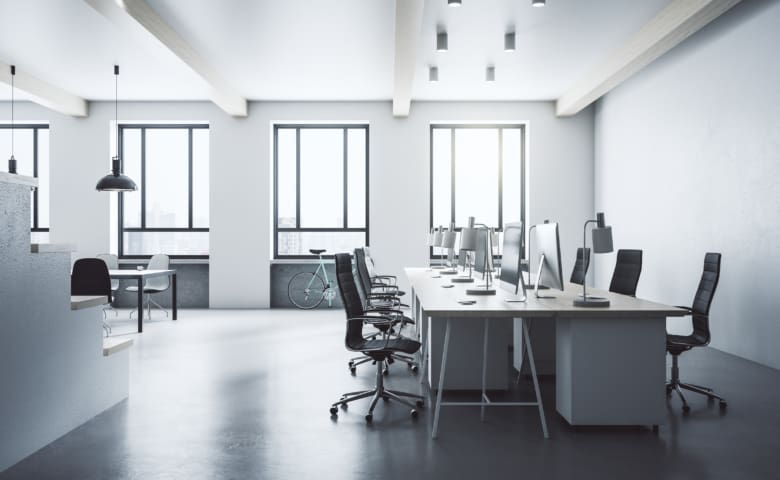
Improving Flow and Accessibility
Movement through the office should feel intuitive. Clear walkways, logical department positioning and appropriate signage all contribute to smoother circulation.
Accessibility considerations are equally important. Door widths, desk heights and turning circles must align with inclusive design standards. Compliance with equality legislation and building regulations should be integrated from the outset rather than retrofitted later.
By prioritising flow and inclusivity, your office redesign becomes more than a visual upgrade. It supports safety, comfort and long-term adaptability.
Working With an Office Design and Fit Team
Managing a workplace refurbishment internally can place considerable pressure on facilities and procurement teams. Coordinating contractors, tracking budgets and resolving design queries alongside day-to-day responsibilities increases risk.
An experienced design and fit partner provides structured support across:
Concept design and space planning
Detailed specifications
Supplier coordination
Project management
Installation and commissioning
Professional oversight reduces delays and cost overruns. It also streamlines communication between stakeholders, contractors and internal decision-makers. For larger organisations, documented processes and clear reporting align with procurement requirements.
Partnering with a specialist team turns an office refurbishment checklist into an actionable project plan, supported by technical knowledge and practical delivery experience.
Selecting Furniture for the Refurbished Space
Furniture plays a central role in performance and comfort. Selection should follow layout planning rather than precede it, ensuring products match both space and usage.
Durability, ergonomics and warranty support are particularly important in high-traffic corporate or educational settings. Consider future flexibility, as organisational needs rarely remain static.
Desks and Workstations
The choice of office desk configuration influences density and adaptability. Fixed desks may suit stable teams with assigned seating. Sit-stand workstations support movement and can contribute to improved posture over time.
Shared bench systems encourage collaboration but require careful cable management. Individual workstations offer privacy yet demand more floor space. During office refurbishment planning, assess which model aligns with work patterns and the available footprint.
Explore suitable options through Wave Office’s range of office desk solutions, selecting formats that complement your new layout while supporting practical daily use.
Chairs and Seating
Seating directly affects well-being and productivity. Adjustable lumbar support, seat depth control and armrest flexibility allow users to tailor chairs to their needs.
High-quality office chairs reduce discomfort and absenteeism linked to musculoskeletal strain. In educational settings, durability and ease of maintenance also influence specification decisions.
Wave Office provides a comprehensive range of office chairs designed to balance ergonomics with long-term reliability. Integrating suitable seating into your office fit-out checklist protects both staff comfort and compliance obligations.
Storage and Ancillary Furniture
Storage planning often receives less attention than desks or seating, yet it shapes efficiency. Poorly planned storage leads to cluttered walkways and underused zones.
Assess document retention policies before specifying cabinets. Lockable storage may be necessary for confidential materials. Shared storage walls can free desk space and support open-plan layouts.
Ancillary items such as meeting tables, reception counters and breakout seating should align with branding and usage requirements. Coordinated specification maintains visual consistency across the refurbished space.
Planning Lighting and Electrical Work
Lighting and electrical infrastructure should be addressed early in the refurbishment programme rather than treated as finishing touches. Both influence comfort, productivity and long-term adaptability.
Start by reviewing how natural light enters the space. Desk positioning should maximise daylight without causing screen glare. Artificial lighting can then be layered to suit different zones. Task lighting supports focused workstations, while balanced ambient lighting maintains consistent illumination across open-plan areas. In meeting rooms, controllable lighting levels may improve screen visibility and presentation quality.
Energy efficiency also warrants attention. LED fittings with occupancy sensors can reduce operational costs while maintaining consistent output. Emergency lighting must be positioned in line with fire safety guidance and tested before reoccupation.
Electrical planning extends beyond standard sockets. Floor boxes, wall-mounted outlets and integrated desk power modules should reflect workstation layouts and collaboration zones. Structured cabling and clearly routed data connections prevent trip hazards and simplify maintenance.
Future capacity remains an important consideration. Allowing for additional power and data provision within your office refurbishment checklist supports expansion, new equipment and evolving hybrid working models without disruptive retrofitting.
Choosing Finishes and Interior Details
Finishes shape how a refurbished office feels on a daily basis. While layout and furniture determine function, materials and detailing influence comfort, durability and long-term maintenance.
Flooring should reflect usage patterns across different zones. Carpet tiles often suit open-plan work areas, offering acoustic support and straightforward replacement in high-wear sections. Hard flooring may be appropriate in receptions, breakout areas or circulation routes where cleaning frequency is higher. In education environments, slip resistance and resilience under heavy footfall require close consideration.
Wall treatments contribute to both identity and practicality. Durable paint systems or protective wall coverings help reduce maintenance costs over time. Feature walls can reinforce brand colours without overwhelming the wider environment. Writable surfaces or acoustic panels may also support collaboration and noise control within specific zones.
Ceilings, partitions and glazing influence light distribution and privacy levels. Glass partitions can maintain openness while containing sound. Solid partitions may be necessary for confidential spaces or safeguarding requirements.
Selecting finishes with lifecycle performance in mind strengthens your office refurbishment checklist, ensuring aesthetic choices remain practical and aligned with operational demands.
Planning Technology and Equipment
Technology underpins modern working practices. Integrating infrastructure during refurbishment avoids disruptive retrofitting.
Assess existing systems and determine whether upgrades are required to support growth or hybrid models. You may need to align technology decisions with broader organisational standards.
IT Infrastructure and Connectivity
Reliable connectivity is essential. Structured cabling, server positioning and Wi-Fi coverage should be reviewed alongside layout plans.
Security considerations, including controlled access points and data protection measures, must form part of early planning. Collaboration between IT teams and refurbishment partners reduces compatibility issues.
A structured approach ensures infrastructure supports both current operations and future expansion.
Meeting and Collaboration Technology
Hybrid meetings demand high-quality audio-visual equipment. Screens, cameras and microphones should match room size and usage frequency.
Touchscreen booking panels and integrated conferencing systems streamline scheduling and reduce administrative workload. In education environments, interactive display solutions may enhance teaching delivery.
Incorporating technology into your office redesign from the outset creates cohesive, future-ready spaces rather than fragmented upgrades.
Health, Safety and Compliance
Health, safety and regulatory compliance must be embedded within every stage of a workplace refurbishment. Rather than treating compliance as a final check, it should inform layout planning, furniture specification and contractor coordination from the beginning.
Display Screen Equipment assessments remain a core requirement. Workstations should allow appropriate monitor height, screen distance and seating adjustment to reduce strain. Adequate spacing between desks supports safe movement and lowers the risk of overcrowding. For shared environments, clear guidance on workstation setup encourages consistent use.
Fire safety planning extends beyond marked exits. Review travel distances, alarm points, extinguishers and emergency lighting in line with current regulations. Refurbishment works may alter escape routes, so updated signage and revised fire risk assessments are often necessary before reoccupation.
Accessibility standards also require careful attention. Consider door clearances, ramp gradients, accessible workstations and inclusive washroom facilities. In educational settings, safeguarding and specific sector guidance may influence spatial design and material selection.
Building control approvals, electrical certifications, and documented inspections should be retained for audit purposes. Incorporating these elements into your office refurbishment checklist provides a structured compliance record and reduces exposure to future risk.
Managing the Refurbishment Project
Strong project management keeps the refurbishment controlled from first works to final sign-off. Once specifications are agreed, the focus moves to coordination, sequencing and oversight. Define clear roles at the outset, including who authorises changes, who monitors costs and who approves completed stages. This structure supports transparency and prevents delays linked to unclear decision-making.
Develop a detailed programme outlining each phase, from strip-out through installation and commissioning. Linking milestones to budget tracking provides visibility for senior stakeholders and procurement teams. Regular progress updates, supported by written summaries, maintain accountability across contractors and internal representatives.
Risk planning should sit alongside scheduling. Identify potential challenges such as supply delays, restricted site access or compliance approvals. Recording mitigation actions early helps maintain momentum throughout the project lifecycle.
Minimising Disruption to Staff
Where works take place in occupied buildings, disruption management becomes a priority. Phased scheduling may allow teams to remain operational while specific zones are upgraded. Temporary relocation plans or hybrid arrangements can reduce pressure on core functions.
Clear communication supports continuity. Share timelines, site access changes and safety guidance in advance. Coordinated planning protects productivity while enabling refurbishment works to proceed safely and efficiently.
Preparing for Staff to Move Back In
The period immediately before reoccupation requires structured coordination. While installation may be complete, practical readiness depends on detailed checks and clear communication.
Begin with a formal walkthrough involving facilities, health and safety representatives and project leads. Confirm that all agreed specifications have been delivered, including finishes, fixtures and integrated systems. Testing building services such as ventilation, heating controls and access systems helps prevent operational issues during the first days of return.
Furniture placement should reflect approved floor plans, with correct spacing between workstations and appropriate positioning of collaborative areas. Labelling storage zones, lockers, or shared resources can reduce early confusion. In larger organisations, allocating desks or booking zones in advance supports a smoother transition.
Technology systems should undergo final validation, including login testing, room booking functionality and AV calibration. Providing concise user guidance documents or short briefing sessions helps teams understand new layouts and equipment without disruption.
Clear internal communication remains essential. Share reopening timelines, updated floor maps and any revised workplace policies. A structured handover process reinforces confidence in the refurbishment outcome and sets the tone for a stable, organised return to the refreshed workspace.
Reviewing the Success of Your Refurbishment
Post-occupancy review allows you to measure whether the refurbishment has delivered against the goals set at the outset. This stage of the office refurbishment checklist often receives less attention, yet it provides valuable insight for future planning and budget allocation.
Begin by comparing outcomes against original objectives. If the aim was to improve space efficiency, review updated utilisation data and occupancy patterns. Where wellbeing formed part of the brief, gather structured staff feedback on comfort, lighting and layout. Procurement teams may also evaluate whether projected cost savings or lifecycle expectations are tracking as anticipated.
Consider operational performance across several areas:
Desk and meeting room usage
Maintenance requests and snagging trends
Energy consumption levels
Technology reliability
Staff satisfaction indicators
Many may find that minor adjustments improve performance further, such as repositioning storage or refining zoning. Those buying for education purposes, might assess durability and ease of maintenance after initial term use.
Document lessons learned, including supplier performance and timeline accuracy. This record supports stronger decision-making in future workplace refurbishment projects and creates a clear internal reference point for continuous improvement.
A structured office refurbishment checklist transforms a complex project into a manageable sequence of decisions. By defining objectives, assessing current space, planning layout carefully and integrating furniture, technology and compliance considerations, organisations reduce uncertainty and control costs.
Experienced professional support strengthens each stage, from concept through to installation and review.If you are planning a workplace refurbishment or exploring options for office redesign, Wave Office can support your project from initial consultation through to furniture supply and installation. To discuss your requirements and next steps, contact us and speak with a member of the team.
Can having too many personal items on your desk be a distraction, or can it improve productivity and wellbeing?
Allowing your employees to add some personal touches to their desk and general work area can encourage ownership over the work space and improve organisation and cleanliness. It can also provide employees with a sense of individuality and make them feel valued.
The use of colour in the workplace is known to have a positive effect on productivity and mood. Encouraging staff to use their favourite colours around their desk can bring comfort and a chance to display their personality within the working environment. It can also help to make the workplace somewhere that employees will want to spend time in.
Photos and other small items can also help to improve productivity, as well as creating a sense of pride and homeliness around the desk space. You could also consider allowing staff the chance to choose their own furniture and chairs to suit individual needs and preferences. Even simple choices such as the colour of a desk divider can make employees feel involved and valued.
Next time you plan a refurbishment or require new furniture, why not talk to your employees and find out what they would like from their own personal work spaces, create a plan to try and fulfill their wishes and see for yourself the improvement a simple touch can make.
[yikes-mailchimp form="1" title="1" description="1" submit="Sign Up"]
With offices, schools, colleges and universities all beginning to focus more on collaborative working and learning, modular furniture allows you to get the most out of your space and the most out of the people using it.
There are a range of ways that modular furniture can boost morale and productivity, as well as offering great value for money.
Bring a new lease of life and functionality to worn/tired rooms
A really simple way to inject some new life in to a room that may have seen better days is to incorporate some modular seating or tables. Most modular furniture is created with a modern design and available in a range of bright fabrics. The way you choose to configure your furniture can also give the room some personality, as well as offering functionality.
Improve or create a community atmosphere
Due to it's endless configuration options, modular furniture allows groups to sit and work, chat and collaborate together more easily than traditional furniture. People who may not ordinarily get the chance to mix due to the restrictions of non-modular furniture can find themselves bouncing ideas of one another or just generally getting to know their colleagues. This builds a stronger sense of community and boosts morale, as well as offering the opportunity for heightened productivity.
Value for money
Easily replace any damaged part of your modular furniture or simply remove the piece and reconfigure the existing pieces. This way there is no immediate need to replace damaged furniture and you also don't need to pay out for a whole new piece if only one part is damaged.
More use out of one room
In offices, the same room can be used as a breakout room, a meeting room, a room for delivering seminars or talks or as a function room. In schools, teachers have the freedom to create more innovative lesson plans and allow different groups of students to work together.
Improved attitudes
Creating a bright, modern and functional space that caters to a range of requirements can make employees and students feel valued, listened to and invested in, which in turn can boost mood, morale and productivity.
[yikes-mailchimp form="1" title="1" description="1" submit="Sign Up"]
Wall Graphics And Glass Manifestations Are a Great Way to Add Personality to Your Building
Wall graphics and glass manifestations are a simple yet eye catching way to liven up your business' premises and express your brand's values.
Choose whichever design you feel would suit your space best. For example, nature shots, nearby landmarks, inspirational quotes or something that reflects your brand's ethos are all great ways to use wall graphics throughout your office.
The process of choosing a wall graphic is very easy for our clients. Simply select your material (choices include, but are not limited to, canvas, Foamex and glass) and specify your dimensions. Size options are endless, our biggest one to date is 7 meters long! You can choose to supply your own artwork or we can source this for you.
Installation is quick and simple and results are amazing!
[yikes-mailchimp form="1" title="1" description="1" submit="Sign Up"]
The reception area is usually the first space people experience when they walk into an office, and that first moment tends to shape expectations almost immediately. Visitors often form a view on how organised, welcoming or confident a business feels before they even speak to anyone.For receptionists, PAs and office managers, furnishing a reception area can feel like a balancing act. The space needs to look professional and reflect the brand, yet still cope with constant use and day-to-day practical demands. Comfort, durability and layout all matter, and so does working within the limits of the space and budget available.There are no strict rules for reception design. Every business has different priorities. Still, focusing on how the area is used in real life usually makes furnishing reception spaces feel far more straightforward and less pressured.
Choose Comfortable and Welcoming Seating
Reception seating plays a quiet but noticeable role in how visitors feel while they wait. If chairs look stylish but feel awkward or uncomfortable, people tend to notice very quickly. Comfort helps visitors relax, especially if they arrive early or appointments run slightly over.It helps to think about how your reception area is typically used. Some spaces see a steady flow of short visits, while others have people waiting for longer periods. In both cases, reception seating should feel supportive and easy to sit in, without looking overly casual.Durability is just as important. Reception seating is used constantly, so fabrics and frames need to handle wear, regular cleaning and frequent movement. Options such as tub chairs, modular seating or individual sofas can all work well, depending on the size and shape of the space. Exploring dedicatedreception seating makes it easier to find solutions designed specifically for high-use front-of-house areas.Things worth keeping in mind include:
Upholstery that is easy to clean and holds its shape
Seat height and depth that feel natural for most people
Enough space between seats so the area does not feel cramped
Well-chosen reception area furniture tends to make the space feel considered rather than rushed.
Selecting Reception Desks and Counters
The reception desk is often the focal point of the space. It is where visitors pause, ask questions and form an impression of how the business operates. From a practical point of view, it also needs to support the person working there throughout the day.A good desk provides enough surface space for screens, paperwork and visitor sign-in, while keeping cables and clutter out of sight. Storage plays a big part too. Practical storage and filing solutions close to the desk help keep the area tidy and calm, even on busy days.Different desk styles suit different receptions. Modular desks allow layouts to be tailored to the available space, without the extra cost of a bespoke solution. High-gloss or illuminated desks often create a strong visual statement, while bespoke desks or refreshed finishes, such as wraps, can help align the desk more closely with brand identity. Purpose-builtreception counters make it easier to strike this balance without starting from scratch.Accessibility should also be part of the decision. Including a lowered counter section supports wheelchair users and anyone who finds standing uncomfortable, and it fits naturally into thoughtful office reception design.
Using Decoration and Branding to Create Atmosphere
Decoration and branding are where the reception area starts to show personality. The aim is not to overwhelm visitors, but to give them a clear sense of the business as soon as they arrive.Neutral colours often work well as a base, helping the space feel calm and easy to maintain. Brand colours can then appear in smaller details, such as upholstery, feature walls or signage, so the reception feels connected to the wider workplace.Signage should feel clear and welcoming rather than formal. A simple logo, company name or directional sign is usually enough. Finishes like wood, metal or textured panels can add interest without making the space feel busy.Display boards can also work well in reception areas, allowing businesses to share key information, achievements or values in a way that feels natural rather than forced.
Designing Layout for Smooth Traffic Flow
The layout has a big influence on how comfortable and safe a reception feels. A well-planned layout helps visitors understand where to go and reduces congestion during busy periods.Key points to consider:
Make entry points clear as soon as visitors arrive
Allow enough space for wheelchair users and those with mobility aids
Keep walkways free from clutter so the area feels calm and safe
Position reception seating so it does not block access to the desk
Place signage where it can be seen without interrupting foot traffic
Good space planning often makes even smaller reception areas feel more open and organised.
Flooring type, Lighting and Finishing Touches for a Polished Look
Lighting is sometimes overlooked, yet it plays a big part in how welcoming a reception feels. Natural light is always worth making the most of, so keeping windows clear and using lighter finishes nearby can help brighten the space.Where natural light is limited, layered lighting works well. Overhead lighting provides general brightness, while accent lighting can highlight signage, artwork or architectural features. This creates a softer feel and avoids harsh shadows.Floor coverings need to cope with traffic volumes and be easy to maintain. Take into account things like slipping if surfaces are likely to be affected by rain or people coming in from the rain. Receptions can be the main access for deliveries as well as visitors; a good design will account for all eventualities. Finishing touches help complete the space. Coffee tables give visitors somewhere to place belongings, while plants, artwork and magazine racks make waiting more comfortable. Even small details, like discreet bins near seating areas, help keep the space tidy and pleasant.If you are unsure how to pull everything together, Wave Office can help guide layout, sensible furniture choices and finishes so the space works day to day, not just visually. A quick conversation through ourcontact us page is often enough to get things moving.
[yikes-mailchimp form="1" title="1" description="1" submit="Sign Up"]
In recent years there has been increasing awareness surrounding the benefits of "Sit/Stand" at work. Many more height adjustable desks are now available on the market and there are also a host of schemes encouraging staff to be more active during their working day.
There are many health and wellbeing issues associated with sitting down all day including:
Issues with weight/obesity
Problems with blood sugar and diabetes
Increased risk of heart disease
Strain to the shoulders, neck and back
Spinal disk damage
Poor circulation in legs
Unfortunately, many of the risk factors associated with a sedentary day can not be offset by exercising after work, although this is still good to do. The only way to combat these issues is to change the way that you work.
You might think that changing your working habits to incorporate standing always requires radical adjustments to your office furniture and comfort levels. This doesn't always have to be the case though. You can start off with small changes and slowly build up your activity levels at work. Here are some suggestions:
Stand whilst taking phone calls
Use the stairs instead of the lift
Have standing or walking meetings
Take a walk during your lunch break or at least try to leave your desk on your breaks
Stand at the back of the room during presentations
Join in on national campaigns such as"On Your Feet Britain"and try to get as many other people in the office involved as possible
Invest in a sit/stand desk and set yourself goals for time spent standing whilst working each day
Where possible consider your choice of footwear - make sure it is comfortable when standing and moving throughout the day
It is important to remember that converting to standing all day can actually pose it's own set of health issues. These can include sore, aching muscles and stiffness and swelling of the legs. This is why it is important to strike a healthy balance. There are a range of chairsavailable that can help to keep your body moving even whilst you are sitting on them which can help to reduce some of the health risks when you do need to sit.
Remember that adapting to a sit/stand work day can take time and you will observe many fluctuations in the amount of time you spend sitting and standing. Eventually though, you will find a pattern that works for you. It is important for employers to remember that productivity can actually increase with the right balance of movement in an employee's day, but that it can take time for people to settle in to a new way of working. As staff will eventually find a rhythm that works for them, everyone should be provided with the ability to be flexible in their routine.
[yikes-mailchimp form="1" title="1" description="1" submit="Sign Up"]
In the last few years ergonomics has been the number one focus in workplace and furniture design. We've seen chairs that promote good posture and sit-stand desks all becoming prevelant. However, ergonomics is just the starting point in the much bigger picture of employee wellbeing.
There are many factors that come in to play when considering how to improve the physical, mental and emotional health of employees. However, something that has perhaps been overlooked in the quest for a more flexible workplace is privacy and proper acoustics. A recent increase in the trend of open plan offices has seen more and more companies refurbishing their sites to reflect a more accessible and flexible environment. With this being very much the main focus, individual preferences have often been overlooked. Indeed, many offices have been designed on presumptions and trends rather than for the company's unique staff.
What are the statistics?
The University of Sydney found that noise is the number one complaint of employees that work in open plan offices, with up to 60% citing it as a major issue. Evans et al & Sundstrom also point out that noise is probably the most prevalent source of annoyance in offices and can lead to increased stress.
If you consider that most people spend more time working (36%) than they do anything else - even sleeping (32%) - it makes sense to create an environment where as many individual needs as possible are catered for. The open plan office manages to tackle many historic dissatisfactions in the workplace such as lack of flexibility, an inability to freely express ideas and interact with managers and a lack of collaboration with other colleagues. However, most office workers spend 40-60% of their time on concentrated tasks, yet 42% said they had no access to private or quiet areas. This can create serious problems with productivity.
It takes an average of 15 minutes to regain concentration after being distracted by unwanted noise. A worrying example of this finding is that just 5 distractions in an 8 hour working day equates to a 15% reduction in productivity. In other words, in a company of 200 employees, 30 of these people would be being paid to do nothing. Other statistics which highlight the issue of noise in the office include a 32.7% decline in operating income for companies with low levels of employee engagement. However, amongst companies with higher levels of employee engagement a 19% increase in operating income was observed.
How can I remedy these problems in my office?
We are now beginning to see just how important noise levels in the office are, even if they have been overlooked in the recent past. There are however, solutions to the problem, even if you have got an open plan office.
Before looking at the following options, we recommend analysing the way that your staff work. What is important in the way the company works? Try to gather some opinions from the staff themselves. This information may take some time to collect but any decision you make from the data is informed and can only have a positive impact on your bottom line.
Product Solutions
Installing acoustic and sound absorbing products into your work place is a quick and easy solution to end distractions, create some privacy and improve concentration.
Perhaps the most obvious way to introduce some privacy is with floor standing screens. Simple to set up, these screens enable you to create quick meeting or private areas. Some floor standing screens are mobile and some come with options such as a whiteboard top or toolbars. The level of acoustics varies between types of screen, so this solution is a better choice if you are looking to simply add in some extra privacy to your work space.
Desk mounted screens offer much the same as their floor standing counterparts but tend to be shorter and attached directly to the desk. They offer a level of organisation and privacy and can also provide some sound absorption depending on the screen's material.
Office pods can be seen as a cure all for privacy, acoustics and flexible working. Offering excellent acoustics, varying degrees of privacy and excellent levels of flexibility, an office pod is the simplest and most versatile option. Dot them around the office to create quiet and private working havens or group them all in the same area to create a place designated for concentrated work only.
How can storage help?
You may not think it but storage can actually help towards solving privacy and noise problems. Bisley Towers™ offer privacy thanks to their tall profile which can act as a simple divide between desks. This also means that they offer some degree of acoustic value.
Bisley Eyespace™ is a great storage and filing system which manages to look stylish, offer superb functionality and create divides. A great way to add practicality and privacy into the office.
Although Bisley Bite™ doesn't offer acoustics or privacy in itself, it can be used at each desk to complement the use of office pods. Bisley Bite™ is a mobile pedestal drawer unit which slots over the top of any desk. So, when your employees need to move to a quieter area to concentrate, they have all their files with them to facilitate a smooth and practical transition from their desk.
Are there any other options?
The above is a list of a few simple options to consider if you aren't thinking of refurbishing your office any time soon. If a redesign is due, there are a range of materials, layouts and structural designs which facilitate proper sound absorption and privacy. Acoustics and privacy should be mentioned to your project manager at the start of the design process to get the most out of your refurbishment.
[yikes-mailchimp form="1" title="1" description="1" submit="Sign Up"]
Buying office furniture sounds simple at first, yet it usually becomes more layered once budgets, team needs and future plans start coming into view. A desk and chair are rarely just functional items. They shape how people work, how comfortable they feel through the day and how your space comes across to anyone walking in.
It’s quite common for organisations to rush this stage. Furniture gets replaced one piece at a time, choices lean heavily on price or bulk orders go ahead before layouts are fully reviewed. Costs then creep up, items wear out sooner than expected and people end up adapting to the space rather than working comfortably within it.
This office furniture buying guide is here to slow things down in a practical way. With clear planning, sensible budgeting and attention to ergonomics, buying office furniture becomes more considered and far less reactive. Wave Office has supported organisations through full fit-outs, refurbishments and phased upgrades for years, so the process below reflects what actually works in day-to-day projects.
The sections that follow move step by step. You can treat this as something to refer back to while planning, not just a quick read before placing an order.
Clarifying Your Office Furniture Requirements
Before requesting quotes or browsing ranges, it helps to pause and define what you genuinely need. That short pause can prevent expensive adjustments once orders are confirmed.
Start with headcount. How many people use the office each day, and how might that shift over the next 12 24 months? Hybrid patterns often fluctuate, with certain days noticeably busier. Planning around peak occupancy rather than average attendance gives a clearer sense of desk demand and shared space pressure.
Next, look at how different teams operate. Some roles need quiet, focused zones with generous desk space and storage. Others rely on collaboration, quick conversations and adaptable layouts. Recognising these working patterns shapes furniture choices in a more grounded way.
It helps to build a simple checklist covering:
Current and projected staff numbers
Desk-sharing or hot-desking policies
Storage volumes and compliance requirements
Accessibility and ergonomic considerations
Brand and presentation preferences
Putting these details in place early creates a steady framework for the rest of the buying process. If you are unsure how to translate headcount and workflow into an actual layout, this is often where speaking to a trusted supplier such as Wave Office can make planning feel far more manageable.
Setting a Realistic Furniture Budget
Budget planning can feel like a balancing act, particularly when expectations vary across departments. Even so, setting a clear financial framework early usually makes the entire process smoother.
Begin by deciding what level of specification is appropriate. Entry-level furniture may suit short-term projects or temporary spaces. For long-term use, mid-range to premium products tend to provide stronger durability and longer warranties. The upfront cost difference can look noticeable, yet lifespan and performance often justify that step up.
It also helps to think in terms of the total cost of ownership rather than purchase price alone. Consider:
Expected lifespan under daily use
Warranty length and what it covers
Maintenance or replacement components
Delivery and installation services
A chair replaced after two years can end up costing more than one designed to last eight. Looking at value over time gives a more accurate picture than comparing price tags in isolation.
Building a modest contingency into the overall budget is sensible. Layout refinements or additional storage sometimes arise once detailed plans are reviewed. Working with an experienced team like Wave Office at this stage can also highlight costs that are easy to overlook, which helps avoid surprises later.
Choosing Office Chairs
Seating directly affects comfort, posture and concentration. For many people, a chair supports them for six to eight hours a day. That alone makes it one of the most carefully considered purchases in this guide.
Ergonomic Features to Look For
When reviewing office chairs, focus on adjustability first. A chair should adapt to the user, not the other way around.
Key features include:
Adjustable seat height
Lumbar support that moves up and down
Seat depth adjustment
Armrests with height or width flexibility
Tilt mechanisms that support natural movement
In shared environments, simple and intuitive controls matter. Chairs used by multiple people need to be quick to adjust without confusion.
Good posture support reduces strain across the lower back and shoulders. Over time, that can mean fewer complaints and a more comfortable working day. If ergonomics feel overwhelming to assess alone, suppliers such as Wave Office can guide you through suitable models and even support DSE-led decisions.
Matching Chairs to Different Tasks
Not every seat in the office needs the same specification. Task chairs suit everyday desk work. Meeting chairs prioritise shorter-duration comfort and visual consistency. In 24-hour environments, reinforced chairs offer extended durability and support.
Matching chair type to task helps avoid overspending where advanced features are unnecessary, while preventing under-specifying roles that demand stronger performance.
Selecting Desks and Workstations
Desks shape the flow of a workspace. Their size and configuration influence movement, collaboration and storage.
Desk Types for Modern Offices
Fixed desks remain common in structured environments. They offer stability and clear allocation.
Sit-stand desks have become more popular in recent years. Height-adjustable models allow people to alternate between sitting and standing, which can support wellbeing when used correctly.
Benching systems group workstations together on shared frames. They make efficient use of floor space and often suit open-plan layouts.
When reviewing office desk ranges, look closely at cable management, screen compatibility and power access. These details tend to affect daily usability more than surface finish alone.
Desk Sizes and Layout Planning
Desk dimensions should reflect task requirements. Roles involving dual monitors or paperwork need deeper surfaces. Compact desks may suit hot-desking zones.
Space planning helps keep walkways clear and movement comfortable. Testing configurations on scaled drawings before ordering can reduce the risk of overcrowding once installation begins. This is another stage where experienced input from Wave Office can simplify decision-making and prevent costly layout revisions.
Planning Office Storage
Storage is often treated as an afterthought, which can lead to cluttered desks and inefficient workflows later.
Start by reviewing what needs to remain on site. Some organisations operate almost paper-free, while others retain physical files for compliance or operational reasons. Document volumes will shape cabinet requirements and whether centralised or departmental storage works better.
Access frequency matters too. Items used daily should be within easy reach, while archived material can sit in less prominent areas.
A balanced mix of storage options usually works well:
Mobile pedestals for personal items and quick-access files
Lockable filing cabinets for confidential documents
Cupboards for shared supplies
Vertical storage to maximise floor space
Planning storage alongside desks rather than afterwards keeps the workspace clearer and more organised from the outset.
Furnishing Meeting and Collaboration Spaces
Meeting areas need to reflect how discussions actually happen. A room that looks impressive but does not support real working patterns often sits unused.
Start by identifying the types of meetings held most often. Formal board discussions, project updates and informal brainstorming sessions all require slightly different setups.
Room size should align with realistic attendance. Oversized tables can make small meetings feel distant, while cramped spaces limit comfort.
Boardroom environments typically benefit from larger tables with integrated cable management and supportive seating for longer sessions. Collaborative zones may work better with modular tables and lightweight chairs that can be rearranged easily.
Breakout areas often combine softer seating with lower tables, encouraging relaxed conversation. Even in informal settings, durability and cleanability remain practical considerations.
Furnishing Reception and Visitor Areas
Reception spaces shape first impressions quietly but quickly. Visitors often form an opinion within moments of entering.
Consider how the area is used. If guests tend to wait for longer periods, seating should offer genuine comfort. Supportive chairs with balanced proportions create a sense of care without feeling overly formal.
Durability is equally important. Reception furniture sees varied and frequent use. Hard-wearing fabrics and sturdy frames help maintain presentation over time.
Brand alignment should feel consistent rather than overwhelming. Coordinated finishes and subtle use of company colours can connect reception to the wider office without dominating the space.
Considering Materials Quality and Durability
Materials influence how furniture performs over time, particularly in busy environments.
Laminate desk surfaces resist scratches and stains, which suits high-traffic spaces. Veneer provides a more natural appearance but may require slightly more careful maintenance. Steel frames generally offer stronger structural support than lighter alternatives.
For seating, fabric durability is often measured by rub count. Higher ratings indicate better resistance to wear. In some settings, wipe-clean finishes may support hygiene policies more effectively than standard upholstery.
Hardware components such as drawer runners and adjustment mechanisms should operate smoothly under repeated use. Commercial-grade products are typically tested more rigorously than domestic options.
Looking at expected lifespan alongside material quality allows you to balance appearance with resilience in a practical way.
Prioritising Comfort and Ergonomics
Comfort affects how people feel through the working day. Over time, it can influence absence levels and concentration.
Chairs should allow feet to rest flat on the floor with knees at a natural angle. Lumbar support maintains the curve of the lower back. Adjustable armrests reduce tension in shoulders and neck.
Desk height matters too. Surfaces set too high or too low can lead to awkward posture. In shared spaces, height-adjustable desks provide flexibility for different users.
Screen placement plays a role as well. Monitors positioned at eye level encourage neutral neck posture. Accessories such as monitor arms or footrests can refine the setup where required.
Addressing ergonomics early supports wellbeing steadily, rather than reacting once discomfort becomes common. If you are reviewing multiple workstations or planning a wider refresh, Wave Office can help align furniture choices with DSE guidance and practical assessments.
Buying Furniture for Hybrid and Flexible Working
Hybrid working has changed how offices are used. Attendance varies across the week and spaces need to adapt more easily.
Understanding peak occupancy is still important. Even with flexible models, certain days may see higher footfall due to meetings or collaborative sessions.
Shared desks benefit from adjustable seating, adaptable heights and straightforward cable management. Storage may shift towards lockers or centralised units rather than personal pedestals.
Modular furniture supports gradual change. Linked desks, movable screens and reconfigurable tables allow layouts to evolve as teams grow. Instead of replacing entire workstation banks, additional components can be added over time.
Selecting scalable systems during the initial purchase helps protect long-term investment and reduces the need for extensive refitting later.
Delivery, Installation and Aftercare
The final stages often determine how smooth the overall experience feels.
Agree clear timelines before confirming orders. Lead times vary depending on specification and quantity. Larger projects may benefit from phased delivery to limit disruption.
Access constraints such as lift sizes or delivery windows should be reviewed early. Professional installation provides reassurance that desks are level, chairs are correctly assembled and layouts match approved plans.
A reliable supplier will offer transparent communication, confirmed specifications and documented warranties. Ongoing aftercare matters too. Replacement parts, layout adjustments or additional items may be needed as teams evolve.
Wave Office supports clients from initial planning through to installation and beyond, offering a steady point of contact rather than leaving you to manage separate contractors. That continuity can make the entire process feel far more straightforward.
Creating a Consistent Office Style
A consistent office style brings cohesion to what might otherwise feel like a collection of separate purchases.
Start with a clear visual direction. Selecting a core palette of finishes, fabrics and frame colours provides a base that can be repeated across desks, storage and meeting areas.
Brand references should feel intentional but not overpowering. Subtle use of company colours through upholstery or screen panels can reinforce identity without dominating the space.
Reception, meeting rooms and workstations do not need to match exactly, yet they should feel related. Establishing a clear specification guide during the initial purchase stage makes future expansion easier and keeps the workplace unified as it grows.
Buying office furniture involves more than selecting items from a catalogue. It requires defined requirements, realistic budgeting and careful attention to ergonomics and durability. Rushed decisions often lead to higher long-term costs and unnecessary disruption.
Following a structured approach allows you to plan with greater confidence. Clarify needs first. Assess ownership costs. Prioritise comfort and flexibility. Choose materials designed for daily commercial use.If you would like tailored advice or support planning your next workspace project, you can contact us at Wave Office to discuss your requirements with a team that understands both the practical detail and the wider picture.
“Wellbeing is very important,” he says. “The boom and bust mentality of work - people working ferociously to hit the deadline and then burning out - leads to peaks and troughs in performance. We’ve gone to extra lengths to create an environment where we attract the best people and once they are here they are able to do their best work.”
Harris’s approach was borne from a frustration with old fashioned beliefs about office life. An “always on” culture where technology makes it difficult to switch off means many people are looking for more flexibility in where, when and how they work.
Rethinking the open plan office
He is one of a number of business leaders rethinking the design of offices to improve staff productivity. But it’s not all about toys and beds. Others, for example, are looking at the open plan design that has dominated workspaces since the 1950s. Once thought to facilitate more collaborative working, research now suggests open plan offices could actually be undermining productivity.
A 2014 survey (pdf) of 10,500 workers across 14 countries, commissioned by office furniture maker Steelcase, found that 69% of people were not satisfied with their working environment, in part due to a lack of privacy. A separate Steelcase-commissioned survey of more than 39,000 workers found 95% of employees said they needed quiet, private places for confidential conversations, but only 41% said they could do so, and 31% had to leave the office to get work completed.
Researchers have also suggested a correlation between employees who work in open plan offices with multiple colleagues and the amount of short-term sick leave those employees take.
One of the main faults of the open plan design is that there is an assumption that all you have to do to boost creative collaboration is throw people together in one room, says Max Chopovsky, founder and CEO of Chicago Creative Space, a company that produces video and media content on office design and culture. But if your staff feel like they don’t have autonomy or someone who will listen to their voice, it’s irrelevant if they are in an open space or not, he adds.
“The main problem is that companies are looking at Google, for example, and just wanting to have the same as them. They are not being authentic. They need to listen to their employees and understand what specifically they want beyond the basics like natural light, good internet connection and comfortable chairs.
Harris admits his office would not be suitable for every business but it has proved a success, with absence from sickness low, staff retention high and employee feedback overwhelmingly positive. Key to making the concept work though has been ensuring that everyone buys into it.
Office of the future
Leaving aside debates about open plan offices, do we even need offices anymore? Advances in technology and remote working mean many staff can choose to work elsewhere.
For Chopovsky, this does not mean the end of the office. If staff can choose to work elsewhere, the office could become a place where workers can have important social encounters and build professional relationships rather than simply knuckle down and work. That means a combination of open plan offices and private rooms. He believes companies should facilitate that by creating areas where staff can come together either for informal chats or company-wide meetings.
This may already be happening in the UK. A survey of 1,100 British office workers, published in June, shows that most workplaces (70%) now also include a communal environment break out spaces such as a shared kitchen or beanbag area to work from or have meetings in, providing a space for more dynamic working. This is key to meeting workers’ needs, with almost a third (29%) deeming the ability to work from a variety of different locations in the office to be important, and almost half (48%) considering access to collaboration space with colleagues an imperative.
Better designed offices are not the end of the matter, however. John Ridd, councillor of the Chartered Institute of Ergonomics & Human Factors (CIEHF), says that while getting the design of the office right for your business and worker needs, it cannot be used as a panacea for improving employee wellbeing.
“To me the major thing is looking at the design of a person’s job in terms of workload and responsibilities. That is going to be far more important in terms of increasing productivity and indeed the wellbeing of the individual because it is the happy worker who works more efficiently.”
[yikes-mailchimp form="1" title="1" description="1" submit="Sign Up"]
January, and indeed, the first few months of the year are always hard. Chances are your employees are only just beginning to get back into the swing of things outwardly. They’ve remembered all their passwords and their diary is now full and organised after a week’s worth of blindly fumbling through the workday.
However, they’re probably still sluggish, a little upset that they’re not still at home in their PJs stuffing Quality Street. There’s nothing much to look forward to in January and absences are likely to be pretty high with colds spreading like wild fire around the office oh, and probably everyone is unashamedly suffering from a little bit of SAD (Seasonal Affective Disorder) now that Christmas is gone and it’s freezing!So, productivity and creativity definitely need a very big boost…but how?
The good news is, you don’t need to become a master of psychology and you don’t need to plan any team building days people are still struggling to get out of bed be gentle!
The set up of your office and the equipment and furniture available is one of the easiest ways to help boost productivity and get those creative brains back into gear. Communication can also be greatly improved with the correct office layout and communication means more ideas and better morale!
Here’s a couple of facts for you:
Comfortable, well-lit and well-ventilated offices see an increase of up to 16% in productivity, 24% in job satisfaction and a notable decrease in absenteeism The average person wastes 4.3 hours per week searching for papers and documents, causing stress and confusion and heavily impacting productivity Ergonomic chairs, such as the patented, chiropractor approved, Chiro Plus Ultimate, help to decrease back, neck, shoulder and pelvic pain and help to prevent musculoskeletal disorders which are a leading cause of lost work days in the UK. The correct chair boosts productivity by increasing oxygen flow to the brain, improving circulation and alleviating distracting aches and pains
Aside from these points, the layout of your office should also be considered. Is every department in the right place? Does everyone have access to the things they need, i.e the right files to hand?
The lighting of the office or workspace is incredibly important but it also seems a daunting and expensive component to change if it is not right. Natural light is best, with the addition of task lighting, i.e lamps, for reading and note taking making it even better. Overhead lighting is the most popular choice but it is also the worst form of lighting, contributing to headaches, eyestrain and fatigue. However, changing the lighting doesn’t need to be as scary as you think and there are plenty of options to improve this area of your office without complete upheaval.
The culture of your company can easily be improved by generally brightening up the area or providing an area for breaks that properly allow for a brain recharge! Relax, you don’t have to get all Google about it and put slides and ball pits into the mix. Rest and play areas are easily created and have a massively positive impact on morale.
These breakout areas can strengthen working relationships and allow employees to feel refreshed and productive. These areas are also great for particularly corporate offices that have many important visitors or wish to portray a strictly professional demeanor. Hide them away in “staff only” sections of your office and even utilise the space to remind people of company values through adding aesthetic signs, quotes and images to walls.
So, if you feel your office needs a little pick me up, or you think that the benefit of happy, productive and creative staff is invaluable then give Wave Office a call. With years of experience in refurbishing offices, designing and planning space, as well as providing furniture that is specifically tailored to the needs of your workplace, we’re confident that we can get your office out of the January Blues and into a prosperous 2015!
CURRENTLY, THERE IS MUCH FOCUS ON CHANGING WORKPLACE ENVIRONMENTS AND WORKING PATTERNS AND AN UNCERTAINTY THAT SEEMS TO GO HAND-IN-HAND WITH EXCITEMENT AROUND WHAT THE FUTURE OF WORKING BRITAIN, AND INDEED, THE WORLD WILL LOOK LIKE
In light of this, Wave Office spoke to Julie Berdou, an Interior Designer in her early twenties. Having now completed her final year of BA (hons) Interior Design and Technology (Cass School of Art Architecture and Design at London Metropolitan University), Julie is excited by a future career in the field or the possibility of completing a masters programme and has shared the process behind her final projects with us.
One of Julie’s projects, WW A Mobile WorkPlace That Connects, is perhaps one of the most pivotal design ideas in expressing how future generations will choose to work and how the face of business will change. WW is Julie’s response to the RSA Student Design Awards and Tomorrow’s Workspace brief. The transparent work spaces are designed to be placed in busy areas and accessible to those who require an office space between meetings, to impress potential investors or customers and grab some extra publicity (there is an option to display your logo on the wall whilst you work there). With fixed office spaces set to become more of a rarity, WW also caters to those who can’t afford to rent space in places such as London but do spend a lot of business time there.
The concepts for the configuration of WW make sure that it meets Generation Y’s demands for:
Connection (the Wall)
Collaboration (the Fold Out Wall)
Contemplation and focus (the X Work Wall)
Community (Fixed Cube)
The design also takes into consideration what consumers in Generation Y will and do demand. With social media an integral part of most marketing plans now, consumers expect to identify a brand’s personality, be able to interact with a company and to gain almost instantaneous answers. The most successful brands in recent years have pushed the boundaries in social media and created the opportunity for more affinity and brand recognition from consumers. Working at a WW workstation will give the impression that the company has nothing to hide, is flexible and up-to-date and is confident enough to allow people to see the faces behind a brand.
Julie also took into account the fact that the next working generation will place a high importance on energy efficiency and combating global warming. WW uses solar cell technology and LED lights among other features and a high level of material research was carried out. All of this was calculated and researched alongside the possible profits, the budget and the amount of noise pollution inside and outside of the hubs.
Perhaps an even bigger triumph for WW is that, as Julie discovered, these work spaces appeal to not just Generation Y, but their predecessors Knowledge Workers, Baby Boomers and Silver Talent who loved the concept and would be happy to work in such places. Finding this opportunity to blend the working generations is crucial during the crossover and will help troughs in morale and productivity. As Julie points out herself, the current and ongoing changes to the workforce are not without their issues:
“In terms of mobile working I think a challenge that needs to be overcome is how to establish trust between employees themselves. One employee not physically being in the office, but working on the go, could be seen by another as them not working at all (If I can’t see XYZ, XYZ is probably not working.). It’s up to HR, management and leadership to develop strategies that deal with such issues”
Another of Julie’s projects the Adaptive Workspace Hub was a response to abandoned architecture and dereliction; the application site is the former flour mill, Millenium Mills, West Silvertown.
The derelict flour mill is not only a reflection of Newham, an area currently dealing with deprivation, unemployment and youth violence, but also of the transition between working generations and the changes they will bring. Generation Y and those to come after will change the face and the mechanics of the workforce, just as Julie has done with Adaptive Workspace Hub.
Julie’s aim with the Hub was to create a place designed to meet the needs of a multi-generational workforce, offering break-out and social areas with quiet, personal spaces for those seeking them. The result was a high segmentation and choice concept that allowed individuals to personalise their work style and provided areas that aided concentration, facilitated collaboration and provided an escape from work to recuperate, something Julie puts a high importance on herself:
“I achieve my best results when working in a physical environment that is adaptable to my needs. Sometimes I need to concentrate on a particular task, that’s when I need my personal desk, chair, laptop and a calm but personalised environment with a sense of ownership. Then I also need to interact with people, talk about my ideas. I want to get inspired by other peoples work and I also want to help inspire others with mine. Recuperation is immensely important too, there are only so many hours of working, concentrating and collaborating I can do before my brain shuts down and I need a break. I believe the workspace of the future should cater to these needs and respond with a series of adaptable workspaces that allow for people to concentrate, collaborate and contemplate when it is appropriate for them”
It’s a tough but exciting time for designers, leaders and employees alike, there are changes in practice and experience for all concerned and as Julie points out, “the physical working environment is only part of a complex matter leaders especially should recognise their workforce’s needs and characteristics in order to boost productivity”. “It is key that individuals can personalise their work style and work in a variety of ergonomic positions (seated, standing, reclining) that allow for a healthier work style”.
In fact, only recently a top Doctor Professor John Ashton has declared that britain should only be working a four day week to reduce stress. It is clear from this and the recent Government change to flexible working that health and a good work-life balance are key in achieving a harmonious and productive workplace and are key factors in a new era of business.
There is no denying that we are entering a new and influential period in our work lives and it will be almost impossible not to be affected by this. The bottom line from Julie is that:
“Gen Y has definitely had an impact on what I do in terms of a designer and is shaping the workforce and its design considerably”
To find out more about Julie's work connect with her on any of the following:
Twitter: @JulieBerdou LinkedIn: http://uk.linkedin.com/in/julieberdou
Behance: https://www.behance.net/julieberdou
AS GENERATION Y COME OF AGE, HOW MUST OUR WORK SPACES ADAPT?
BY THE END OF THE DECADE WE CAN EXPECT TO SEE A COMPLETE TURN AROUND IN THE ETHICS, DEMANDS AND REQUIREMENTS OF THOSE WHO ARE OF WORKING AGE. IT IS ESTIMATED THAT THIS SHIFT IN THE WORKPLACE PARADIGM WILL SEE THE AMOUNT OF “BABY BOOMERS” IN THE WORK PLACE FALL FROM 50% TO 25% AND AN INCREASE OF GENERATION-Y WORKERS (OTHERWISE KNOWN AS MILLENNIALS) FROM 25% TO 50% AND THAT’S JUST WITHIN THE NEXT SIX YEARS.
So who are Generation-Y, why must we change our ways for them and how do we attract and retain them into our workforce?
Generation-Y are those who were born between 1983-1995 and were teenagers around the same time as the new millennium, when the internet was becoming faster and more prevalent in day-to-day life and technology was advancing at an almost alarming rate. In their lifetime so far we’ve gone from walkmans to mp3 players to Bluetooth speakers. Their first phone is likely to have been the Nokia 8210 or even the 3310 with only Snake and Space Impact as standard and in those short few years they will have gone through phone after phone until they reached the iPhone 5s with fingerprint recognition.
From the rapid expansion and improvement of technology, the speed of the internet and the vast amount of information readily available at the fingertips of a whole generation, you will understand why Generation-Y are the creative, adaptable and flexible people that they are. This is the generation that both expect and in many ways demand:
Engaging work places that in many cases should feel like a home from home and almost residential in nature
Flexible meeting rooms and plenty of social, collaborative space available
Be free to handle their work schedules and work in a way that both suits them and allows them to be the most productive
Higher pay and better benefits in an interesting and challenging job role that suits their lifestyle and needs
Up to date technology
Continuous and instant feedback from management without authoritative management styles
Be able to recognise and tend to their own needs, breaking when they want to, working socially or alone when they need to etc
Providing Generation-Y with new challenges in the work place is of the highest importance. It is estimated that by the time a millennial is 38 years old he or she will have had at least 14 different jobs; this equates to a new job every 1-2 years. The challenge in employing this generation is employee retention.
In a survey by Hays Recruitment Experts, 60% of their Generation Y respondents said that having interesting work was the most important factor when considering a new role or assessing the level of satisfaction that they have in their current job, 47% said they look for their leader to be motivational and 50% said that feeling valued and appreciated is of most importance when considering job satisfaction. Remodelling the office to suit the flexibility and lust for collaborative work of Gen Y employees goes a long way to recognising these needs. Many companies worry that by doing this, they make their work space seem unprofessional and too relaxed. This couldn’t be further from the truth and by staying ahead of the game now, they will reap the rewards ten-fold in the future.
Cisco, a global networking equipment designer and manufacturer, began redesigning their office spaces in 2004 when Generation Y were about to or had just joined the work force and within a few years the vast majority of their work places had been remodelled to adapt to the needs of the new generation and to increase productivity. For Cisco, productivity wasn’t the only thing to improve, absence rates fell and employee turnover decreased; they also noticed that the total workplace resource cost per person dropped by 50%.
Generation-Y is a results focused generation and puts less emphasis on the structure of the working day as opposed to what is achieved within it. If they spend three hours and achieve the results they needed to or preferably go beyond this, why should they be tied to a desk for seven hours? If they know they are more productive sitting in a comfortable, collaborative environment with technology on-tap, why will they sit in silence, squirrelling away behind a desk divider. They won’t do it and will see anywhere that is not catering to this way of working as wasting time that they could be achieving something valuable in. Choy, a Generation Y employee at Cisco said “The Cisco culture isn’t about putting in ‘face time’ at the office, it’s about meeting deadlines and getting results”.
However you feel about it, Generation Y are well and truly shaking up the work place and if your company isn’t embracing the demands of the new workforce, you’re going to fall behind. It’s time to get planning and empower both a new generation and your business.
We use cookies on our website to give you the most relevant experience by remembering your preferences and repeat visits. By clicking “Accept All”, you consent to the use of ALL the cookies. However, you may visit "Cookie Settings" to provide a controlled consent.
This website uses cookies to improve your experience while you navigate through the website. Out of these, the cookies that are categorized as necessary are stored on your browser as they are essential for the working of basic functionalities of the website. We also use third-party cookies that help us analyze and understand how you use this website. These cookies will be stored in your browser only with your consent. You also have the option to opt-out of these cookies. But opting out of some of these cookies may affect your browsing experience.
Necessary cookies are absolutely essential for the website to function properly. These cookies ensure basic functionalities and security features of the website, anonymously.
Cookie
Duration
Description
cookielawinfo-checkbox-analytics
11 months
This cookie is set by GDPR Cookie Consent plugin. The cookie is used to store the user consent for the cookies in the category "Analytics".
cookielawinfo-checkbox-functional
11 months
The cookie is set by GDPR cookie consent to record the user consent for the cookies in the category "Functional".
cookielawinfo-checkbox-necessary
11 months
This cookie is set by GDPR Cookie Consent plugin. The cookies is used to store the user consent for the cookies in the category "Necessary".
cookielawinfo-checkbox-others
11 months
This cookie is set by GDPR Cookie Consent plugin. The cookie is used to store the user consent for the cookies in the category "Other.
cookielawinfo-checkbox-performance
11 months
This cookie is set by GDPR Cookie Consent plugin. The cookie is used to store the user consent for the cookies in the category "Performance".
viewed_cookie_policy
11 months
The cookie is set by the GDPR Cookie Consent plugin and is used to store whether or not user has consented to the use of cookies. It does not store any personal data.
Functional cookies help to perform certain functionalities like sharing the content of the website on social media platforms, collect feedbacks, and other third-party features.
Performance cookies are used to understand and analyze the key performance indexes of the website which helps in delivering a better user experience for the visitors.
Analytical cookies are used to understand how visitors interact with the website. These cookies help provide information on metrics the number of visitors, bounce rate, traffic source, etc.
Advertisement cookies are used to provide visitors with relevant ads and marketing campaigns. These cookies track visitors across websites and collect information to provide customized ads.