Search
office wellness

Wellness That Works: Creating Meaningful Spaces

A wellness space filled with beautiful furniture that gets no employee engagement is like a gym no one uses visually impressive, but functionally empty

Wellness rooms have become a visual hallmark of modern company culture. Scroll through any corporate Instagram feed and you’ll see dreamy images of softly lit rooms filled with spa music, essential oil diffusers and reclining massage chairs. They’re often used to attract new recruits and showcase a progressive approach to employee wellbeing. But for many organisations, especially those without large budgets this can feel out of reach or, worse, out of touch.

For businesses operating with tighter margins and less square footage, the idea of a wellness room doesn’t have to be an all-or-nothing luxury. In fact, with the right planning and practical support from dealers, effective wellness spaces can be created affordably, without sacrificing functionality or stealing space from business-critical areas.

More Than Mood Lighting: Understanding the Purpose

One of the most common mistakes organisations make is equating wellness with decor. A couple of beanbags and a salt lamp don’t create a meaningful wellness experience. To design a space that truly supports mental and physical recovery, the starting point should be a conversation. Dealers should ask their customers: What does wellness look like for your team?

For example, a high-stress, fast-paced retail or customer-facing environment may benefit most from a quiet, calming space to decompress, a room that offers employees a sensory break from noise, screens and human interaction. In contrast, a mentally demanding workplace such as a law firm, healthcare office, or accounting practice might need a space that fosters mental clarity, reflection and mindfulness practices.

Fitting Wellness Into the Real World

Once the purpose is clear, the next step is figuring out where it can happen. Does the customer have a dedicated room? Or are they trying to carve out space in a shared environment?

If a separate room is available, dealers can offer all-in-one wellness room packages that include lounge seating, soft lighting, acoustic wall panels and modular storage units to keep the space tidy and calm. Acoustic chairs can also provide enclosed seating that supports solitude and quiet. In many cases, space will be shared, a corner of a breakroom or multi-purpose room. This makes it even more essential to create physical and visual boundaries. Encourage customers to use moveable partitions, acoustic panels, colour-coded rugs or vinyl flooring and vertical storage to zone off a wellness corner. Add natural elements like potted plants or greenery walls to increase comfort and calm. Sound masking machines or white noise units can further block out the bustle of a busy environment.

If No One Uses it, it’s Just Decor

Designing a wellness space is only half the job. If employees don’t feel comfortable or encouraged to use it, the space becomes nothing more than aesthetic. Leaders must make it clear that taking a moment to recharge is not just allowed but supported. Wellness spaces should not become yet another box to tick on a company culture checklist. They need to be embraced, lived in and built into the rhythm of the workday. The more people interact with the space, the more value it delivers.

Dealers can guide customers in curating not only the layout but also the content of the room. Add accessible activities that draw people in, headphones with relaxing playlists or nature sounds, tactile elements like stress balls or puzzles to support mental reset. These small additions make the space come alive, transforming it from a set of chairs and mood lighting into a living, usable part of the workplace culture.

The future of workplace wellbeing won’t be measured by how luxurious a space looks, but by how intentionally it’s used. With the right furniture, space planning and employee engagement strategies, wellness rooms become more than just quiet places. They become essential tools for morale and long-term performance.

workplace frustration

The Secret to Handling Workplace Frustration

Workplace frustration is a common emotion that arises when you face obstacles preventing you from achieving your goals. Understanding its root cause can help you manage it more effectively

CREDIT: This is an edited version of an article that originally appeared in Fast Company

Frustration is a feeling that often arises when external or internal barriers prevent you from reaching your goals. While anger is usually directed outward toward an external obstacle, frustration tends to be focused on internal or systemic issues that seem beyond your control. This difference can make frustration feel more difficult to overcome, as it’s often tied to situations where you can’t simply act physically or change the environment around you.

What Do You Need?

Identifying the root cause of workplace frustration is crucial for finding a solution. Sometimes, the source of frustration isn’t immediately obvious, and you might feel stuck without fully understanding why. Take a moment to reflect on the situation: What exactly is stopping you from completing your work? Are you feeling unprepared or lacking the necessary skills? If so, consider creating a proposal to your supervisor that outlines the resources or training you need to become more effective in your role. On the other hand, your frustration might be due to organisational barriers, such as needing approval from someone else to move forward with a task, or a colleague hindering your progress. Identifying the exact nature of the obstacle is the first step in overcoming it.

How Do You Feel?

It’s also important to take a step back and manage your energy levels. Research has shown that there is an optimal level of mental energy required for effective performance. Low energy can lead to disengagement, while too much energy can cause anxiety and difficulty focusing. A small amount of frustration can serve as a useful signal to pay attention, but too much frustration can impair your ability to address the issue at hand. When your frustration becomes overwhelming, it’s harder to think clearly or come up with effective solutions.

Look Inside and Out

While it’s easy to blame workplace frustration on external factors such as poor management or organisational issues, it’s worth considering whether your own reactions might be exacerbating the problem. Sometimes, we interpret others’ actions as obstacles, even when they’re not meant to be. Overestimating your own abilities and taking on more work than you can handle can also contribute to feelings of frustration. It’s important to manage expectations, both your own and others’, and to learn how to respond to frustrations in a way that allows you to move forward constructively.

By understanding the sources of your frustration and taking a step back to evaluate your reactions and the environment, you can address workplace challenges more effectively and maintain a healthier, more productive mindset.

From Stress to Success: The 4-Day Workweek Revolution

From Stress to Success: The 4-Day Workweek Revolution

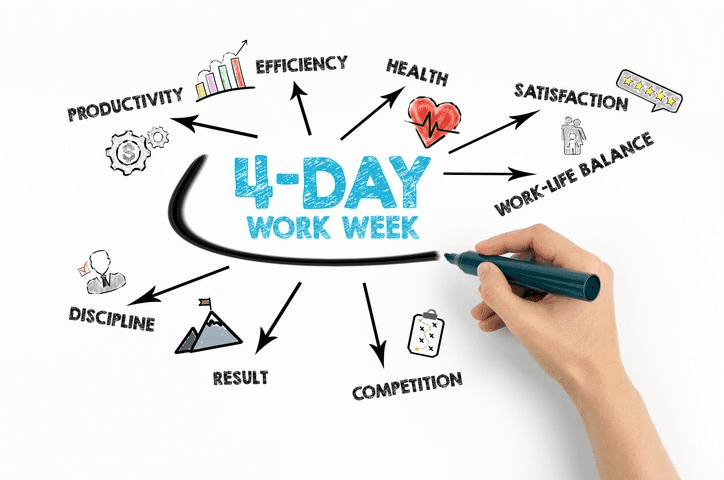
From Stress to Success: The 4-Day Workweek Revolution as reported in SME today, almost every UK company that took part in the world’s biggest four-day week trial, has decided to continue with the reduced working hours model, 92% of the 61 participating companies confirming the policy is a permanent change

While this shift towards a better work-life balance is promising, Adrian Lewis, Co-founder and Global Lead at Activ People HR advises caution to firms looking to follow suit and ensure they have the right systems in place to make this a success.

Adrian says, “The four-day working week is something many employees would value as it can help them achieve a better work-life balance. This in turn can make them more motivated and enthusiastic, which boosts productivity. It’s easy to see why firms might want to implement this model.

“However, we would urge caution and for employers to think carefully about offering a four-day week, as if not managed correctly, it can be detrimental to the business and to employees, as they try to squeeze their workload into a shorter working week.”

The UK trial showed the main benefits of shorter working hours were around wellbeing with 39% of employees saying they were less stressed, and 71% having reduced levels of burnout at the end of the trial. Also, levels of anxiety, fatigue and sleep issues decreased, while mental and physical health both improved.

Results showed increased productivity and engagement too, with organisations reporting revenue increases of 35% on average, compared with other periods, and the number of staff leaving decreasing significantly, dropping by 57% over the trial period.

However, it hasn’t been plain sailing for all involved as it’s not a model that suits all businesses. Disadvantages reported included staff being exhausted by the time they reached their day off, and employers struggling to get staff cover or facing extra staff costs if the business is customer-facing such as a restaurant or shop.

Adrian adds: “For firms considering implementing a four-day week, forward planning and adopting the right HR systems can ensure a smooth transition. Going digital and using tools like absence management software can offer an accurate way to keep track of staff, so they know who is off when, and allow managers to plan ahead.

“Digital tools give instance visibility over the workforce as well as accurate data on other absences such as sick days or holidays. This can help them spot any changes to behaviour which may indicate that the four-day week isn’t working for some.

“For example, if someone ends up stressed by trying to cram work into fewer days this could lead to them taking more time off sick if they can’t cope. Identifying such patterns helps companies address any concerns promptly and make adjustments to maintain a healthy work environment.

“Introducing a four-day working week can bring substantial benefits when managed correctly and proactively monitored for changes in behaviour. Using digital tools can support the decision to offer this whilst at the same time staying attentive to any negative impacts.”

From Stress to Success: The 4-Day Workweek Revolution

tired

Obesity in the workplace

Did you know that one in four adults are classified as clinically obese?


This means that one in every four of your employees could be obese and require additional adjustments to support their comfort and overall wellbeing.

  In the UK, an estimated 15.5-16 million sick days taken per year are attributed to the effects of obesity. Obesity can cause a number of serious health issues such as:
  • high blood pressure
  • diabetes
  • heart disease
  • some types of cancer
  • musculoskeletal conditions
  • poor mental and emotional wellbeing
  All of these effects of obesity can also have repercussions on the productivity, presence and efficiency of your staff. Worries about health, lack of self esteem, feelings of  guilt or shame and varying amounts of pain and discomfort can all distract people from their work. As an employer, there are several things that you can do to care for your staff. You should ensure that they are as comfortable as possible at their current size, but also consider creating a company wide strategy for health and wellbeing that encourages everyone to make healthier choices. Healthier food and drink options should be offered in the canteen, vending machines and from any outside subscription services or caterers. You could also make sure that the healthy canteen recipes are made available for staff to follow at home. Considering how and when staff get the opportunity to move and exercise throughout the day is also important. Practical plans that go beyond a subsided gym membership should be implemented in order to encourage all staff to become more active during working hours. For example, installing changing and showering facilities, alongside secure and convenient storage for clothes, bags and equipment can be helpful in encouraging more active ways to commute to work such as walking, jogging or cycling. An on-site gym could be considered to provide an easily accessible place to exercise or external agencies could be brought in to run a variety of exercise classes throughout the week. Simpler and more instant plans could include the introduction of walking meetings, promoting the use of stairs instead of lifts and creating monthly or weekly staff team challenges such as total amount of steps or weight lost. Make sure that staff often take the entirety of their lunch break, are encouraged not to eat at their desk and incorporate some type of movement during their break, such as a short walk around the building or grounds. Regular health screenings can not only help people to realise if they do have a health issue, but they can also help to keep those who are trying to make healthier choices on track. Another benefit of on-site health screenings is that they allow employers to gain a better insight into the health of their workforce and identify areas that may require more focus. Employees should be provided with information on reputable weight loss, exercise and wellbeing classes, clubs or apps. This helps to ensure that they make healthier and more informed choices outside of the workplace. The NHS Change4Life website is a great place to source this type of information.   With all that being said, change takes time and staff need to be comfortable enough to work productively until the changes start to take effect. So, what can be done? Carry out a review of the furniture that your staff are using. If an employee is sat in an unsuitable chair, levels of discomfort can increase, leading to a drop in productivity. In the worst case scenarios the chair may break, causing embarrassment or even harm to the employee. Key indicators that someone is sat in a chair that is inappropriate for their size include:
  • The employee does not appear to comfortably fit between the two armrests
  • In the case that a chair doesn't have armrests, the member of staff is visibly too large for the chair
  • The employee has complained of or taken time off due to musculoskeletal pain
  • The castors or base of the chair may start to crack
  • The chair's back does not properly support the employee, even once the tension has been adjusted
  There are a range of seating options available to cater for larger employees. These types of chairs feature wider seats and backrests and are designed to withstand heavier weights. Some chairs designed for heavier loads offer even more support and comfort with bespoke designs, unique to an individual's needs. A chair assessment can be carried out by a member of our staff to avoid potentially uncomfortable conversations between employers and employees in relation to size and weight. We can also take a range of other measurements in a professional and discreet manner and ask specific questions in order to establish the best product for the employee's needs.
heart awareness month

NATIONAL HEART HEALTH MONTH

February is the British Heart Foundation's, National Heart Health Month and we are all encouraged to learn as much as possible about looking after our hearts

  Many deaths and preventable disabilities in the UK are caused by heart related illnesses, but making some simple changes can improve your chances of avoiding these diseases.  

Diet

A good diet is vital for overall health, but it is even more important when it comes to health of the heart. However, if you work in an office environment, sticking to healthy food choices can be particularly difficult. Birthdays, celebrations, leftovers and general "pick-me-ups" are all good excuses for people to bring unhealthy food into the office.   Saturated fats raise cholesterol levels and increase the risk of heart disease. Foods such as cakes, biscuit and dairy products are all generally high in saturated fats. Sugar raises your heart rate and any unused energy will be stored as fat, which can increase the risk of heart disease and type 2 diabetes. Salt raises blood pressure and increases the risk of heart attacks and strokes.   Try to encourage staff to make healthier choices by offering nutritious meals in the canteen, providing fresh, low sugar snacks throughout the day and ensuring that low sugar drink options are available. Education is an extremely important factor in helping people to make informed choices about their diet. The British Heart Foundation has some great resources on their website that you could use to provide staff with information about well balanced diets and portion control.  

Exercise

The heart is a muscle and requires regular exercise in order to stay strong and healthy. Unfortunately, spending the majority of the working week sat at your desk means that fitting regular exercise in to your day can be difficult. With some small changes to equipment, alongside motivating tasks or challenges organised by management, it can be easier and more fun than you think to get a good amount of movement into your working day. For example, sit/stand desks or monitor risers can be a great way to get staff on their feet throughout the day. Step challenges are also a fun way to build morale as well as keeping employees active. If you don't already have teams within your business, divide your workforce up as evenly as possible and supply everyone with a pedometer. Give every team a week to complete the most amount of steps and think of a healthy reward for the winners.

Mental and Emotional Health

Employers should also strive to look after the mental health and overall wellbeing of their employees as stress can have a detrimental impact on heart health. Employers should make sure that their staff are aware of the help that is available to them if they find themselves struggling emotionally or mentally. You could create information leaflets, posters or emails to let people know about support available to them within the business and outside agencies that can help. Workshops are also a great way to get people involved and educated or finding a new hobby which can help people to care for their wellbeing outside of work.  

Training and Education

For every minute that somebody in cardiac arrest doesn't receive defibrillation, their chances of survival drop by 10%. Having a defibrillator and trained staff on site could save a life. First aid training should be provided regularly and as many staff as possible should be invited to attend. Employees should also be made aware of the risk factors that can cause heart disease and illness such as high blood pressure, diabetes and smoking. Information and support in controlling these risk factors can help staff to take back control of their health and avoid more serious conditions in the future.
daniel-brubaker-aCcz7h0QOzA-unsplash

Getting to work in winter weather

Snow, rain or ice , as well as lower light levels or glare from the low sun are all conditions that can make the winter commute very hazardous. Driving in these types of weather can be extremely stressful and require a lot of concentration. However, there is some sensible advice to be followed to try to make your commute as safe and calm as possible. Give yourself extra time: Rushing is a main cause of mistakes and feeling under pressure to arrive on time can cause you to speed. In winter, this can be even more dangerous than speeding in normal conditions. Remember that in snowy and icy conditions in particular, you should drive slower than you normally would, traffic is likely to be heavier and slower moving and you may need to take a detour. All of these factors may add time to your journey that should be allowed for. Clear your car properly: All windows and mirrors should be completely clear of any ice, snow or fog and you should make sure there is no snow left on the roof of your car as this can drop on to the windscreen when you are driving. Driving your car when windows, mirrors and windscreens are not clear is an offence that can add three points to your license. Keep speed down and stopping distances greater than usual: Corners should be taken extra slowly and remember that safe stopping distances are doubled in wet conditions and can be up to ten times greater in icy conditions. Keep steady and in control: Try to avoid heavy acceleration, braking and steering in bad weather conditions. Carry out any maneuvers slowly and with great care. Make sure that you are always aware of your surroundings as pedestrians, cyclists, motorcyclists and other cars can be harder than usual to see. Keep an emergency kit in the car: Winter weather can be unpredictable and it is not unheard of for people to become stuck due to impassable roads or breaking down with long recovery times. This is why it is vital that you keep a winter emergency kit in the car. This should include: Torches and batteries, warm clothing and blankets, hi-vis jackets, jump leads, food and drink and a spade.
cold weather working conditions

Cold Weather Working

Cold weather brings lots of worries for employers and employees alike. Main concerns include travel, absenteeism, illnesses and general health and safety. In this post, we aim to give a little practical advice to help you to handle the biggest business concerns that cold weather brings.  

What temperature should my workplace be?

    There is no legal lower limit for indoor working temperature, but the Workplace Health, Safety and Welfare Regulations of 1992 state that the minimum temperature in the workplace should not fall below 16°c, reduced to 13°c if the work requires a high level of physical activity. However, these are only recommended guidelines and not legal requirements. The regulations go on to state that the temperature of workrooms should provide reasonable comfort without the need for special clothing. Employers are required to do what is reasonable and practical to keep employees warm and safe. Extra risk assessments may need to be carried out to ensure that employers are doing everything that they can to ensure their employees are not at risk of illness or injury. When the weather begins to affect the workplace, the HSE recommends the following measures in order to keep the working environment warm:
  • Provide adequate heating with the addition of additional heaters if required
  • Reduce any drafts and reduce exposure to the cold by minimising the length of time that tasks are carried out outdoors or in colder areas
  • Provide ample break time for employees to spend time in warmer areas, eat warm food and make hot drinks
  • Provide appropriate floor insulation or footwear if employees are expected to stand for extended periods of time
 

What if the weather makes it difficult or impossible to reach your workplace?

  If heavy snow or ice is making your journey extremely long, difficult or dangerous, the most advisable thing to do would be to talk to your manager about working remotely. Employers should prepare for such events with clear guidelines in place to avoid confusion among employees. Employers and employees should both act in a responsible manner at these times to protect individual safety and the interests of the company. By being prepared for such events ahead of time, risk of confusion is lowered and safety concerns are clearly communicated. If you have to travel in the snow or ice, make sure that you are aware of the best way to drive in these conditions.  

What about illnesses?

  Conditions such as asthma, arthritis, psoriasis and cardiovascular disease can all be aggravated by the cold weather and those who suffer from these illnesses should be encouraged to take extra precautions to protect their health. Working indoors in periods of cold weather can encourage the spread of illnesses such as cold and flu. This is because indoor environments are generally less ventilated in the winter months and people's immune systems are normally weaker. Consider installing hand sanitizing dispensers around the office to help to control the spread of germs. Norovirus is another highly contagious illness and is so common in the winter months that most people know it by the name of "the winter vomiting bug". The bug is easily spread in unventilated environments where people spend a lot of time in close proximity to one another. Those who have had the bug should remain off of work for at least 48 hours after their symptoms have cleared and should remember to properly clean and disinfect their desk and equipment upon their return. Employers should be aware that asthma can become worse in cold weather as the sensitive airways of the sufferer can become aggravated by damp or cold conditions outside. Indoors, sufferers are at risk from heated air and indoor pollutants.
winter office

Getting Through Winter at the Office

Most staff will be waking up to dark mornings and leaving the office in the dark. It's cold and rainy, so commutes are even more miserable and there's less to do during leisure time outside of the office. Christmas is only a few weeks away and some may be stressed with the cost and organisation associated with it. And to top it all off, it's cold and flu season.

So, what can be done to lift spirits and make sure that staff well-being is cared for over the winter months?

Provide healthy snacks This is important in keeping people alert and productive and stopping the afternoon slump. Comfort eating is common at this time of year and usually there's no shortage of sugary snacks on offer in the lead up to Christmas. Fruit is ideal for getting a sweet hit and vitamins all in one. Iron rich foods are also great for providing energy and keeping people alert. Sugary and caffeinated drinks should be kept to a minimum, so consider stocking up on herbal teas or naturally flavoured water. Encourage movement Holding walking meetings, taking the stairs and getting outside on breaks (if it isn't too cold or wet) are great ways to incorporate movement into the working day. Moving helps to keep you alert and productive, as well as stimulating the release of endorphins to keep spirits up. You could also consider putting together a "deskercise" information sheet with instructions on how to keep active whilst working at a desk. Encourage short breaks Following on from the previous point about keeping active, encouraging staff to take a few minutes break in between tasks is a great way to keep people focused. A few minutes every hour to take the eyes away from a screen and allow the brain to relax a little also helps to keep stress levels down and generally help people to feel less pressured. Consider lighting Keep the blinds open, even when it's cloudy as any natural light is beneficial. Consider investing in lighting that more closely mimics natural daylight. This is important for keeping the body clock on track and keeping us refreshed and productive despite the cold and dark outside. Educate staff on the importance of vitamin D In the winter, there is less sunlight available which means our Vitamin D levels will naturally decrease. This can lead to a more deflated mood and further exaggerate any existing aches and pains. Good quality vitamin D supplements are easily available over the counter and can easily help to restore any depleted levels. Offer help and support Set up exercise or well-being workshops throughout each month or offer access to mental health support - this could be as simple as making staff aware about the type of help that is available and local places they can go to receive support or further information. Consider offering physical health checks to staff to make sure their basic health is looked after. You could also set up awareness classes around smoking and drinking as these habits are generally increased around this time of year and are often popular new year's resolutions which are rarely followed through without the right support and awareness. Also, stress the importance of people going to have their flu jab, and perhaps offer it free of charge to employees. Organise a few fun activities throughout the winter Keep morale high and invest in a few fun days out or evening social gatherings throughout the winter months. Generally people tend to hibernate at this time of year, once the Christmas party season is over. This can affect well-being, their performance at work and team morale. Get staff involved with organising something they would all like to do together, and help them to fund a few activities.    
work stress

How Can I Manage Stress At Work?

On Stress Awareness Day, we look at some ways that stress at work can be managed

  Don't stay silent If your workload is too overwhelming, talk to your manager or a colleague. Explain to them why you're struggling, especially if the problem is out of your control. This helps to keep the people around you informed, which in itself should relieve some pressure. A manager or colleague may be able to offer a solution that you hadn't thought of, or even take some of your workload off your shoulders. Take breaks and try to relax Stress slows down and distorts the cognitive functions of the brain. This has a direct impact on productivity and quality of work. While it may seem that you have no time to take breaks, not taking them can actually be counterproductive. Even just a few five minute breaks taken between tasks, or after working for a certain amount of time can help to keep your brain alert. Use this time to look away from your work, (particularly if you use a screen), get up, stretch and move and also make sure you are snacking healthily and keeping hydrated. After an intense or particularly stressful workload is finished, try to take some proper time to recuperate. For example, if a job has taken weeks to complete and has been particularly stressful, consider taking the minimum of a long weekend off. This way, you will have something to look forward too whilst you are doing the work and a great way to wind down before starting a new project. Try to get outside Even if it's a quick, brisk walk around the block during your lunch break, a change of scenery and some fresh air can help to calm you down and refresh your brain. Exercise is a great stress reliever and it also releases endorphins which improve mood. If you can't get outside, try to leave your desk and walk about the building, use the stairs instead of the lift and even consider parking your car further away from the entrance of the building. Try not to take work home with you Don't check your emails after you leave the office, unless it's company policy. When at home, try to spend some time on yourself. A nutritious meal, a soothing bath or shower and a herbal tea or decaffeinated hot drink can all help you to unwind. Try to end screen time from devices and TV at least an hour before you intend to go to sleep. In this time, you could escape into a book, meditate or write your emotions down in a journal. The NHS also has a list of apps that they recommend in order to help with a range of mental health issues, including stress and anxiety.
tired at work

How Does Tiredness Affect Performance at Work

Research from Westfield Health has found that almost half of employees regularly turn up to work too tired to function effectively. Despite this, 86% feel that they are not able to openly communicate with their manager about how their tiredness is affecting their performance. 34% of survey respondents said that their mental well-being has suffered because of their tiredness, whilst 55% stated that their fatigue extends beyond the office and affects their home life too. 37% state that tiredness has made them forgetful at work and 30% said it has made them short tempered with colleagues. Worryingly, 22% have found themselves actively drifting off to sleep at work and 13% have drifted off while driving. Furthermore, 30% have had an accident, made a serious mistake or felt extremely stressed at work due to fatigue. Currently, 86% of employees feel that their employers or managers do not recognise the negative impacts and dangers of fatigue and only 9% believe that their employer would find fatigue a valid reason to call in sick. Director of Well-being at Westfield Health, Richard Holmes, states that "the importance of rest time both at work and home should be taken seriously and encouraged by employers, and fatigue should be considered just as important as any other physical illness or injury".

So, what can be done?

  Try to break your work schedule down into smaller chunks. This makes larger tasks seem less overwhelming and also allows you to use the Pomodoro Technique which can help you to stay focused and less stressed. Make sure you get up to move around as much as possible throughout the day. This is good for keeping your mind alert and a gentle outdoor exercise such as a short walk during your break time is proven to have a positive impact on mental health. Try to slowly cut down on sugar and carbs and swap caffeinated drinks for herbal teas or water. This helps to keep energy levels steady throughout the day rather than providing an artificial peak caused by sugar or caffeine which results in an energy crash later in the day. Make sure your work space is set up ergonomically. A good ergonomic chair and setting your monitor screen to the correct height, as well as the addition of a footrest are all great ways to keep your body free from aches, pains and strains. An ergonomically correct posture will also keep oxygen flow and circulation at an optimum to help you to stay more alert and focused. Freedom from aches and pains helps you to feel less tired and aids in keeping added stress from pain at bay. Try to get as much rest at home as possible. Develop a good night time routine with screen time ending at least an hour before you plan to go to sleep. Also, unless it is required by your employer, do not bring your work home and don't check or respond to emails whilst out of the office. Consider taking a long weekend if you have enough holiday time to use. Regular, shorter breaks can often be better than one extended summer holiday. Try to use this time to relax and unwind as much as possible and make sure that you do not spend the time checking up on work. Finally, if you feel able to, talk to your manager or employer about how your fatigue is affecting you both personally and professionally. You may, for example, be able to reach a flexible working agreement to allow you some extra time to rest, or you oculd ask for the opportunity to start and finish earlier so that you don't spend any more time than necessary commuting.  
employee

What Are Employee’s Top Priorities in Terms of Benefits and Working Environment

Do you really know what makes your staff tick?

Research by co-working developer, Areaworks, has found that flexible and comfortable working zones are a top priority to employees. Half of the workers surveyed wanted to swap fixed desks for hot desks and casual seating. 64% of office-based respondents also stated that having access to good outdoor facilities or the ability to work on a roof terrace were important productivity and well-being factors. Other items that made the list for dream office features included:
  • Good kitchen facilities
  • Plants
  • Games, e.g, table tennis
  • Pets
  • Sleeping Pods
  • Water Features
A study conducted by Perkbox, found that Generation Z - those born between the mid-1990's and 2000 - place a high importance on perks when deciding where to work.  The research also found that 32% of Gen Z prefer smaller benefits with a higher frequency that they can benefit from year round, rather than one bigger annual event such as a Christmas party. The top 3 most popular perks were annual leave on birthdays, free hot drinks and flexible working hours. These were closely followed up by free lunches and access to private health and dental care. Capital One recently conducted a survey of 3,500 full-time US employees. The aim of the research was to understand employee's thoughts on workplace environment and design in relation to productivity, innovation and collaboration. According to the results, many employees highly value flexibility and good office design. They also value up-to-date technology, agile work spaces and personal well-being investments. These factors were found to be particularly important when employees were considering moving to a new employer. For example, 73% of workers say that a flexible schedule is a top reason for choosing to stay with or leave an employer. When it comes to office design, 57% value natural light, 37% feel they benefit from easily reconfigurable furniture, 30% value collaborative spaces and 25% place high importance on rest and relaxation zones. 66% of workers believe that the design of the office environment is more important that it's location. When asked to choose a health and well-being benefit that they would most like to keep or see implemented, 39% of respondents cited healthy food and beverage options as an important benefit, while 33% placed a high importance on on-site health and wellness centers or programs. Next time you're considering your staff retention rates or are trying to attract a new generation of workers, consider what it is that they value and implement as many of these factors as you can.
tired at work

HOW TO COMBAT TIREDNESS & FATIGUE AT WORK

Struggling to get through the day? You're not alone. Constant fatigue among UK workers is much more common than you might think. So how can we combat it?

  Keep Hydrated: Aim to try and drink 2 litres of water per day. This sounds like a lot but can easily be achieved by keeping a bottle of water close by to sip regularly throughout the day. If you're not used to drinking this much, set yourself small goals over a few weeks, slowly building your intake up. You can also try alternating each tea or coffee with a glass of water. This will not only help you to achieve your two litre goal, but also aids in offsetting the diuretic affects of tea and coffee. Watch Your Caffeine Intake: Try not to drink caffeinated drinks after lunchtime as afternoon consumption can still affect you into the evening and disturb your sleep. If you enjoy hot drinks at work, try to swap to decaffeinated drinks or herbal teas and see if this change helps you to nod off easier in the evening. Try to Keep Moving Throughout the Day: Movement and physical activity keep your blood flowing which helps to improve concentration and relieves stress and anxiety. Simple activities such as stretching, taking the stairs and walking over to chat to a colleague instead of sending an email, can all help you to keep active over the day. Snack Regularly: Keep energy levels up and blood sugar balanced by regularly snacking on healthy foods, rather than leaving yourself hungry until your next meal. If you are less hungry at lunch time, you will likely have a lighter lunch, which will combat the post-lunch slump. Nuts and fruit are good options to reach for when you begin to feel peckish as they are full of fibre and omegas to aid digestion and help concentration. Try to avoid sugary treats as the initial energy boost wears off quickly and the sugar crash can end up making you feel worse. Use The Pomodoro Technique: This technique helps you to break your workload down into manageable chunks and allows you a five minute refresher break for every 25 minutes of work completed. This can help to improve concentration and productivity and avoid mental fatigue. Watch Your Posture: Bad posture can lead to pain in the neck, back, shoulders and hips. Pains and aches can cause fatigue and bad posture can affect your concentration and productivity. If you need help to achieve a better posture, take a look at an ergonomic chair to help you into the correct sitting position.   Try incorporating some or all of these tips into your work day and see how much improvement is made to your levels of fatigue.     [yikes-mailchimp form="1" title="1" description="1" submit="Sign up"]
SHOULD YOU ALLOW EMPLOYEES TO HAVE PERSONALISED WORKSPACES

SHOULD YOU ALLOW EMPLOYEES TO HAVE PERSONALISED WORKSPACES

Can having too many personal items on your desk be a distraction, or can it improve productivity and wellbeing?

Allowing your employees to add some personal touches to their desk and general work area can encourage ownership over the work space and improve organisation and cleanliness. It can also provide employees with a sense of individuality and make them feel valued. The use of colour in the workplace is known to have a positive effect on productivity and mood. Encouraging staff to use their favourite colours around their desk can bring comfort and a chance to display their personality within the working environment. It can also help to make the workplace somewhere that employees will want to spend time in. Photos and other small items can also help to improve productivity, as well as creating a sense of pride and homeliness around the desk space. You could also consider allowing staff the chance to choose their own furniture and chairs to suit individual needs and preferences. Even simple choices such as the colour of a desk divider can make employees feel involved and valued. Next time you plan a refurbishment or require new furniture, why not talk to your employees and find out what they would like from their own personal work spaces, create a plan to try and fulfill their wishes and see for yourself the improvement a simple touch can make.     [yikes-mailchimp form="1" title="1" description="1" submit="Sign Up"]

WHICH PLANTS ARE BEST FOR MY OFFICE?

With urbanisation on the rise and a dependence on technology increasing, most of us have less time to relax and renew our mental and physical energy

  Research has shown that incorporating elements of nature into the working environment can reduce blood pressure, heart rates and stress levels and can increase creativity, productivity and general mood. A quick and simple way to incorporate nature into the office is through the use of plants. There's a huge variety of plants with a range of benefits which require very little care. Here we take a look at the top eight plants for office spaces.  

Snake Plant

Indoor-Black-Snake-Plant Can last for weeks without water and tolerates heating and air conditioning very well. Doesn't require a lot of light.  

Peace Lilly

Peace-Lilly-Plant Brings a tropical feel to your work space and tolerates air conditioning very well. Suitable for low-medium light. (Not recommended for use in home offices as this plant is poisonous for cats and dogs).  

Rubber Tree Plant

Potted-Rubber-Tree-Plant Ideal for brightening up corners, this floor plant boasts large leaves & brings colour to the office. Requires watering once a week.  

Aloe Vera

Aloe Vera Potted Plant Can go for many weeks without water but requires plenty of sunlight. The plant helps to filter the air and the gel inside has cooling and healing properties.  

Yucca

Yucca Plant Potted Can survive for several weeks without water and can grow fairly large with the right levels of light. This plant can grow into an eye catching feature, even in large spaces.  

Croton

Potted Croton Plant Can grow up to ten feet tall and the leaves of the plant often feature a variable and interesting pattern. Must get enough sunlight or these patterns will begin to fade.  

Fatsia Japonica

Potted-Fatsia-Japonica A low maintenance, air purifying plant with dark green leathery leaves  

Montsera Deliciosa

Potted Monstera Deliciosa Plant This plant has huge, eye catching leaves and creates a luxury tropical feel in any space.     [yikes-mailchimp form="1" title="1" description="1" submit="Sign Up"]
increase-activity-productivty

INCREASE YOUR ACTIVITY LEVELS IN THE OFFICE

A typical office worker spends more time sat down than the average person aged over 75

Our sedentary working lives are severely impacting our health and wellbeing and yet few of us realise how dangerous it can be.

Many office workers spend 8 hours or more sat at their desks. This is bad enough, but when we consider the amount of time spent sitting while commuting, eating or watching television at home, the problem becomes even greater. This amount of sedentary time can lead to a range of different health problems. According to the NHS Live Well website these issues include, but are not limited to:
  • Obesity & Slow Metabolism
  • Type 2 Diabetes
  • Some Types of Cancer
  • Early Death
Sedentary behavior has also been found to negatively impact on mental health too, worsening symptoms of anxiety and depression.

So, how can we become more active?

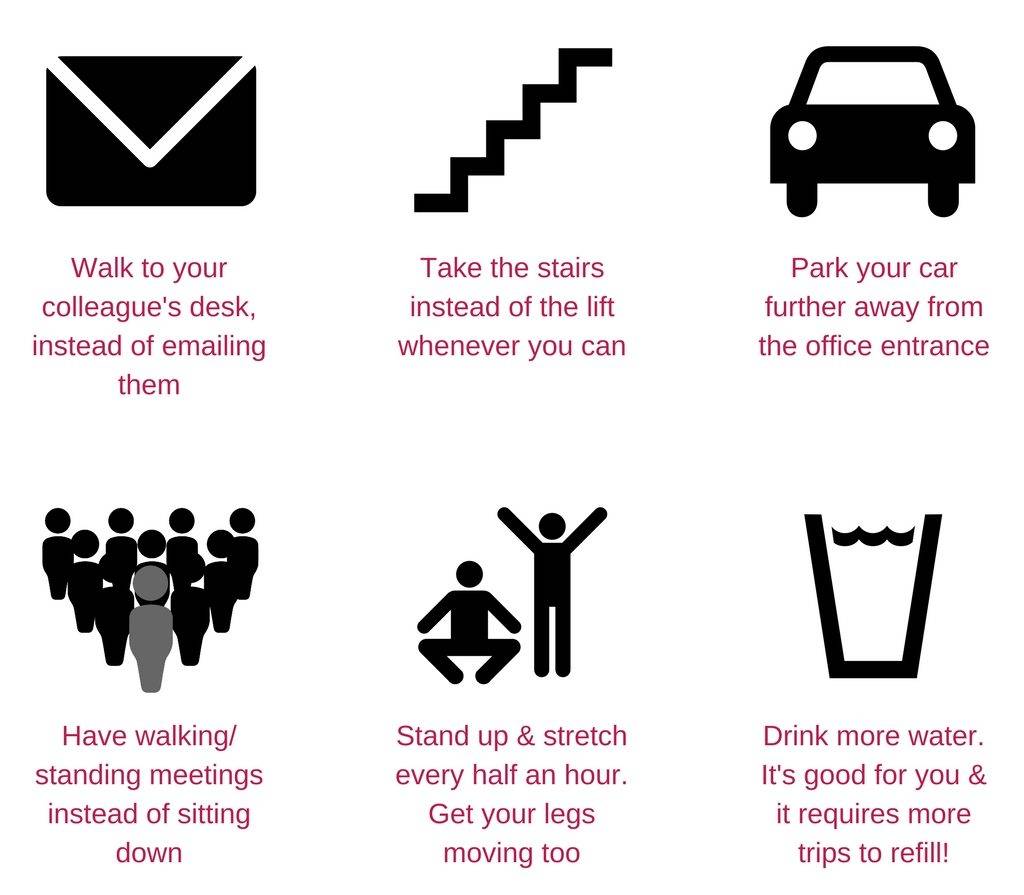
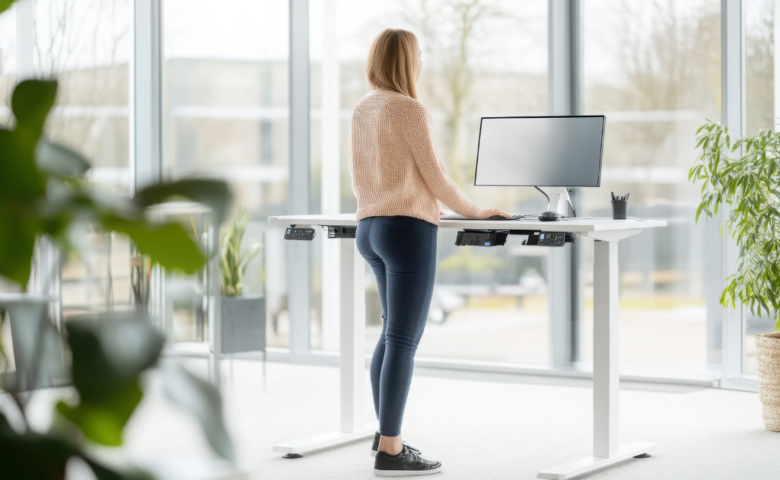
Firstly, a height adjustable or sit/stand desk can encourage you to spend some time standing and moving whilst working. Sit/stand desks have also been linked to an increase in alertness, creativity and productivity, as well as helping to relieve symptoms of poor circulation and back ache. A chair such as the HÄG Sofi that features an InBalance™ mechanism can help to keep your body moving when you do need to sit down. This can also help to keep you alert, productive and aids the body's blood and oxygen flow. Apart from integrating adaptable furniture in to your workspace, there are other smaller adjustments that you can incorporate in to your working day to up your activity levels. Icons for being active at work       [yikes-mailchimp form="1" title="1" description="1" submit="Sign Up"]

How is Employee Wellbeing Affected by Lack of Privacy and Acoustics

In the last few years ergonomics has been the number one focus in workplace and furniture design. We've seen chairs that promote good posture and sit-stand desks all becoming prevelant. However, ergonomics is just the starting point in the much bigger picture of employee wellbeing. There are many factors that come in to play when considering how to improve the physical, mental and emotional health of employees. However, something that has perhaps been overlooked in the quest for a more flexible workplace is privacy and proper acoustics. A recent increase in the trend of open plan offices has seen more and more companies refurbishing their sites to reflect a more accessible and flexible environment. With this being very much the main focus, individual preferences have often been overlooked. Indeed, many offices have been designed on presumptions and trends rather than for the company's unique staff.

What are the statistics?

The University of Sydney found that noise is the number one complaint of employees that work in open plan offices, with up to 60% citing it as a major issue. Evans et al & Sundstrom also point out that noise is probably the most prevalent source of annoyance in offices and can lead to increased stress. If you consider that most people spend more time working (36%) than they do anything else - even sleeping (32%) - it makes sense to create an environment where as many individual needs as possible are catered for. The open plan office manages to tackle many historic dissatisfactions in the workplace such as lack of flexibility, an inability to freely express ideas and interact with managers and a lack of collaboration with other colleagues. However, most office workers spend 40-60% of their time on concentrated tasks, yet 42% said they had no access to private or quiet areas. This can create serious problems with productivity. It takes an average of 15 minutes to regain concentration after being distracted by unwanted noise. A worrying example of this finding is that just 5 distractions in an 8 hour working day equates to a 15% reduction in productivity. In other words, in a company of 200 employees, 30 of these people would be being paid to do nothing. Other statistics which highlight the issue of noise in the office include a 32.7% decline in operating income for companies with low levels of employee engagement. However, amongst companies with higher levels of employee engagement a 19% increase in operating income was observed.  

How can I remedy these problems in my office?

We are now beginning to see just how important noise levels in the office are, even if they have been overlooked in the recent past. There are however, solutions to the problem, even if you have got an open plan office. Before looking at the following options, we recommend analysing the way that your staff work. What is important in the way the company works? Try to gather some opinions from the staff themselves. This information may take some time to collect but any decision you make from the data is informed and can only have a positive impact on your bottom line.

Product Solutions

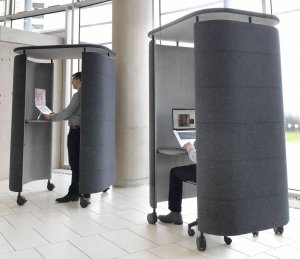
Installing acoustic and sound absorbing products into your work place is a quick and easy solution to end distractions, create some privacy and improve concentration. Perhaps the most obvious way to introduce some privacy is with floor standing screens. Simple to set up, these screens enable you to create quick meeting or private areas. Some floor standing screens are mobile and some come with options such as a whiteboard top or toolbars. The level of acoustics varies between types of screen, so this solution is a better choice if you are looking to simply add in some extra privacy to your work space. Desk mounted screens offer much the same as their floor standing counterparts but tend to be shorter and attached directly to the desk. They offer a level of organisation and privacy and can also provide some sound absorption depending on the screen's material. Office pods can be seen as a cure all for privacy, acoustics and flexible working. Offering excellent acoustics, varying degrees of privacy and excellent levels of flexibility, an office pod is the simplest and most versatile option. Dot them around the office to create quiet and private working havens or group them all in the same area to create a place designated for concentrated work only. InnoPod-Mobile-Acoustic-Office-Working-Pods  Flap-Totem-Freestanding-Acoustic-Panels

How can storage help?

You may not think it but storage can actually help towards solving privacy and noise problems. Bisley Towers™ offer privacy thanks to their tall profile which can act as a simple divide between desks. This also means that they offer some degree of acoustic value. Bisley Eyespace™ is a great storage and filing system which manages to look stylish, offer superb functionality and create divides. A great way to add practicality and privacy into the office. Although Bisley Bite™ doesn't offer acoustics or privacy in itself, it can be used at each desk to complement the use of office pods. Bisley Bite™ is a mobile pedestal drawer unit which slots over the top of any desk. So, when your employees need to move to a quieter area to concentrate, they have all their files with them to facilitate a smooth and practical transition from their desk. Bite-Mobile-Storage-PedestalsEyespace-Office-Storage-System  

Are there any other options?

The above is a list of a few simple options to consider if you aren't thinking of refurbishing your office any time soon. If a redesign is due, there are a range of materials, layouts and structural designs which facilitate proper sound absorption and privacy. Acoustics and privacy should be mentioned to your project manager at the start of the design process to get the most out of your refurbishment.     [yikes-mailchimp form="1" title="1" description="1" submit="Sign Up"]
workplace-design

Workplace Design and Ergonomics and How They Can Reduce Employee Stress

On National Stress Awareness Day, we take a look at the importance of workplace design and ergonomics on the reduction of employee stress, fatigue, illness and absenteeism.

  According to Beautyman (2006), businesses that ignore the design and layout of their workplaces are failing to optimise the full value of their human capital. This is echoed by Amble (2005) who points out that poor workplace design is linked to lower business performance and a higher level of stress experienced by employees. Research by the Industrial Society in London suggests that many employers are beginning to take notice of the impact of stress on their businesses and see it as a matter of urgency to improve their employee's working environments. 74% of surveyed employers predicted that employee stress would become their greatest health and safety concern in the next few years, with 53% stating that this is an issue which employers should address proactively.

With this in mind, what is it that can be done to create a comfortable, productive working environment that provides a reliable ROI?

Looking at the balance of privacy and co-working spaces is a good place to start in catering to an array of personality types, fluctuations in employee moods and the levels of productivity required from employees. According to Monroe (1999), physical environments that foster creativity and interaction, whether in conference areas or in "casual collisions" in corridors or break areas, is important for building rapport and support networks, as well as improving communication and problem solving. Following on from this, Asirvatham (1999) and Umlauf-Garneau (2001), predicted that future offices will consist of very few fixed walls and will see an increase in mobile furniture, more laptops and a generous distribution of data and power outlets, allowing employees to choose their working space in order to reach their maximum productivity.

So, how is a well balanced workplace design that caters to a range of personalities and requirements reached?

Wallace (2001) predicted that the office cubicle will not be something that we see disappear, but instead, redesigned to reach a concept that allows for better acoustics and accessibility, leaving the onus for creating complete privacy on separate sound proofed rooms available for access on an as-and-when-basis. A good example of the type of "cubicle" that has been redesigned for the modern office is the Den range sold on our website. Available in a range of shapes and sizes and with great acoustics, Den is a flexible and dynamic solution to the classic, more restrictive cubicle. With this in mind, it is important to also factor in parts of office design that aren't always immediately obvious, such as aforementioned acoustics and types of lighting. Hower (1995), reports that high noise levels can cause irritation, increase stress and reduce productivity, whilst Smith (2001) reported that employees who are constantly working in a noisy environment show higher levels of adrenaline which, in turn, decreases their productivity and in some cases adds to absenteeism. Frank (2000) points out that lighting is a critical element in creating a comfortable working environment and that lower lighting levels, rather than fluorescent tubing, boosts productivity, although in these situations employees should be provided with individual task lighting which can be adjusted accordingly. Hower (1995), explains why lighting has such an impact on productivity with light levels affecting the endocrine system, cardiac rhythm and "the body clock". He goes on to add that lower levels of lighting increase memory function and focus, whilst daylight improves mood. According to a survey by Steelcase Workplace Index, 86% of participants stated that poor lighting caused them some form of discomfort i.e, headaches and watery eyes. According to the same survey, proper lighting would increase efficiency for 3 out of 4 of the participants. Lighting and acoustics, whilst essential in achieving a good ROI from your office refurbishment, are tricky areas of office design to get right. It is best to consult with your designer early on in the process in order to get these fundamentals correct from the start.

Now we've covered some of the larger aspects of a productive workplace, let's cover one of the essentials which is often over looked - ergonomics.

According to the Work Related Musculoskeletal Disorder Statistics (WRMSD) report by HSE for Great Britain 2016, the total number of WRMSDs in 2015/16 was 539,000 out of a total 1,311,000 for all work related illnesses, a total of 41%. An estimated 8.8 million working days were lost to WRMSDs, making an average of 16 sick days per case. A breakdown of the total days lost to WRMSDs shows that 36% were due to upper limb disorders, 39% to problems with the back and 26% to lower limb disorders. These sick days put a huge strain on a company's productivity and financially they take a toll with paid sick leave and any healthcare costs if included in an employee's benefit package. However, many of these cases can be avoided with investment in a simple ergonomics program. Offering staff the right ergonomics equipment such as a height adjustable desk, ergonomic chair and other accessories such as wrist rests can seem like a costly outlay. In many cases though, when the cost of sick days and health care and the decline in productivity is calculated against the cost of this equipment - much of which lasts for many years - it actually presents a huge saving. It's not just in preventing the sick days that ergonomics can help boost productivity either. Proper ergonomics can boost concentration, memory and mood which helps to make the employee more efficient during their working day.

If you are confused as to where to start with ergonomics, you can find an array of videos on our website to help you adjust your existing chair or guide you in choosing a new chair to suit your needs. We also offer a range of desks and accessories which all fit within a good ergonomics strategy for your business. With over 20 year's experience our advisors can help you to choose the right furniture for you ergonomics plan, as well as designing your office to help you get the most out of your staff and your investment in your workplace.

  [yikes-mailchimp form="1" title="1" description="1" submit="Sign Up"]

From Standing Desks To Relaxation Zones, What Makes A Productive Office?

“Wellbeing is very important,” he says. “The boom and bust mentality of work - people working ferociously to hit the deadline and then burning out - leads to peaks and troughs in performance. We’ve gone to extra lengths to create an environment where we attract the best people and once they are here they are able to do their best work.” Harris’s approach was borne from a frustration with old fashioned beliefs about office life. An “always on” culture where technology makes it difficult to switch off means many people are looking for more flexibility in where, when and how they work. Rethinking the open plan office He is one of a number of business leaders rethinking the design of offices to improve staff productivity. But it’s not all about toys and beds. Others, for example, are looking at the open plan design that has dominated workspaces since the 1950s. Once thought to facilitate more collaborative working, research now suggests open plan offices could actually be undermining productivity. A 2014 survey (pdf) of 10,500 workers across 14 countries, commissioned by office furniture maker Steelcase, found that 69% of people were not satisfied with their working environment, in part due to a lack of privacy. A separate Steelcase-commissioned survey of more than 39,000 workers found 95% of employees said they needed quiet, private places for confidential conversations, but only 41% said they could do so, and 31% had to leave the office to get work completed. Researchers have also suggested a correlation between employees who work in open plan offices with multiple colleagues and the amount of short-term sick leave those employees take. One of the main faults of the open plan design is that there is an assumption that all you have to do to boost creative collaboration is throw people together in one room, says Max Chopovsky, founder and CEO of Chicago Creative Space, a company that produces video and media content on office design and culture. But if your staff feel like they don’t have autonomy or someone who will listen to their voice, it’s irrelevant if they are in an open space or not, he adds. “The main problem is that companies are looking at Google, for example, and just wanting to have the same as them. They are not being authentic. They need to listen to their employees and understand what specifically they want beyond the basics like natural light, good internet connection and comfortable chairs. Harris admits his office would not be suitable for every business but it has proved a success, with absence from sickness low, staff retention high and employee feedback overwhelmingly positive. Key to making the concept work though has been ensuring that everyone buys into it. Office of the future Leaving aside debates about open plan offices, do we even need offices anymore? Advances in technology and remote working mean many staff can choose to work elsewhere. For Chopovsky, this does not mean the end of the office. If staff can choose to work elsewhere, the office could become a place where workers can have important social encounters and build professional relationships rather than simply knuckle down and work. That means a combination of open plan offices and private rooms. He believes companies should facilitate that by creating areas where staff can come together either for informal chats or company-wide meetings. This may already be happening in the UK. A survey of 1,100 British office workers, published in June, shows that most workplaces (70%) now also include a communal environment break out spaces such as a shared kitchen or beanbag area to work from or have meetings in, providing a space for more dynamic working. This is key to meeting workers’ needs, with almost a third (29%) deeming the ability to work from a variety of different locations in the office to be important, and almost half (48%) considering access to collaboration space with colleagues an imperative. Better designed offices are not the end of the matter, however. John Ridd, councillor of the Chartered Institute of Ergonomics & Human Factors (CIEHF), says that while getting the design of the office right for your business and worker needs, it cannot be used as a panacea for improving employee wellbeing. “To me the major thing is looking at the design of a person’s job in terms of workload and responsibilities. That is going to be far more important in terms of increasing productivity and indeed the wellbeing of the individual because it is the happy worker who works more efficiently.” [yikes-mailchimp form="1" title="1" description="1" submit="Sign Up"]
Product has been added to your cart