Search
ergonomic furniture

Ergonomic Products From Wave Office

In today's fast-paced world, where many of us spend a significant portion of our day at a desk, the importance of a comfortable and supportive workspace cannot be overstated. Ergonomic furniture is no longer a luxury; it's a necessity for maintaining well-being, boosting productivity, and preventing long-term health issues. If you're in the Crawley, West Sussex area and looking to upgrade your office environment, look no further than Wave Office.

Wave Office, based right here in Crawley, is a local expert in providing comprehensive office furniture solutions. They understand that a well-designed workspace goes beyond just aesthetics; it needs to support the people who use it every day. This is where their range of ergonomic furniture and related products comes into play.

What is Ergonomic Furniture and Why Does it Matter?

Ergonomics is the science of designing and arranging things people use so that the people and things interact most efficiently and safely. In the context of office furniture, this means creating chairs, desks, and accessories that support your body's natural posture and movements, reducing strain and the risk of musculoskeletal disorders.  

Investing in ergonomic furniture offers a multitude of benefits, including:

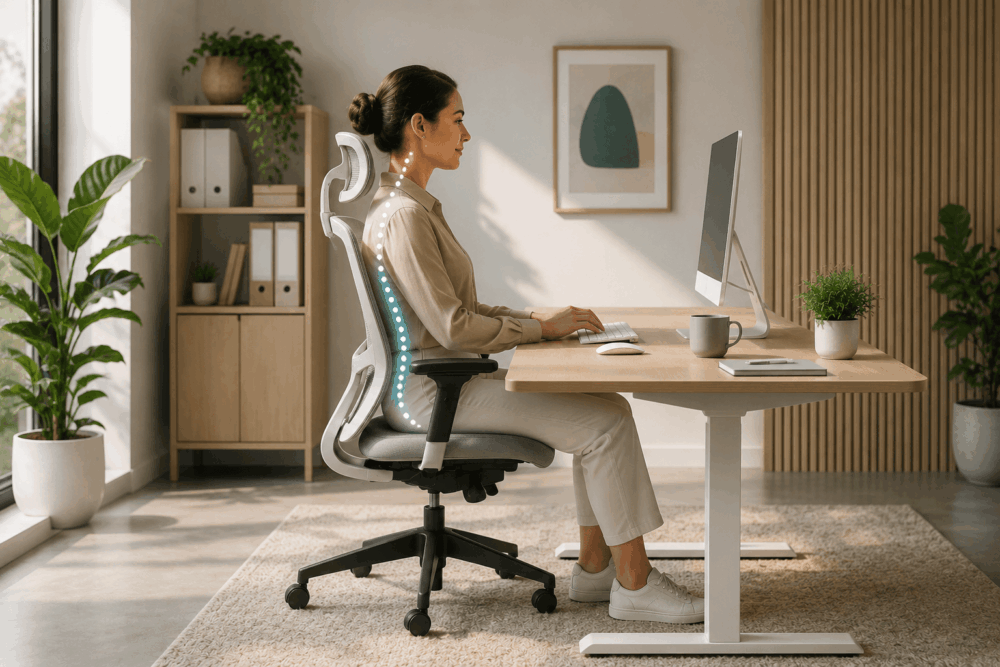
  • Improved Posture: Ergonomic chairs, for example, are designed with features like adjustable lumbar support, seat height, and armrests to help you maintain a healthy spine alignment.
  • Reduced Pain and Discomfort: By supporting your body correctly, ergonomic furniture can alleviate common office-related aches and pains in the back, neck, shoulders, and wrists.
  • Increased Productivity: When you're comfortable and not distracted by discomfort, you can focus better on your tasks, leading to improved concentration and productivity.
  • Enhanced Well-being and Morale: A workspace that prioritizes employee health and comfort contributes to higher job satisfaction and overall morale.
  • Prevention of Long-Term Health Issues: Properly aligned seating and workspace setups can help prevent the development of chronic conditions like carpal tunnel syndrome and chronic back pain.

Ergonomic Solutions Available at Wave Office

Wave Office in Crawley offers a variety of products designed to enhance the ergonomics of your workspace. While their full range is extensive, you can typically find essential ergonomic items and related accessories to create a more supportive environment. Their offerings are likely to include:

  • Ergonomic Office Chairs: Look for chairs with adjustable features such as lumbar support, seat depth and height, armrests, and tilt mechanisms to customize the fit to your body.
  • Ergonomic Accessories: Products like arm and wrist supports can help maintain neutral wrist positions while typing, reducing the risk of strain. Desk screens can also contribute to a better work environment by managing privacy and acoustics.
  • Height-Adjustable Desks: While not explicitly listed as a separate category, many modern office furniture suppliers like Wave Office offer height-adjustable or standing desks that allow you to alternate between sitting and standing throughout the day, promoting better circulation and reducing the negative effects of prolonged sitting.  

By choosing ergonomic furniture from a local supplier like Wave Office in Crawley, you not only invest in your own or your employees' health and comfort but also support a local business. Their expertise in office interiors means they can help you create a complete workspace solution that is both functional and ergonomic.

If you're ready to experience the benefits of a truly supportive workspace, consider exploring the ergonomic furniture and related products available at Wave Office in Crawley, West Sussex. Your body will thank you!

thisisengineering-raeng-h6gCRTCxM7o-unsplash (1)

Ergonomic Tips for Teachers

Although teachers are not necessarily sat down for as long as office workers, they are still just as susceptible to musculoskeletal disorders (MSDs)

    Standing for extended periods of time, bending or crouching down to low desks and chairs, or sitting on chairs designed for children can all put strain on a teacher's body. MSDs are one of the leading reasons for extended periods of time off across a range of professions throughout the UK workforce. The economical impact of extended absence is huge and in the case of teachers, the academic impact on students also needs to be considered. Research shows that:
  • 75% of teachers suffer neck and shoulder pain
  • 53% have suffered with knee problems
  • 33% have had trouble with their hips
  • 82% experience MSD related pain at least once a week

What do teachers need to be aware of?

  Teachers should pay special attention to how much time they spend on their feet, particularly if they are stood in one place, such as next to the whiteboard, for long periods of time with little movement. Spending a lot of time standing, particularly in one position, can increase the risk of:
  • Varicose veins
  • Poor circulation
  • Bunions
  • Painful swelling of the feet and legs
  • Joint damage
  • Lower back pain
  • Problems with the feet
Standing properly can help to alleviate pain and strain. When standing, feet should be shoulder width apart, with weight evenly distributed across both feet. Knees should be slightly bent, the back kept straight and shoulders pulled back. When interacting with students, teachers should note how often they are crouching and bending down. These actions can put huge strain on the body and should be avoided where possible.

Solutions?

  Achieving good musculoskeletal and postural health is all about making sure that the teacher is properly supported and comfortable throughout the range of tasks they must fulfill each day. The Jollyback Teacher's chair is a great addition to any classroom. It prevents the need for teacher's to crouch and bend by allowing the teacher to sit at pupil height in an ergonomically supportive chair. The castor base and adult height handle, make the chair easy to move without the need for bending or lifting. A supportive, ergonomic chair for working at their own desk should also be made a priority by teachers and their employers.
Classroom with desks and supplies

How Can You Improve Children’s Spinal and Postural Health at School?

Is your classroom ergonomical?

  Musculoskeletal disorders and back pain account for 31 million of lost working days due to absenteeism. The costs to the economy are huge and perhaps that's why prevention or intervention for these issues tends to focus on adults in the workforce rather than children. However, research shows that increasing numbers of children are experiencing neck and back pain. 72% of primary and 64% of secondary school students reported that they had experienced back pain at school. There are currently no legal regulations regarding back and postural health for students that schools are required to follow. Children spend approximately 30% of their waking hours at school and much of this time is spent seated. Freedom from back pain and good postural health has been shown to have a positive impact on concentration and the ability to learn.

Luckily, there are some simple things that you can do to care for student's musculoskeletal health

 
  1. The 30:30 Rule: for every 30 minutes spent seated, encourage students to stand up, move and stretch for 30 seconds
  2. Limit the amount of time that students are sat cross-legged on the floor. Try to keep this time to around 10 minutes and encourage students to sit with their legs out in front of them
  3. 10% of a person's body weight is recommended as the limit of safe weight for backpacks. Try to encourage students to repack their bags each night so they only bring what they need. Alternatively, consider the provision of lockers where students can store belongings that aren't required for their next lesson.
  4. Make sure everybody has a clear view of the front of the classroom, the white board and where you are standing to teach. Students should not need to twist, strain or stretch to clearly see these elements.
  5. If a student is regularly hunching over their work in order to read or write, consider the quality of their eyesight and consider reporting this to their parents
  6. Make sure students are active during break times
  7. Provide students with specially designed ergonomic chairs suitable for their age range.
  8. Lead by example. Get up and move with them and make sure that you are standing and sitting with a good posture.
Desk with chair and laptop

What’s The Best Height Adjustable Desk?

Looking to buy height adjustable desks? Need some more information about the best types of sit/stand desks? Read on.

  There is plenty of information available online regarding the multitude of ways that sit/stand desks are beneficial for both staff and employers. However, there isn't much information about what the best type of height adjustable desk may be for your business. We won't cover all of the specific benefits that height adjustable desks can offer, as this information is easily found, however, we will say that keeping the body moving throughout the day is one of the best ways to improve concentration and productivity and avoid the development of musculoskeletal issues. There is a wide range of factors that need to be considered when looking to purchase height adjustable desks. These factors are often overlooked by consumers and this leads to dissatisfaction and inefficient use further down the line. It also causes many to believe that sit/stand desks are an unsustainable "fad" for the workplace. Here, we aim to help you to choose the best type of ergonomic sit/stand desk and explain why this choice is most likely to have the best impact on staff health, well being and productivity and thus, the best ROI for your business.   Manually adjustable sit/stand desks are generally operated by a crank handle. This adjustment operation is almost always slow and laborious and often people will simply just stop adjusting the desk, particularly if it is intended for use by a sole individual. In the case of electronic height adjustable desks, there are a range of factors to consider before purchase that could cause issues with usage and integration. Electronic operating motors can be noisy both when in use and when idle. A common complaint is that even when not being actively adjusted, the motor will make an annoying humming or buzzing noise which is particularly noticeable in quiet working areas of offices or in libraries. Motors also run the risk of failure. It's not common but it is a problem that can occur and if it does it has the potential to put the desk out of use until fixed. Motor failure is particulalry problematic if the failure occurs during an adjustment as the desk will end up at an awkward and unworkable height. Multiple and frequent adjustments can wear the motor out or cause it to overheat. This is a particular issue in areas where the desk is shared by multiple users or is in a more public environment. Electrical sit/stand desks will need to be placed within the vicinity of a power outlet and there is also the issue of additional cabling to address. The placement of desks that are required to have direct access to power means that re-configuring your office space becomes much harder so your layout becomes very fixed. Making the change to using a height adjustable sit/stand desk can be uncomfortable and hard to become accustomed with for new users. The change requires the user to form a habit of changing between sitting and standing regularly in order to reap the intended benefit of the desk. Having a desk that is quick and easy to adjust, will help to make the process less of a struggle and habit forming easier. As with the point above, people should neither sit all day, nor stand all day so regular adjustments throughout the day are unavoidable. If adjustments are slow, noisy or take a lot of effort, people will simply stop changing the height and the desk's function becomes obsolete, along with the business' ROI.   Transform, is the first gas assisted height adjustable desk to come to market. This simple method of adjustment - that has been implemented in chair design for decades - could actually solve many of the issues relating to the use of sit/stand desks and their effective integration into the workplace. The desk requires no electrical power and doesn't rely on a crank handle. The gas assisted adjustment is smooth, quick and requires only fingertip touch from the user. The height is set by applying a brake to keep the desktop in place. Transform boasts a 700-1500mm height range and is available in 1200, 1400 and 1600mm top lengths. Transform is a logical and practical advancement on the height adjustable desks that are currently on the market. It solves all of the problems outlined above and is a worthwhile investment for businesses who are looking to introduce sit/stand desks into their work place.  
Ergonomic Workplace

Top 13 Products to Create an Ergonomic Workplace

At the heart of an ergonomic workplace, it has to ensure the setup fits the person using it, rather than forcing the body to adapt to poor furniture or awkward layouts.

Chairs support movement, desks adjust to different tasks, and accessories remove small daily strains which tend to build up over time.

With hybrid working now common and desk time stretching across longer days, office ergonomics has become a practical need rather than a specialist extra.

This guide walks through thirteen ergonomic office products which, used together or individually, help create healthier and more comfortable working environments.

We’ll focus firmly on everyday use, explaining what each product offers, who it suits best, and why it plays a part in a well-balanced ergonomic workplace.

The HÅG SoFi Mesh Chair is designed to support movement rather than encourage static sitting. Its breathable mesh back responds to small shifts in posture, helping users stay comfortable across the day without feeling restricted.

Key ergonomic benefits

  • Supports natural movement while seated
  • Helps maintain lower back alignment

Best suited for
Office users working standard hours at fixed desks

Logic 220 24-Hour Chair

The Logic 220 24-Hour Chair is built for environments where seating is used for extended periods or shared across shifts. Its structure stays supportive even after many hours of continuous use.

Key ergonomic benefits

  • Maintains posture during long sitting periods
  • Highly adjustable for different users

Best suited for
Control rooms, shared desks, and shift-based workplaces

Enjoy Elite G2 Ergonomic Chair With Headrest

Offering a balance of structure and comfort, the Enjoy Elite G2 Ergonomic Chair features a headrest that supports the neck during focused desk work. It suits users who spend most of their day seated.

Key ergonomic benefits

  • Supports upper back and neck
  • Encourages neutral spine positioning

Best suited for
Desk-based roles with limited movement during the day

Toleo Quick Ship 3D Upholstered Office Chair Black

This upholstered chair from Toleo comes with adjustable support and a more traditional look, making it suitable for offices that need ergonomic chairs without long lead times.

Key ergonomic benefits

  • Adjustable seat and back support
  • Cushioned comfort for longer tasks

Best suited for
Fast-growing teams or quick office refreshes

Solo Ergonomic Task Chair

The Solo Ergonomic Task Chair is designed for everyday desk work where comfort needs to be simple and reliable. It focuses on the core elements of office ergonomics, supporting posture without overwhelming users with complicated controls. This makes it easier for teams to sit comfortably without having to adjust multiple settings.

Key ergonomic benefits

  • Supports upright, balanced sitting
  • Straightforward adjustments reduce setup effort

Best suited for
SMEs and shared offices needing practical ergonomic seating

HÅG Capisco Chair 8106

Built around movement rather than traditional sitting, the HÅG Capisco Chair 8106 with its saddle-style seat supports a wide range of postures, allowing users to sit forwards, sideways, or in a semi-standing position.

This flexibility suits roles where tasks change often and fixed seating feels restrictive, helping the body stay active rather than locked into one position.

Key ergonomic benefits

  • Encourages frequent posture changes
  • Supports seated and semi-standing work

Best suited for
Agile roles using sit-stand desks or varied tasks

Endurance Dual Motor Sit-Stand Desk R800

The Endurance Dual Motor Sit-Stand Desk R800 supports regular movement through the working day by allowing smooth transitions between seated and standing positions.

Its dual motor system keeps height changes steady, which helps users adjust little and often rather than staying in one posture for too long. This makes it easier to build healthier desk habits without interrupting focus.

Key ergonomic benefits

  • Encourages regular posture changes
  • Stable height adjustment for daily use

Best suited for
Office teams adopting flexible or hybrid working patterns

Dual Motor Sit-Stand Twin Desks R802X

Designed for shared workspaces, the Dual Motor Sit-Stand Twin Desks R802X are perfect where two people need their own level of control.

Each side adjusts independently, allowing users to switch between sitting and standing without affecting their neighbour. This setup supports healthier habits in busy offices, where shared desks often limit individual comfort and movement.

Key ergonomic benefits

  • Independent height control for each user
  • Encourages movement in shared spaces

Best suited for
Bench desk layouts and collaborative office environments

Core Single Motor Sit-Stand Desk

The Core Single Motor Sit-Stand Desk offers a straightforward way to introduce height-adjustable working without overcomplicating the setup.

It allows users to shift between sitting and standing at a steady pace, supporting small posture changes during the day. This simplicity suits environments where reliability and ease of use matter more than frequent or rapid adjustments.

Key ergonomic benefits

  • Supports basic sit-stand routines
  • Simple controls suit everyday use

Best suited for
Home offices and smaller teams seeking practical flexibility

Office Desk Risers

Office desk risers provide a flexible way to raise working height without replacing existing furniture.

They sit on top of standard desks, allowing users to work standing for short periods or alternate positions during the day. This makes them useful where permanent sit-stand desks are not practical, helping reduce long spells of seated work with minimal disruption.

Key ergonomic benefits

  • Supports standing posture without desk replacement
  • Easy to add or remove as needed

Best suited for
Occasional standing work or temporary ergonomic adjustments

Twin Gas Monitor Arm

The Twin Gas Monitor Arm allows two screens to be positioned at comfortable viewing heights, helping users maintain a neutral head and neck position throughout the day.

By lifting monitors off the desk surface, it also creates more usable workspace, supporting cleaner layouts and easier posture adjustments.

Key ergonomic benefits

  • Supports correct screen height and distance
  • Reduces neck and shoulder strain

Best suited for
Dual-screen users and technical roles

Single Gas Monitor Arm

For precise positioning of a single screen, a single gas monitor arm helps maintain a comfortable viewing angle throughout the day.

Key ergonomic benefits

  • Reduces neck and eye strain
  • Allows flexible screen movement

Best suited for
Standard single-monitor workstations

Kensington Sole Massage Footrest

The Kensington Sole Massage Footrest supports lower body positioning and encourages subtle movement while seated, which helps reduce discomfort over time.

Key ergonomic benefits

  • Supports healthy leg positioning
  • Encourages gentle movement

Best suited for
Users needing extra lower-body support

Creating an ergonomic workplace works best when seating, desks, and accessories are considered together rather than in isolation. Chairs, sit-stand desks, and ergonomic desk accessories each play a part in reducing discomfort and supporting long-term health.

Exploring Wave Office’s full range of ergonomic products can help identify combinations suited to different roles and spaces.For tailored advice based on individual needs, teams can also choose to contact us for practical guidance without pressure.

office furniture

ENHANCE YOUR SIT/STAND EXPERIENCE

Making the choice to move to a sit/stand way of working can be quite an adjustment, but with the right equipment and accessories, it should be a more comfortable transition

  Despite sit/stand desks being proven to be beneficial to health, well-being and productivity, if you're used to sitting at a desk for many hours, changing to sit/stand can be a challenge. The key is to build yourself up slowly, finding a rhythm of sitting and standing that works for you and gradually building your standing time up. As with any lifestyle change, jumping in head first and not pacing yourself can quickly cause you to give up and revert to what is familiar and comfortable. Alongside your increasing sit/stand schedule, there are several other products and accessories that can help you to make a smooth and comfortable adjustment. Standing Mat: These types of mats can help you to better control your posture, which in turn can help relieve aches and pains in the legs, feet, hips and back. They also make it easier to get used to spending time on your feet by providing a soft but supportive base. If you prefer to work in this position with your shoes off, they also provide a clean area for you to stand. Monitor Riser/Screen Mount: Raising your computer screen up to eye level is a crucial part of reaping the benefits of a sit/stand desk. If your monitor is too low, you will need to hunch or stoop to get a proper view, or you could even end up leaning. Postures of this type can cause painful problems with the neck, shoulders and upper back. Most risers also provide support to your wrists which can help to prevent RSI when typing. An added bonus of mounting or raising your screen is the extra desk space you gain for accessories, notes and files etc. Comfortable Footwear: Be aware that if you have been used to sitting at your desk, your choice of footwear may not have caused you any problems in the past. However, if you are trying to stay on your feet for longer, you may find that your usual shoes can cause pressure, pain and blisters. If possible, try to wear a soft sole shoe such as trainers to help you with your transition. You may even choose to remove your shoes for a period if this is appropriate. Ergonomic Chair: Preventing aches and pains and keeping your body moving doesn't need to stop when you need a break from standing. Ergonomic chairs are designed to help you to keep a proper posture and provide support to the parts of the body that require it the most. Some ergonomic chairs even come with a mechanism that keeps you active whilst you're sitting. This helps to keep you alert and productive and prevents stiffness and aches throughout the body. Foot Rest: Improve your posture further with the use of a footrest when you are sat down. A foot rest can help to prevent swelling in the legs and feet and relieve pressure in the hips by keeping your legs at a suitable angle. The Right Height Adjustable Desk: The above products and tips will all be wasted if you haven't got a sit/stand desk that works for you. There are plenty to choose from on the market and you should invest some proper time in choosing one to suit you and the way you work. From electric or manual height adjustable desks, to those that remind you when its time to stand up and keep track of burned calories for you, there really is a desk for everyone. Request to visit the dealers who you are interested in buying from so you can see the desk before purchasing. Some companies will even let you trial the desks at your own workplace to ensure you have the right fit.   [yikes-mailchimp form="1" title="1" description="1" submit="Sign Up"]

INTEGRATING SIT/STAND INTO THE WORKPLACE

In recent years there has been increasing awareness surrounding the benefits of "Sit/Stand" at work. Many more height adjustable desks are now available on the market and there are also a host of schemes encouraging staff to be more active during their working day. There are many health and wellbeing issues associated with sitting down all day including:
  • Issues with weight/obesity
  • Problems with blood sugar and diabetes
  • Increased risk of heart disease
  • Strain to the shoulders, neck and back
  • Spinal disk damage
  • Poor circulation in legs
Unfortunately, many of the risk factors associated with a sedentary day can not be offset by exercising after work, although this is still good to do. The only way to combat these issues is to change the way that you work. You might think that changing your working habits to incorporate standing always requires radical adjustments to your office furniture and comfort levels. This doesn't always have to be the case though. You can start off with small changes and slowly build up your activity levels at work. Here are some suggestions:
  • Stand whilst taking phone calls
  • Use the stairs instead of the lift
  • Have standing or walking meetings
  • Take a walk during your lunch break or at least try to leave your desk on your breaks
  • Stand at the back of the room during presentations
  • Join in on national campaigns such as "On Your Feet Britain" and try to get as many other people in the office involved as possible
  • Invest in a sit/stand desk and set yourself goals for time spent standing whilst working each day
  • Where possible consider your choice of footwear - make sure it is comfortable when standing and moving throughout the day
It is important to remember that converting to standing all day can actually pose it's own set of health issues. These can include sore, aching muscles and stiffness and swelling of the legs. This is why it is important to strike a healthy balance. There are a range of chairs available that can help to keep your body moving even whilst you are sitting on them which can help to reduce some of the health risks when you do need to sit. Remember that adapting to a sit/stand work day can take time and you will observe many fluctuations in the amount of time you spend sitting and standing. Eventually though, you will find a pattern that works for you. It is important for employers to remember that productivity can actually increase with the right balance of movement in an employee's day, but that it can take time for people to settle in to a new way of working. As staff will eventually find a rhythm that works for them, everyone should be provided with the ability to be flexible in their routine.     [yikes-mailchimp form="1" title="1" description="1" submit="Sign Up"]
active-seating

A Look at Active Seating and the HÅG InBalance™ Mechanism

With Winter fast approaching, it's easier than ever to stay at your desk on your lunch break and to get cosy on the sofa in the evening. But do you know how bad this sedentary behavior is for your health?

  Take a moment to think about exactly how much time you spend sitting in an average day. How long is your commute to and from work and are you seated for the journey? Do you work at a desk or sit in meetings for the majority of the day? Do you eat your meals whilst seated? Do your evening activities involve sitting down?

Research suggests that on average, we only spend three hours out of twenty-four standing up or walking.

You may think that this isn't a problem if you are within your healthy BMI and take measures to exercise regularly, but did you know that even if you visited the gym every day, the negative effects of a sedentary lifestyle will not be offset?

So what are the effects of sedentary behavior?

The NHS website lists a number of issues such as:
  • Obesity
  • Type 2 Diabetes
  • Certain Types of Cancer
  • Slow Metabolism
  • Issues with blood pressure
  • Cardiovascular Disease
 

How can we change this?

You can take certain measures in order to tackle these effects, however, much like dieting, they depend upon self discipline and thus tend to fluctuate in success. Knowing this and taking note of the alarming health risks facing a large proportion of workers, the brains at Scandinavian Business Seating looked into creating a way to tackle sedentary behavior for workers without them even having to think about it. The HÅG InBalance™ Mechanism is the end result of their design. The mechanism perfectly complements a range of their ergonomically sound chairs, with the newest addition to their range - Sofi Mesh - also boasting the mechanism. InBalance™ allows the chair to act as a platform, enabling the user's body to move naturally and, as the name suggests, keeps them perfectly balanced whilst performing their day to day tasks.  

InBalance allows the range of chairs it is applied to, to be identified as "dynamic chairs", of which there are already many on the market. So, what sets InBalance™ apart from the rest?

HÅG handed the Sofi Mesh, fitted with the mechanism, over to the Karolinska Institutet (who award the Nobel Prize for physiology and medicine) to study how beneficial the mechanism is to the user and to compare these results to other dynamic chairs on the market.  
The blue lines on the image trace the movements of a user sat on the SoFi during the study

The blue lines on the image trace the movements of a user sat on the SoFi during the study

  Using a range of high-tech tools, the institute measured the movements of a group of test subjects who were asked to perform a variety of tasks that were akin to general office work. They then asked the test subjects to carry out the same tasks when sitting in other conventional dynamic chairs and whilst standing. Results were compared thereafter. As many as 73% of the subjects reached levels of movement similar to taking a slow walk, classified as "light human activity", when carrying out their tasks in the HÅG SoFi Mesh chair. These results far surpassed those of the test subject's recorded movements when sat in a conventional dynamic chair. The InBalance™ mechanism also outperformed the results for standing up by the same margin. This was a surprising find as it suggests that standing is not enough in itself to combat issues that surround sedentary behavior and highlights that the body must actually be in motion in order to avoid associated health risks.  

Erlend Weinholdt, physiotherapist and lead ergonomist at Scandinavian Business Seating, highlights the importance of the Institute's findings and comments; "Everyone is talking about chairs that promote activity, but we are the only ones who can prove it".

So, knowing these results and with an easy fix on the market, what's stopping you from investing in your health?

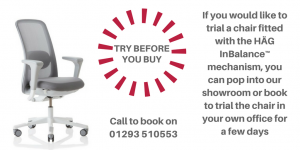
 HAG SoFi Mesh InBalance Mechanism Try Before You Buy

      [yikes-mailchimp form="1" title="1" description="1" submit="Sign Up"]
workplace-design

Workplace Design and Ergonomics and How They Can Reduce Employee Stress

On National Stress Awareness Day, we take a look at the importance of workplace design and ergonomics on the reduction of employee stress, fatigue, illness and absenteeism.

  According to Beautyman (2006), businesses that ignore the design and layout of their workplaces are failing to optimise the full value of their human capital. This is echoed by Amble (2005) who points out that poor workplace design is linked to lower business performance and a higher level of stress experienced by employees. Research by the Industrial Society in London suggests that many employers are beginning to take notice of the impact of stress on their businesses and see it as a matter of urgency to improve their employee's working environments. 74% of surveyed employers predicted that employee stress would become their greatest health and safety concern in the next few years, with 53% stating that this is an issue which employers should address proactively.

With this in mind, what is it that can be done to create a comfortable, productive working environment that provides a reliable ROI?

Looking at the balance of privacy and co-working spaces is a good place to start in catering to an array of personality types, fluctuations in employee moods and the levels of productivity required from employees. According to Monroe (1999), physical environments that foster creativity and interaction, whether in conference areas or in "casual collisions" in corridors or break areas, is important for building rapport and support networks, as well as improving communication and problem solving. Following on from this, Asirvatham (1999) and Umlauf-Garneau (2001), predicted that future offices will consist of very few fixed walls and will see an increase in mobile furniture, more laptops and a generous distribution of data and power outlets, allowing employees to choose their working space in order to reach their maximum productivity.

So, how is a well balanced workplace design that caters to a range of personalities and requirements reached?

Wallace (2001) predicted that the office cubicle will not be something that we see disappear, but instead, redesigned to reach a concept that allows for better acoustics and accessibility, leaving the onus for creating complete privacy on separate sound proofed rooms available for access on an as-and-when-basis. A good example of the type of "cubicle" that has been redesigned for the modern office is the Den range sold on our website. Available in a range of shapes and sizes and with great acoustics, Den is a flexible and dynamic solution to the classic, more restrictive cubicle. With this in mind, it is important to also factor in parts of office design that aren't always immediately obvious, such as aforementioned acoustics and types of lighting. Hower (1995), reports that high noise levels can cause irritation, increase stress and reduce productivity, whilst Smith (2001) reported that employees who are constantly working in a noisy environment show higher levels of adrenaline which, in turn, decreases their productivity and in some cases adds to absenteeism. Frank (2000) points out that lighting is a critical element in creating a comfortable working environment and that lower lighting levels, rather than fluorescent tubing, boosts productivity, although in these situations employees should be provided with individual task lighting which can be adjusted accordingly. Hower (1995), explains why lighting has such an impact on productivity with light levels affecting the endocrine system, cardiac rhythm and "the body clock". He goes on to add that lower levels of lighting increase memory function and focus, whilst daylight improves mood. According to a survey by Steelcase Workplace Index, 86% of participants stated that poor lighting caused them some form of discomfort i.e, headaches and watery eyes. According to the same survey, proper lighting would increase efficiency for 3 out of 4 of the participants. Lighting and acoustics, whilst essential in achieving a good ROI from your office refurbishment, are tricky areas of office design to get right. It is best to consult with your designer early on in the process in order to get these fundamentals correct from the start.

Now we've covered some of the larger aspects of a productive workplace, let's cover one of the essentials which is often over looked - ergonomics.

According to the Work Related Musculoskeletal Disorder Statistics (WRMSD) report by HSE for Great Britain 2016, the total number of WRMSDs in 2015/16 was 539,000 out of a total 1,311,000 for all work related illnesses, a total of 41%. An estimated 8.8 million working days were lost to WRMSDs, making an average of 16 sick days per case. A breakdown of the total days lost to WRMSDs shows that 36% were due to upper limb disorders, 39% to problems with the back and 26% to lower limb disorders. These sick days put a huge strain on a company's productivity and financially they take a toll with paid sick leave and any healthcare costs if included in an employee's benefit package. However, many of these cases can be avoided with investment in a simple ergonomics program. Offering staff the right ergonomics equipment such as a height adjustable desk, ergonomic chair and other accessories such as wrist rests can seem like a costly outlay. In many cases though, when the cost of sick days and health care and the decline in productivity is calculated against the cost of this equipment - much of which lasts for many years - it actually presents a huge saving. It's not just in preventing the sick days that ergonomics can help boost productivity either. Proper ergonomics can boost concentration, memory and mood which helps to make the employee more efficient during their working day.

If you are confused as to where to start with ergonomics, you can find an array of videos on our website to help you adjust your existing chair or guide you in choosing a new chair to suit your needs. We also offer a range of desks and accessories which all fit within a good ergonomics strategy for your business. With over 20 year's experience our advisors can help you to choose the right furniture for you ergonomics plan, as well as designing your office to help you get the most out of your staff and your investment in your workplace.

  [yikes-mailchimp form="1" title="1" description="1" submit="Sign Up"]

SIT STAND DESKS; WHAT ARE THE BENEFITS AND WILL THEY BECOME THE NORM?

DR MIKE LOOSEMOORE (LEAD CONSULTANT IN EXERCISE MEDICINE AT THE INSTITUTE OF SPORT, EXERCISE AND HEALTH) CLAIMS THAT STANDING FOR THREE HOURS A DAY IS AS GOOD FOR YOU AS RUNNING TEN MARATHONS PER YEAR. DOESN’T SOUND TOO ARDUOUS, RIGHT? BUT WHAT CAN YOU DO IF YOUR JOB OR DAILY ROUTINE REQUIRES YOU TO BE AT A DESK FOR THE DURATION OF YOUR DAY?

We’ve long known that standing for long periods of time has damaging effects on your health resulting in conditions such as varicose veins, lower back pain and disorders and an increased risk of stroke. However, it is only in more recent years that the effects of sitting for prolonged periods have been found to be just as, if not more, damaging than standing. Even going to the gym and working out intensely each day after work (no, thanks) doesn’t offset the damage that sitting during the day has done to your body. Plus, sitting burns a measly, one calorie per minute, so those Malteasers that “aren’t so bad for you” will take it out of you trying to burn them off at the gym. But the weight isn’t all there is to worry about. When you sit for prolonged periods of the day (this is including driving to and from work, watching television, eating dinner etc.), your good cholesterol is lowered, your metabolism slows, insulin becomes less effective and the likelihood of heart disease and type 2 Diabetes increase. So what are you supposed to do if both sitting and standing becomes damaging after extended periods? Cue the sit/stand desk. Many companies are now aware of the effect of good, and indeed, bad health on the morale and productivity of staff, and staff themselves are aware of the effects that certain working situations can have on their body and are beginning to demand the aids that they need to counteract these effects. Sit/stand desks come in a variety of forms either manual, if you really want to stretch your office workout, or electric for ease of use. The introduction of these desks means that users have the option of how to work based on their own preferences and comfort, medical history and informed choice as to the effects of each position. It is recommended that for every hour a person spends sitting,  they should spend a minimum of ten minutes standing. If standing for longer, most find it comfortable to raise one leg and rest their foot on a stool or something similar to relieve pressure from their feet and legs alternately. However, just as an ergonomically designed chair will never see it’s user reap its full benefits if they have not received correct training in how and when to adjust the chair, height adjustable desks are of no use unless the set-up comes with more than just an assemble and plug-in job. Those installing the desks, such as us at Wave Office, should understand the benefits of sit/stand desks and how they should be used by individuals depending on their circumstance. There are also many applications and software that can help people to get into the habit of standing and sitting at appropriate times based on the type of work that they are carrying out and the time they have spent in a particular position. Check these out if you’re unsure where to start: Even without this software, it’s easy to set a simple alarm on your phone or PC that can remind you when your allocated sitting or standing time is up and it’s time to change. What are your views? Do you think height adjustable or sit/stand desks will become common place in office based professions, or even beyond?
Product has been added to your cart