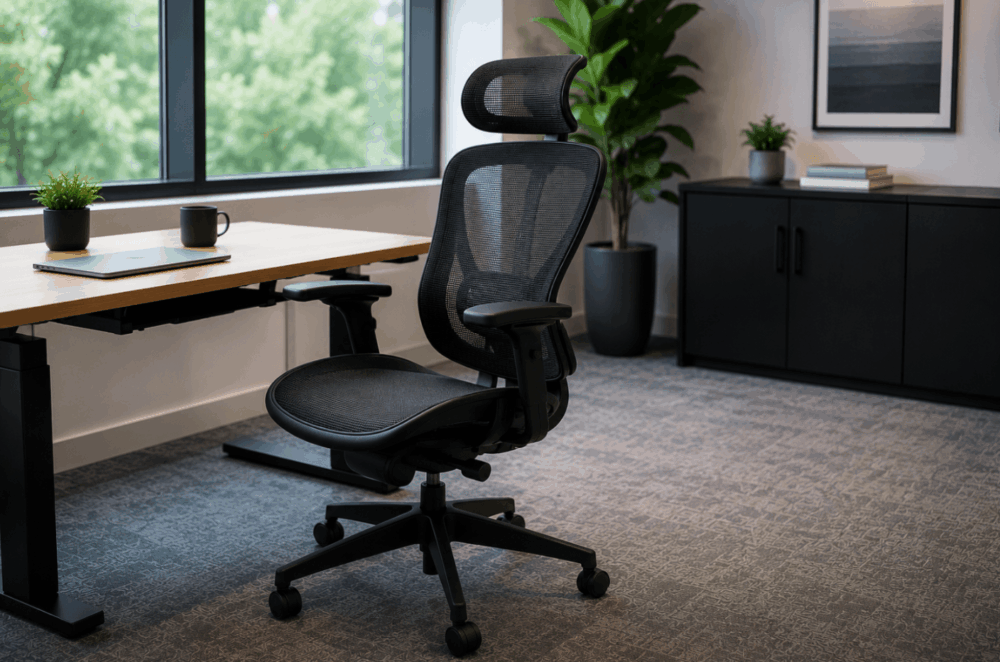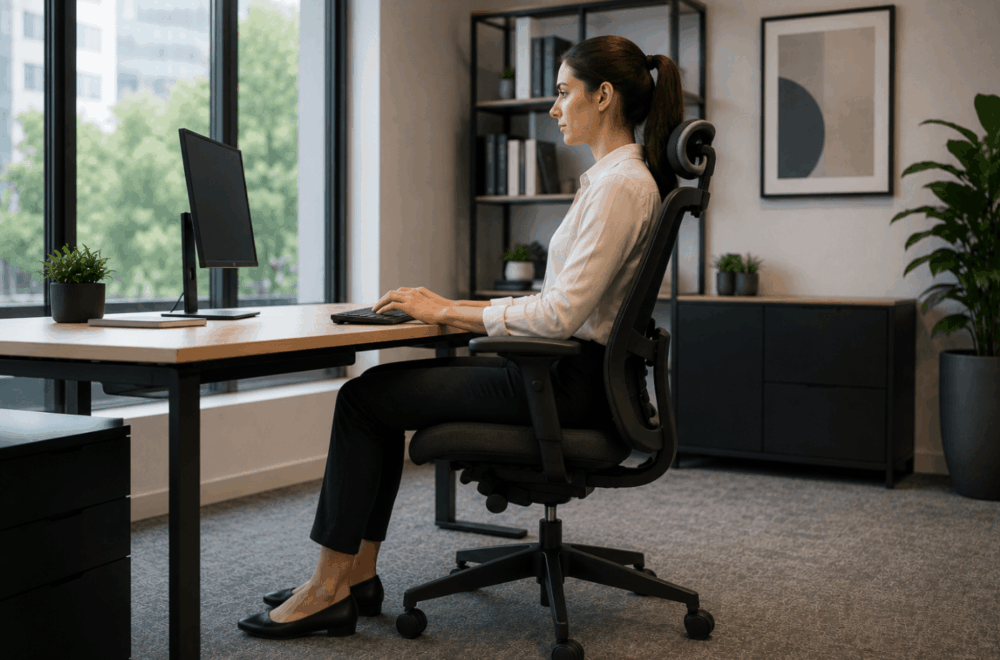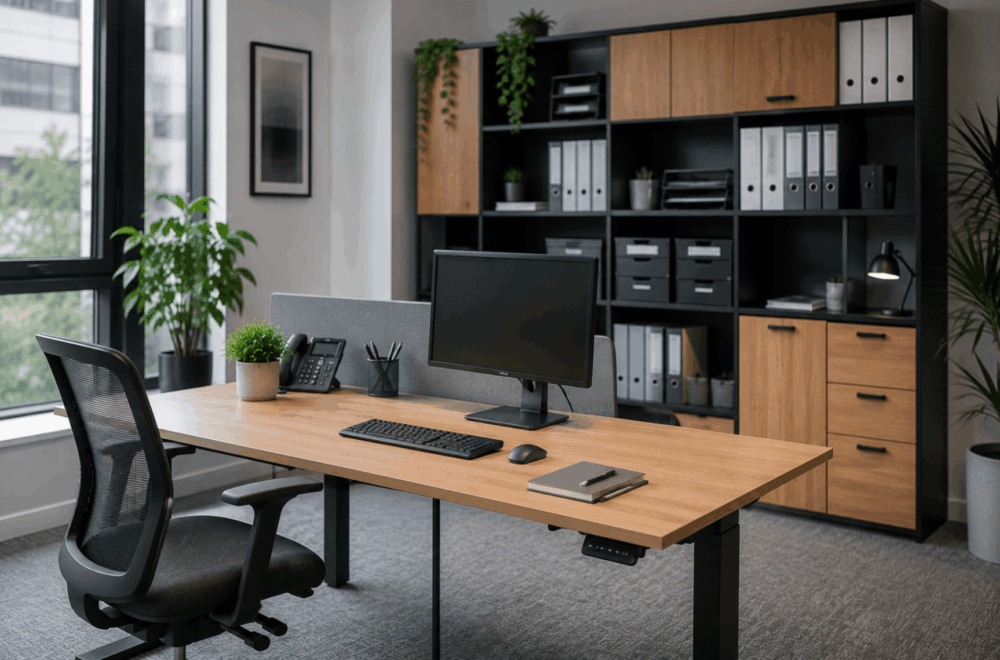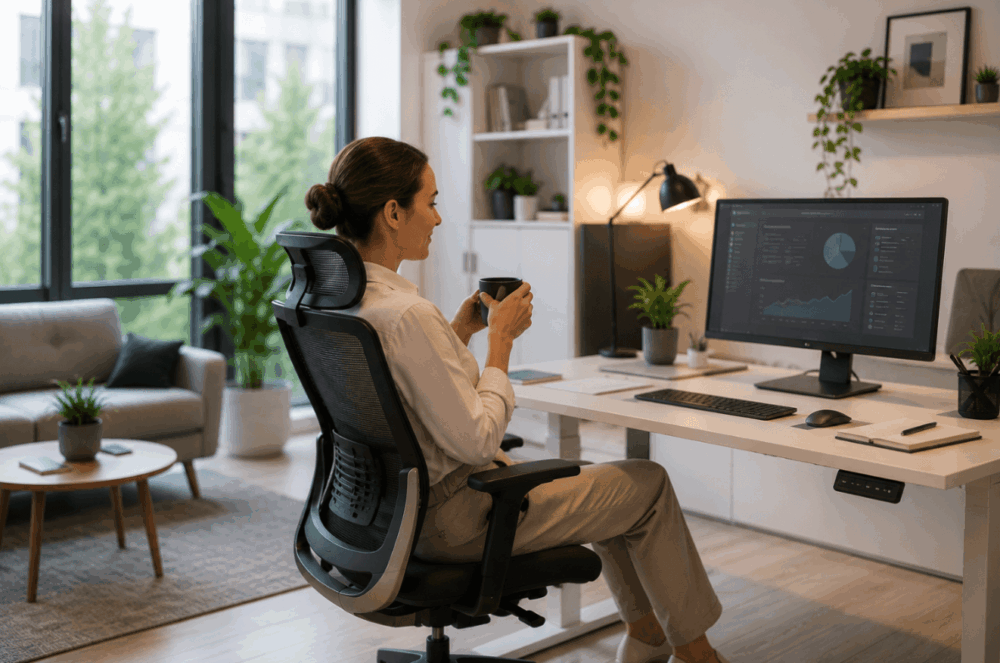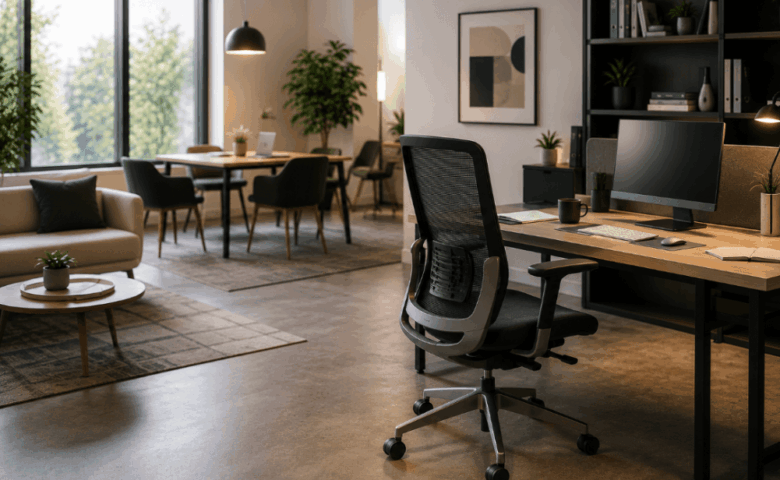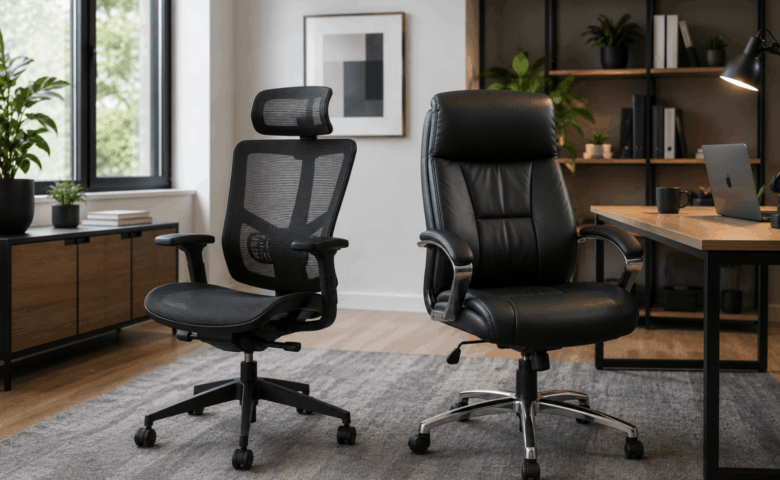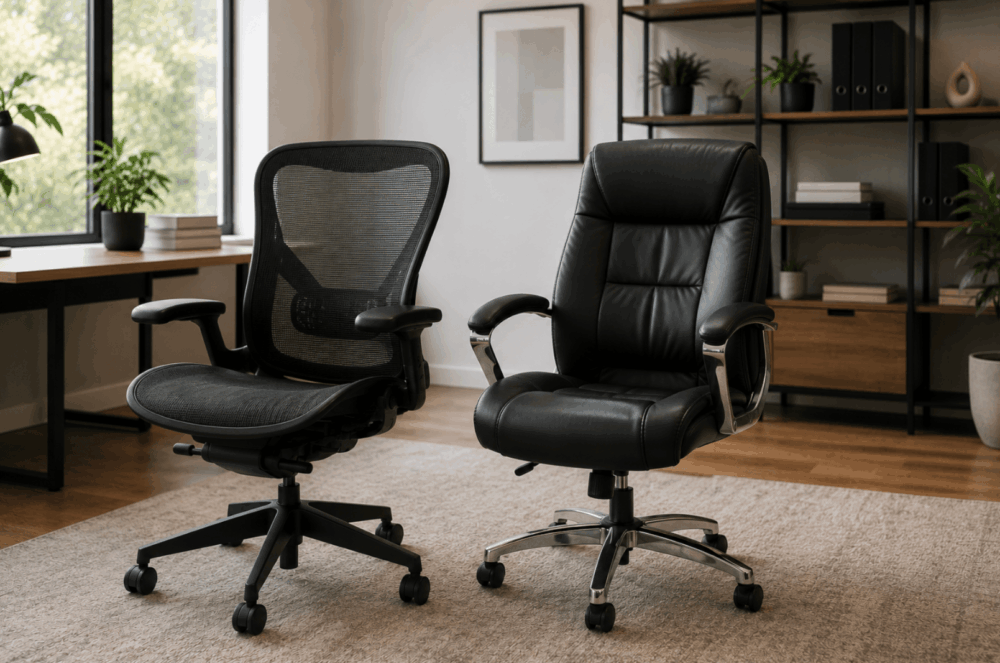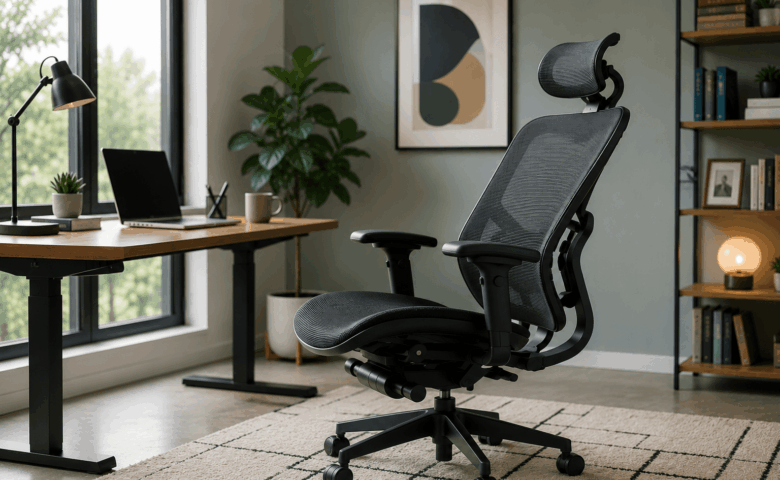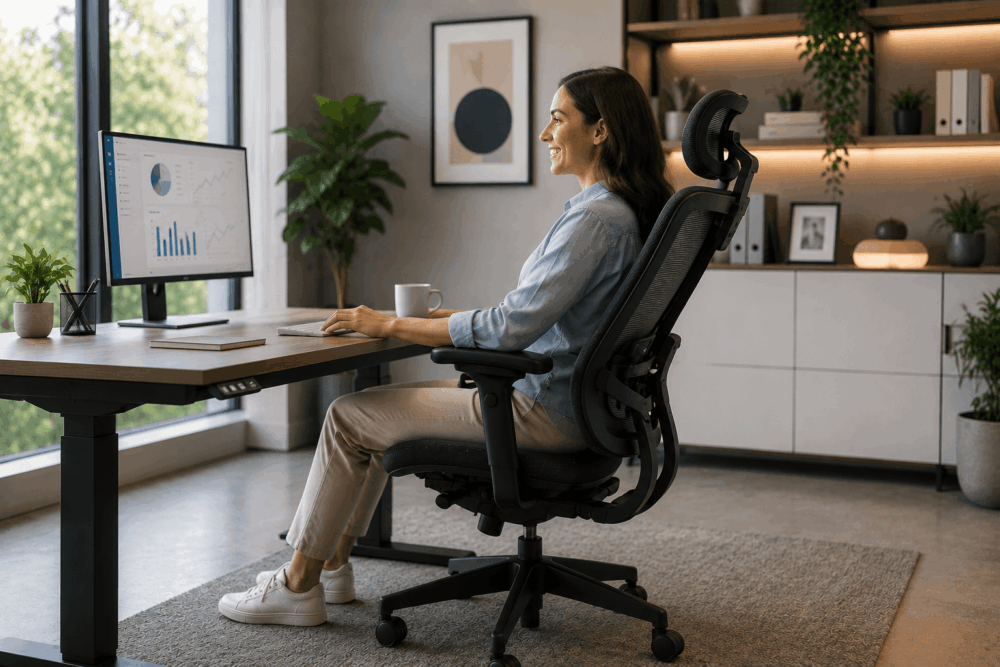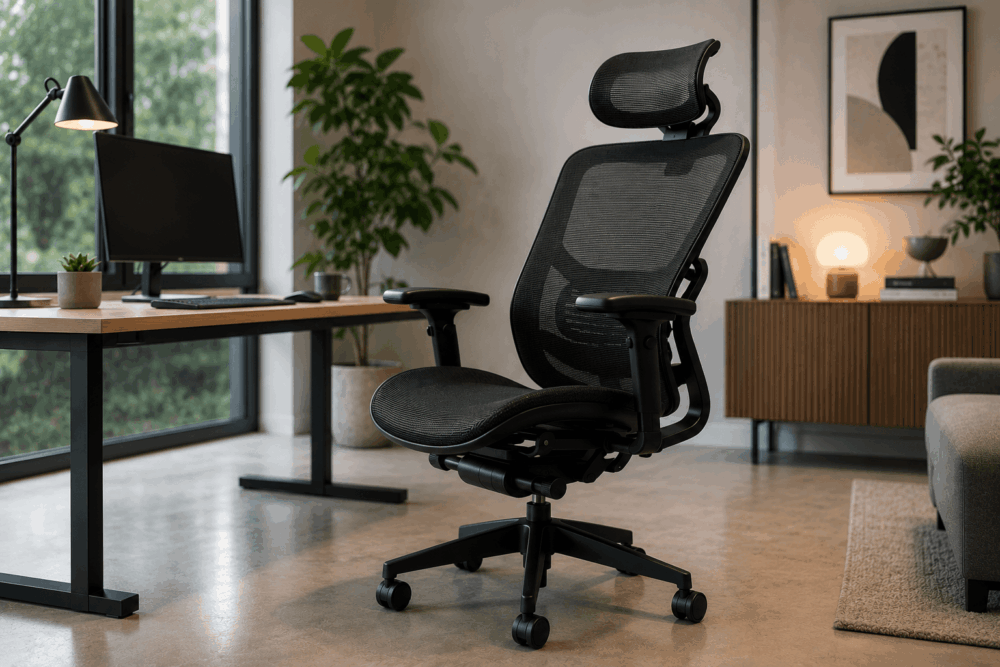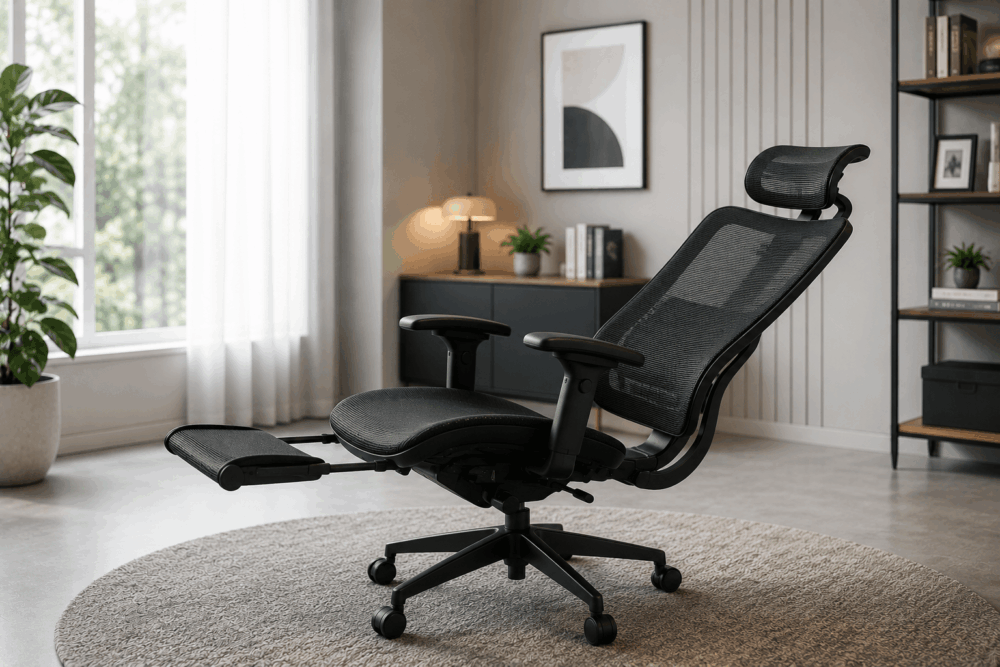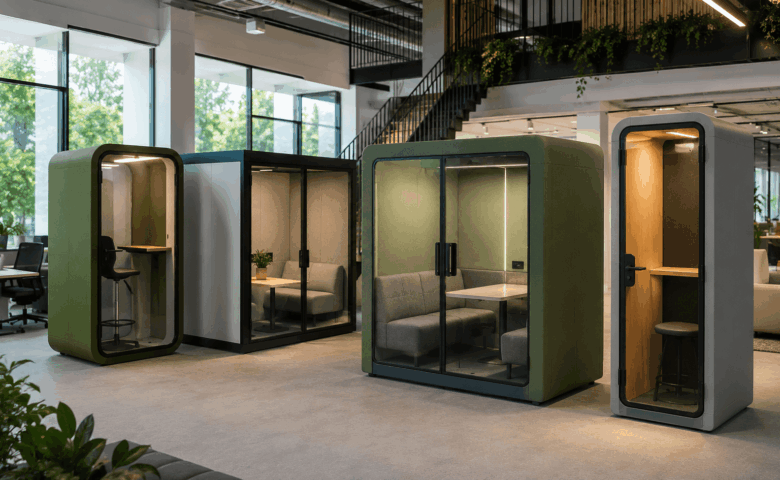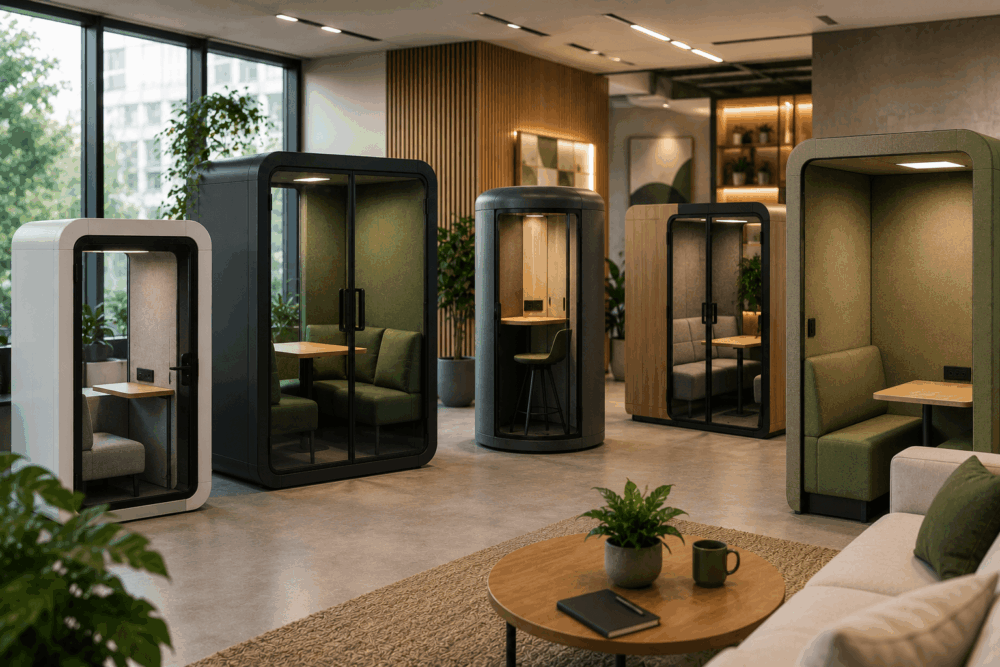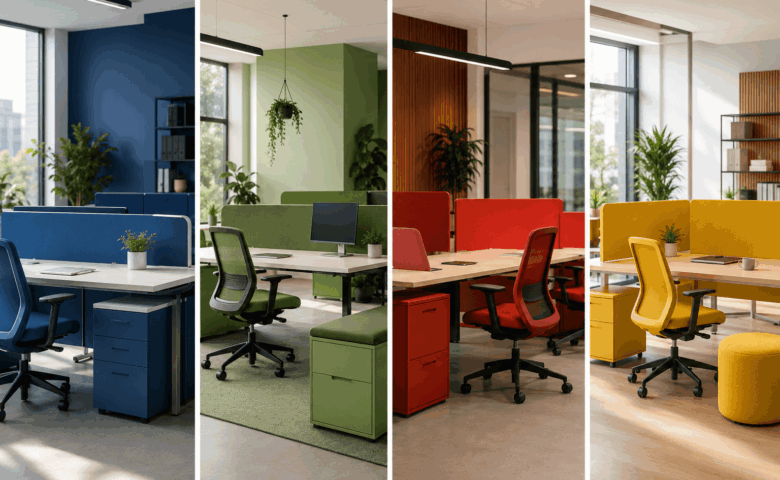
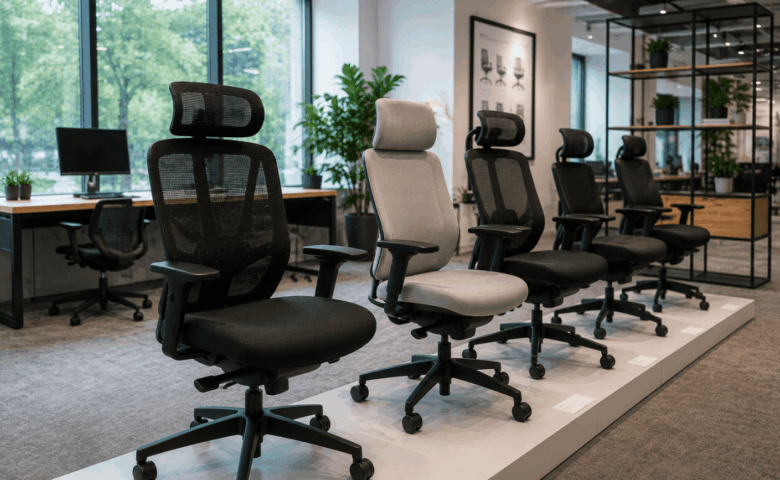
Office chairs are often used for years without much thought, yet they play a central role in how people work each day. Over time, support tends to decline, even if the change is not immediately obvious. This can affect posture, comfort, and overall performance in ways that build gradually.
Knowing when to replace office chair setups is not always straightforward. Small signs are often overlooked until discomfort becomes part of the routine. For businesses, this can impact focus, productivity, and even how the workspace is perceived by visitors.
This guide outlines five clear reasons to consider an office chair upgrade, helping you recognise when it may be time to buy new office chairoptions that better support your team and environment.
1. Your Current Chair No Longer Supports Good Posture
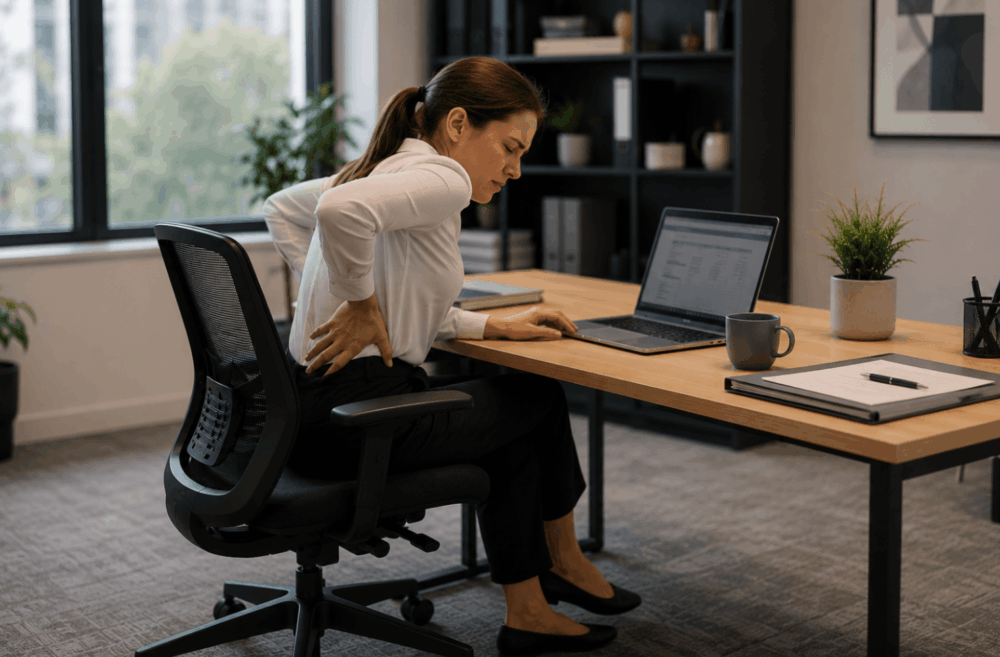
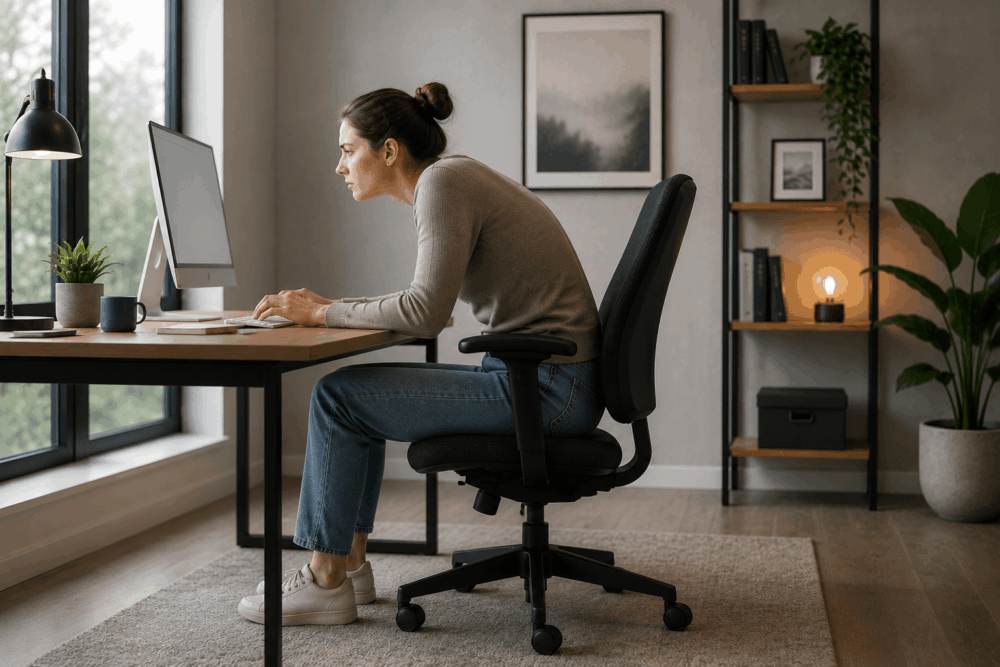
One of the clearest signs that it is time to replace your office chair setups is a noticeable change in posture. Users may find themselves leaning forward, adjusting frequently, or struggling to stay in a stable position throughout the day.
Older chairs often lack the adjustability needed to support different body types. Limited lumbar support or fixed settings can lead to strain across the lower back, shoulders, and neck. These issues tend to develop gradually, making them easy to ignore at first.
A chair designed for proper workplace seating ergonomics allows users to maintain a more neutral sitting position. This reduces pressure on key areas and supports better alignment over longer periods.
2. Your Team Is Struggling With Comfort During The Working Day
Discomfort in the workplace rarely appears as a single issue. It often shows through small behaviours such as frequent movement, short breaks, or difficulty staying focused on tasks.
When seating does not provide adequate support, fatigue can build earlier in the day. This can affect concentration, decision-making, and overall output. Over time, it may also influence morale if employees feel their working environment is not meeting basic comfort needs.
Improving office comfort can have a direct impact on performance. A well-designed chair allows users to stay engaged with their work for longer, reducing unnecessary interruptions. For many businesses, this is one of the more practical reasons to consider an office chair upgrade.
3. Your Office Chair Is Worn Out Or Damaged
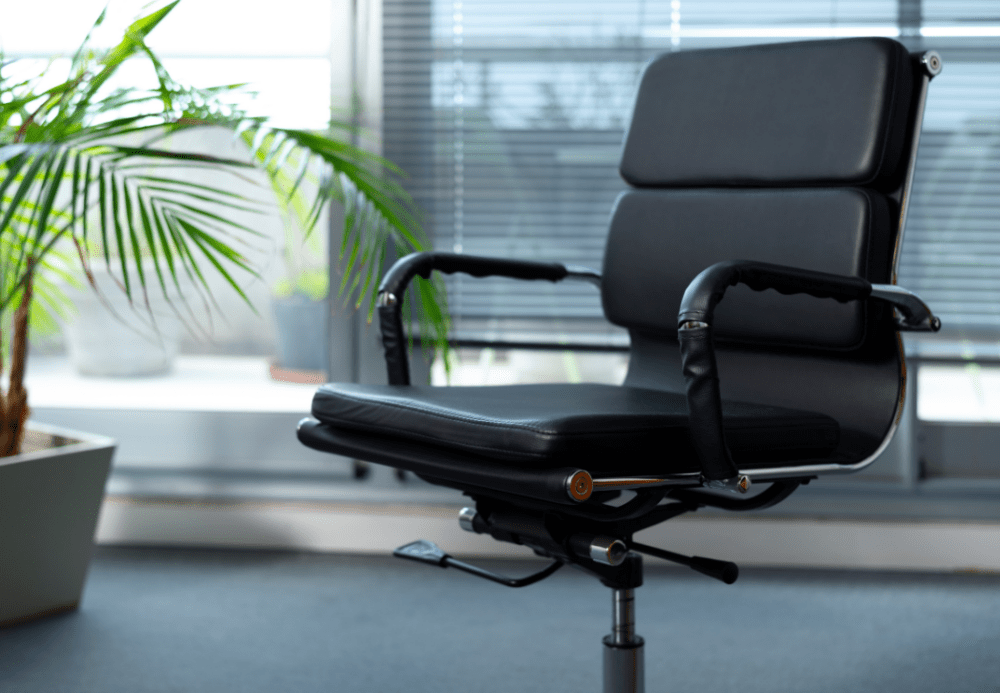
Physical wear is one of the most visible signs that a chair has reached the end of its lifespan. Seat padding may flatten, fabrics can show damage, and adjustment mechanisms may stop working as intended.
These issues affect more than appearance. Reduced support and limited functionality can make chairs less effective for daily use. In some cases, damaged components may also introduce safety concerns, particularly in busy office environments.
Common signs include:
Flattened or uneven seat cushioning
Faulty height or tilt adjustments
Loose or unstable armrests
Visible wear across fabric or structure
Replacing worn seating is not only about comfort. It also helps maintain safety standards and supports a more consistent workplace setup.
4. Your Workspace Needs Better Style And Professional Appeal
Office seating plays a visible role in how a workspace is perceived. Chairs that are outdated, mismatched, or worn can make the environment feel neglected, even if other areas are well-maintained.
A consistent approach to office seating solutions helps create a more cohesive and organised space. This is particularly relevant in client-facing areas, where first impressions are formed quickly.
Updating seating can support a more professional office design without requiring a full refurbishment. For growing businesses, this can help align the workspace with brand identity and create a more considered overall appearance.
5. A Better Office Chair Can Improve Productivity
The connection between comfort and productivity is often underestimated. When a chair supports the body properly, it becomes easier to maintain focus and complete tasks without distraction.
Discomfort can interrupt workflow in subtle ways. Frequent adjustments, short breaks, or reduced concentration can all affect how efficiently work is completed. Addressing these issues through better seating can lead to more consistent performance.
Ergonomic office chair benefits extend beyond basic comfort. They support posture, reduce strain, and create a more stable working position. For businesses looking to improve output, upgrading seating can be a straightforward and effective step.
How Upgrading Your Office Chair Can Benefit Your Business
An office chair upgrade brings together several practical benefits across comfort, productivity, and workplace presentation. Employees gain improved support, which can help reduce strain and support more consistent performance throughout the day.
From a business perspective, investing in better seating can offer long-term value. Higher-quality chairs tend to last longer and perform more reliably, reducing the need for frequent replacements. This can make them a more cost-effective option over time.
Improved seating may also contribute to fewer complaints related to discomfort, supporting overall workplace satisfaction. In addition, a well-maintained environment can positively influence how the business is perceived by clients and visitors.If you are looking to buy new office chair options, exploring our range of our office chairs can help you identify solutions that match your needs. For more specific guidance, contact usand speak to our specialist team here at Wave Office for support with more tailored decisions.
Questions around office chairs and spine health often centre on posture, comfort, and long-term impact. Reclining office chairs introduce a slightly different consideration. While some assume leaning back reduces strain, others associate it with poor sitting habits.
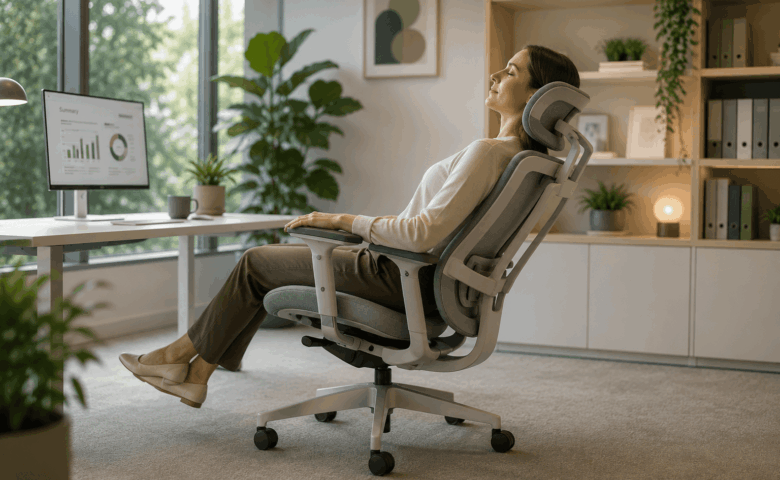
In practice, the answer sits between the two. A reclining office chair can support the spine when used correctly, though it does not replace proper setup or posture. The way the chair is adjusted and used tends to matter more than the recline function itself.
This guide explains how reclining works, where it can support spinal health, and what to consider when choosing an ergonomic office chair.
What A Reclining Office Chair Is Designed To Do
A reclining office chair allows the backrest to tilt backwards, giving users the option to move away from a fixed upright position. This movement is controlled through mechanisms such as tilt, synchro tilt, and lock systems, each offering a different level of support and flexibility.
The purpose is not to promote constant reclining. Instead, it introduces controlled movement into the working day. Remaining in one static position for extended periods can increase pressure on the spine, particularly in the lower back.
Reclining chairs are designed to support natural shifts in posture. This flexibility helps reduce the strain associated with rigid seating and allows the user to adjust position as tasks change throughout the day.
How Reclining Can Support The Spine
When used correctly, a reclining office chair can contribute to better spine support in several ways:
Reduces pressure on the lower back compared to prolonged upright sitting
Distributes body weight more evenly between the seat and backrest
Supports the natural curve of the spine when lumbar support is properly adjusted
Provides variation in seating position, which can improve overall comfort during long periods at a desk
The benefit comes from movement rather than the reclined position alone. Chairs that allow controlled adjustments tend to support spinal health more effectively than fixed designs.
When A Reclining Office Chair Can Be Beneficial
Reclining office chair benefits are most noticeable in environments where posture can vary throughout the day.
They may be particularly useful for:
Long desk-based roles where fatigue builds gradually in the lower back and shoulders
Tasks such as reading, reviewing documents, or video calls, where a slightly reclined position feels more natural
Users experiencing mild discomfort linked to static sitting positions
Hybrid working setups where ergonomic consistency is harder to maintain
Roles that allow flexibility in posture rather than constant forward-facing screen work
In these situations, the ability to shift position can help reduce the impact of prolonged sitting.
Why Posture Still Matters When Using A Reclining Chair
Reclining does not remove the need for proper posture. The spine still relies on structured support, particularly in the lumbar region.
Without adequate adjustment, the body may fall into a slouched position, which can increase strain rather than reduce it. A reclining chair should support alignment, not replace it.
Key considerations include:
Keeping feet flat on the floor
Maintaining a comfortable knee angle
Aligning the screen with natural eye level
Adjusting lumbar support to match the curve of the lower back
Poor positioning, even in a high-quality chair, can lead to tension in the neck and shoulders. For this reason, posture remains central to any ergonomic seating setup.
Features To Look For In A Supportive Reclining Office Chair
Not all reclining chairs offer the same level of ergonomic office chair support. The quality of adjustability plays a significant role in how well the chair supports the spine.
Features to look for include:
Adjustable lumbar support to maintain lower back alignment
Seat height and depth controls to suit different body types
Tilt tension and lock settings for controlled reclining
Headrest support to maintain neck positioning during recline
Durable materials that provide consistent support over time
An adjustable office chair in the UK market should offer flexibility across these areas, rather than relying on a single fixed position.
Common Mistakes That Can Reduce Spinal Support
Even the best office chair for back pain can fall short if it is not used correctly.
Common issues include:
Remaining fully reclined for long periods
Poor desk or screen positioning leading to neck strain
Limited adjustability that prevents proper setup
Ignoring individual comfort and body differences
These factors can reduce the effectiveness of any ergonomic seating solution, regardless of design.
Reclining Office Chairs Compared With Standard Office Chairs
Reclining office chairs offer greater flexibility than standard fixed designs. This allows users to adjust posture throughout the day, which can help reduce discomfort linked to static sitting.
Standard office chairs tend to support a more upright position, which suits task-focused work that requires consistent screen engagement.
Each option serves a different purpose:
Reclining chairs support movement and variation
Standard chairs provide stability for focused tasks
Choosing between them depends on how the chair will be used, rather than a single definition of what works best.
How To Use A Reclining Office Chair Properly At Work
To get the most from a spine support office chair, correct setup is essential:
Adjust seat height, depth, and lumbar support to fit the user
Use the recline function intermittently rather than continuously
Keep the desk and screen aligned with eye level
Change posture regularly to support circulation and reduce stiffness
Consistent adjustment tends to deliver better long-term comfort than relying on one fixed position.
Who May Benefit Most From A Reclining Office Chair
Reclining chairs are typically suited to individuals who spend extended periods seated and can vary their posture throughout the day.
They may be particularly relevant for:
Office workers with long sedentary hours
Users experiencing mild back discomfort
Roles involving calls, reading, or flexible workflows
In more fixed workstation environments, a standard ergonomic office chair may be more appropriate.
Choosing A Reclining Office Chair For Comfort And Back Support
Selecting the right chair depends on how it will be used. Features such as adjustability, lumbar support, and controlled recline tend to have a greater impact than appearance.
Testing a chair before purchase can provide a clearer sense of how it performs over time. Durability is also worth considering, particularly in busy office environments.Exploring our range of office chairs can help identify suitable options based on different workspace needs. For more specific guidance, contact usand speak to our specialist team here at Wave Office for support with more tailored decisions.
Walk through most modern offices, and you'll see the same challenge appearing in different forms.
Somebody is taking a Teams call at their desk because every meeting room is occupied. A manager is trying to have a confidential conversation in a breakout area. A project team has gathered around a table only to be interrupted by noise from the surrounding workspace.
Open-plan offices have delivered many benefits over the years, but privacy is rarely one of them.
At the same time, many organisations have reduced their office footprint, introduced hybrid working policies, and changed the way their workspace is used. While these changes have increased flexibility, they have also created greater pressure on meeting rooms, quiet spaces and collaboration areas.
This is where office pods can help.
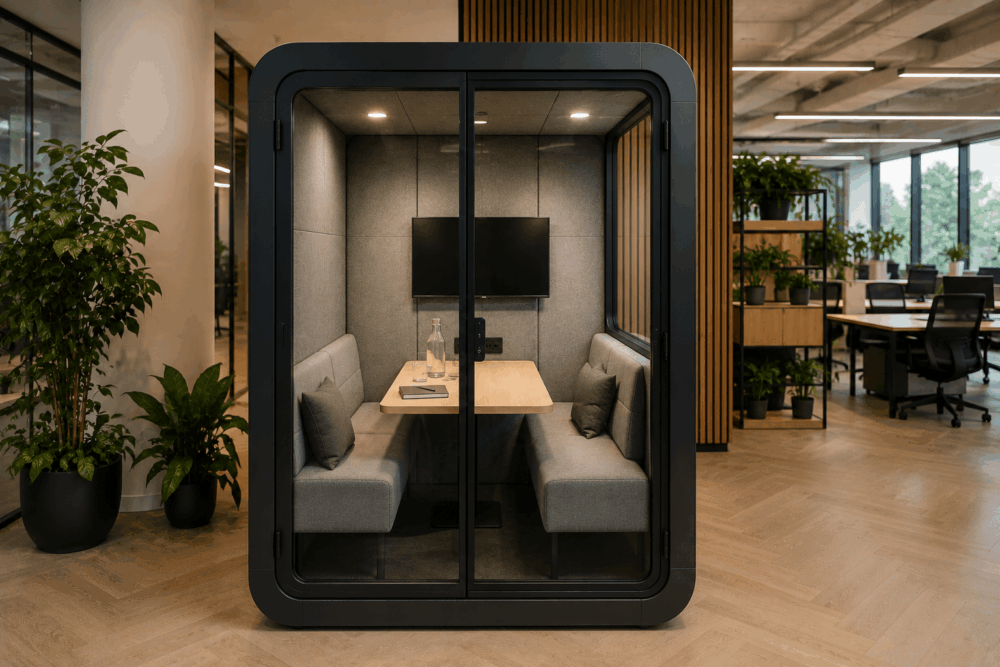
The challenge is that "office pod" now covers everything from a single-person phone booth to a fully enclosed modular meeting room. Choosing the wrong type can leave you with an expensive solution that doesn't solve the problem you were trying to address in the first place.
At Wave Office, conversations about office pods rarely start with products. They usually start with questions.
How many people need the space?
What activities will take place there?
Is the challenge privacy, noise, lack of meeting rooms, or all three?
The answers often lead to very different recommendations.
This guide looks at ten office pod solutions and the workplace challenges they are designed to solve, helping you identify which option may be the best fit for your organisation.
What Should You Look for When Choosing an Office Pod?
The best office pod depends less on features and more on how people will actually use it.
A beautifully designed booth can still be the wrong choice if it doesn't support the way your team works.
Before looking at products, consider:
How many people need access each day?
Will it mainly be used for calls, meetings or focused work?
How much floor space is available?
Are you solving a privacy problem or a meeting room shortage?
Is the office likely to change over the next few years?
The answers will usually narrow down your options very quickly.
The Biggest Mistakes Businesses Make When Buying Office Pods
Choosing a Product Before Identifying the Problem
One of the most common mistakes is starting with a product rather than a workplace challenge.
A business looking for additional meeting space may initially focus on phone booths. A company struggling with noise might assume it needs a large meeting pod when individual focus booths would solve the issue more effectively.
Underestimating Demand
A single booth often seems sufficient during the planning stage. Then it becomes the most popular space in the office.
In hybrid workplaces where Teams calls and video meetings are common, demand for private space is often higher than organisations expect.
Assuming Every Acoustic Pod Performs the Same Way
Different products provide different levels of privacy, enclosure and acoustic performance.
A partially enclosed collaboration booth serves a very different purpose to a fully enclosed meeting room pod.
Focusing Only on Today
It’s important to remember that office layouts evolve, teams grow, working patterns change; business never sleeps and how your space handles that matters.
Some organisations benefit from choosing solutions that can adapt alongside the business rather than solving a short-term requirement.
1. The Bob Office Privacy Booth: When One Space Needs to Do More Than One Job
Rather than being designed around a single activity, The Bob can support focused work, private conversations and informal collaboration depending on the configuration selected.
Available in two, four and six-person layouts, The Bob combines upholstered acoustic walls with integrated tables and optional additions such as lighting, ventilation and glass doors.
What makes The Bob particularly interesting is its flexibility.
Many organisations are still learning how employees use the workplace following changes to hybrid working patterns. A booth that supports multiple activities can often deliver more long-term value than a highly specialised solution.
The Bob is well-suited to organisations looking for adaptable workplace space without moving towards larger modular room systems.
2. The Bea Acoustic Meeting Booth: Designed for Informal Collaboration
Not every meeting requires a formal boardroom.
The Bea Acoustic Meeting Booth is designed around a more relaxed style of collaboration, combining deep cushioned seating with a distinctive pitched roof design that creates a comfortable, den-like environment.
This makes The Bea particularly suitable for:
Project discussions
Informal catch-ups
One-to-one meetings
Hybrid collaboration sessions
Where traditional meeting rooms can sometimes feel formal and underused, The Bea creates a space people are more likely to use naturally throughout the day.
For businesses looking to encourage spontaneous collaboration without introducing additional meeting rooms, it offers an attractive middle ground.
3. The Bill Meeting Pod: Creating Privacy Within Busy Offices
While The Bea focuses on collaboration, The Bill Meeting Pod leans more towards privacy.
Its angular design, upholstered structure and optional glass door help create a dedicated environment for conversations that need greater separation from surrounding workplace activity.
The Bill is often a strong choice for:
Management discussions
HR meetings
Client conversations
Interview spaces
Video meetings
In many open-plan offices, confidential conversations become difficult simply because there is nowhere suitable to have them.
The Bill addresses that challenge without requiring permanent construction or dedicated meeting rooms.
4. The Solus Acoustic Office Pod: The Most Adaptable Option in the Collection
If you're unsure how workplace requirements might evolve over the next few years, The Solus Acoustic Office Poddeserves serious consideration.
Unlike many products that serve a single purpose, The Solus is available as:
A phone booth
An individual work pod
A private office pod
Two-person meeting pods
Four-person meeting pods
That flexibility makes it one of the most adaptable solutions available.
The Solus is particularly well suited to organisations embracing hybrid working, activity-based working or flexible office layouts.
Integrated lighting, ventilation and optional power connectivity support longer periods of use, while the variety of configurations allows organisations to create a consistent look across multiple workspace types.
For businesses still defining how their office will be used in the future, The Solus offers a level of adaptability that few alternatives can match.
5. The Bob Rooms: When a Booth Isn't Enough
There comes a point where adding another booth no longer solves the problem.
If meeting rooms are constantly booked, teams struggle to find enclosed spaces and larger discussions regularly spill into open-plan areas, the issue may not be privacy. It may be a shortage of rooms.
Available in depths from 1200mm through to 4800mm, The Bob Rooms create fully enclosed modular spaces without the disruption associated with traditional construction.
Unlike standard office booths, they are designed to function as genuine rooms.
Businesses can configure panel layouts, glazing, furniture arrangements and technology integration to create spaces that support:
Team meetings
Training sessions
Project rooms
Client presentations
Larger collaboration sessions
For organisations that have outgrown smaller pods, The Bob Rooms can provide a practical alternative to permanent building work.
6. Connection Rooms: Reimagining How Space Is Used
Connection Rooms solve a slightly different challenge.
While The Bob Rooms create enclosed destinations, Connection Roomsfocus on shaping the workplace itself.
Built around a modular post-and-beam system, Connection Rooms allow organisations to create meeting spaces, focus areas, breakout zones and collaborative environments without losing the openness of the wider office.
This makes them particularly appealing for:
Workplace refurbishments
Agile working environments
Growing businesses
Multi-functional office layouts
Rather than simply adding a room, Connection Rooms help define how space is organised.
For Facilities Managers planning long-term workplace flexibility, that distinction can be significant.
7. The Say Box Acoustic Booth: Built Around Frequent Calls
If employees spend a large portion of their day on calls, comfort becomes just as important as privacy.
Featuring upholstered acoustic panels, integrated ventilation, motion-activated lighting, USB charging and a perch table, it creates an environment that supports regular phone and video conversations throughout the day.
The premium design also makes it well-suited to customer-facing environments where appearance matters.
Sales teams, recruiters and customer service departments often generate the highest demand for individual booths. In those situations, creating a comfortable experience can make a meaningful difference to how frequently the space is used.
8. The Retreat Box: A Dedicated Space for Focus
Open-plan offices are excellent for collaboration.
They are not always ideal for concentration.
The Retreat Box is designed to provide a dedicated space for focused work, private calls and virtual meetings within a remarkably compact footprint.
At just 1000mm x 1000mm, it can fit into locations where larger pods may not be practical.
Integrated lighting, ventilation and power supply help support extended use, while the enclosed environment creates separation from surrounding distractions.
For organisations looking to introduce focus space without sacrificing large amounts of floor space, The Retreat Box offers a practical solution.
9. The Hana Compact Acoustic Booth: Privacy for Smaller Workplaces
Not every office has the space for larger acoustic pods.
Its compact footprint, plug-and-play installation and integrated power options make it particularly suitable for:
Smaller offices
Co-working spaces
Reception areas
Shared workplaces
The Hana also offers a straightforward user experience. Lighting and ventilation activate automatically, while integrated power and USB connectivity support modern working requirements.
For businesses looking to create private space quickly and efficiently, The Hana can be an attractive option.
10. The Session Pod Collection: One Range, Multiple Workplace Solutions
The Session Pod Collection is difficult to describe as a single product because it is really a family of workplace solutions.
The range includes:
Single-person phone booths
Two-person booths
Four-person collaboration pods
Six-person meeting booths
Glass-front enclosed pods
Accessible Session Rooms
This breadth makes Session particularly appealing for organisations seeking consistency across multiple workspace settings.
Rather than mixing products from different collections, businesses can create a coordinated environment using a single design language throughout the workplace.
With multiple roof styles, seating configurations, enclosed and open options, Session adapts to a wide variety of workplace requirements.
For larger organisations planning multiple collaboration zones, breakout spaces and meeting areas, few collections offer the same level of flexibility.
Which Office Pod Is Right for Your Workplace?
The right office pod depends on the challenge you're trying to solve.
If your workplace needs...
Consider...
Private calls and video meetings
The Say Box, The Retreat Box, The Hana
Focused individual work
The Retreat Box, The Hana, The Solus
Informal collaboration
The Bea, The Bob
Private meetings
The Bill, The Bob
Flexible workplace layouts
The Solus, Connection Rooms
Additional meeting rooms
The Bob Rooms
Consistency across multiple workspace types
The Session Pod Collection
Future adaptability
The Solus, Connection Rooms, Session
The best solution is rarely the largest booth or the most feature-rich product.
It is the one that aligns most closely with the way your people work.
Office pods have become an important part of modern workplace design because they address challenges that many traditional office layouts struggle to solve.
Whether the priority is focused work, confidential conversations, hybrid meetings or additional collaboration space, there is no single solution that suits every organisation.
The most successful projects start by understanding workplace behaviour, identifying where friction exists and selecting solutions that genuinely support the way people work.If you're exploring office pods and would like guidance on which solution best fits your workplace, why notcontact usand our Wave Office team can help you compare options, assess your available space and create a more effective environment for focus, collaboration and privacy.
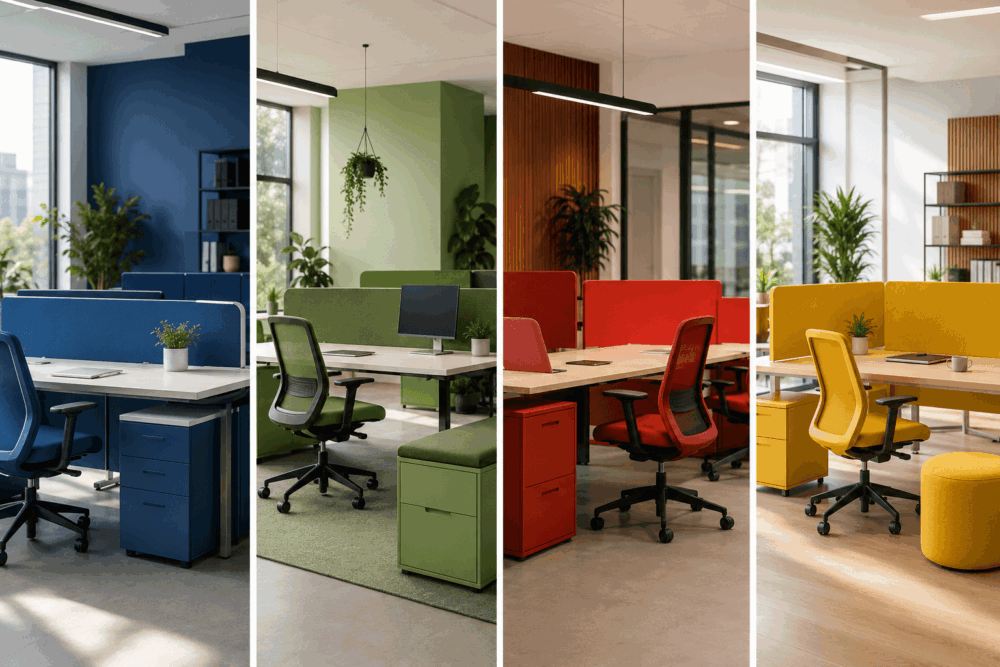
Walk into any workspace and the overall look tends to shape how the business is perceived almost immediately. Office design colour plays a key role in that first impression, influencing how people interpret professionalism, energy, and attention to detail.
Furniture often carries that visual weight more than expected. Office desks, storage, and shared areas create a consistent backdrop that people respond to, whether consciously or not. For businesses aiming to present a clear identity, these choices go beyond appearance.
This guide explores how different office furniture colours influence perception, mood, and brand identity, helping you make decisions that feel considered and aligned with how your business operates.
Why Office Furniture Colour Matters In The Workplace
Office colour psychology is closely linked to how people experience a workspace day to day. Colour can influence focus, energy levels, and overall comfort, often in subtle ways that build over time.
For employees, the environment tends to shape how easy it feels to concentrate or collaborate. A balanced colour scheme can support productivity, while poorly matched tones may create distraction or fatigue.
Visitors also respond quickly. The look of a workspace can suggest organisation, credibility, and consistency before any conversation begins. This makes office furniture colours a practical part of how a business presents itself.
Choosing colours with intent allows a workspace to reflect both brand identity and the way teams actually work, rather than feeling like a series of disconnected decisions.
Blue Office Furniture And What It Says About Your Business
Blue is widely associated with trust, consistency, and a steady approach to work. It is commonly used in corporate environments where reliability is a priority, such as finance or professional services.
The tone supports focus, which can make it easier for teams to settle into detailed tasks. Lighter shades tend to feel calm and open, while deeper tones introduce a more formal, structured impression.
As part of an office interior colour scheme, blue works well for businesses aiming to appear organised and dependable. Used in excess, it can feel slightly reserved, so it often benefits from contrast through materials or softer accents.
Grey Office Furniture And The Message It Creates
Grey provides a neutral and modern foundation, which is why it appears so often in contemporary workplace design ideas. It allows other elements within the space to stand out without competing for attention.
This flexibility makes grey suitable across a wide range of industries. It pairs easily with brighter colours, natural finishes, or softer textures, helping create a balanced and cohesive environment.
Without variation, it can feel flat or impersonal. Layering tones or introducing contrast tends to keep the space visually engaging while maintaining a professional appearance.
Black Office Furniture And A More Executive Feel
Black furniture introduces a sense of authority and structure, often associated with leadership spaces and client-facing environments. It can give a workspace a more established and confident presence.
In a professional office design, black is typically used to create contrast and depth. It works particularly well alongside lighter surfaces, helping define key areas without dominating the entire space.
If overused, it can make a room feel enclosed or heavy. Balancing it with lighter colours or natural materials helps maintain a more open and accessible atmosphere.
White Office Furniture And A Clean Modern Identity
White is often used in modern office design in the UK, where clarity and simplicity are part of the overall look. It creates a clean and open environment, which can make spaces feel larger and more organised.
It also reflects light effectively, supporting a brighter workspace that feels easier to navigate. This can be useful in smaller offices or areas with limited natural light.
White furniture adapts easily to different styles, whether paired with bold features or kept minimal. The main consideration is maintenance, as marks and wear tend to show more quickly over time.
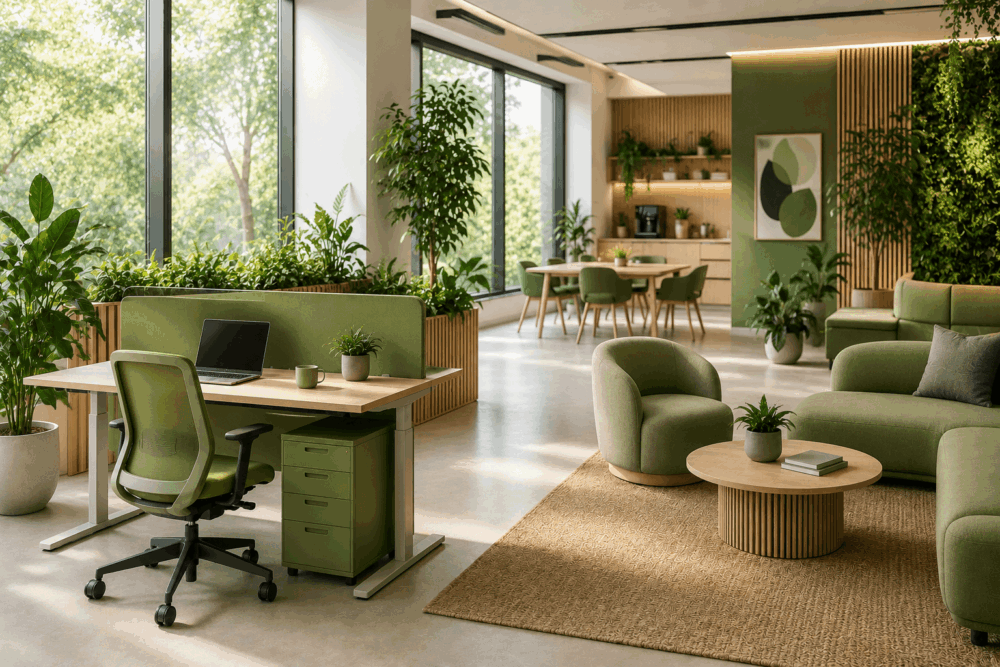
Green Office Furniture And A Focus On Balance And Wellbeing
Green is closely linked to balance and wellbeing, which is why it is becoming more visible in workplace design. It introduces a calmer atmosphere that can help reduce tension during longer working days.
Softer tones tend to feel more restorative, while deeper shades create a more grounded and stable environment. This makes green a useful option in collaborative or flexible workspaces.
As part of office space colour ideas, green supports a shift towards environments that feel more considered, rather than purely functional.
Wood Finish Office Furniture And A Warm Professional Look
Wood finishes bring warmth and familiarity into a workspace, helping it feel more approachable without losing structure. They sit comfortably between traditional and modern styles, which makes them widely applicable.
Natural tones can soften sharper design elements, creating a more balanced environment. This can be particularly useful in areas where client interaction takes place.
Different finishes allow for variation. Lighter woods tend to feel more open, while darker tones introduce a more formal edge, giving flexibility within a consistent design approach.
Bright Colour Office Furniture And A More Creative Brand Personality
Brighter colours tend to signal energy, creativity, and a more expressive working culture. They are often used in industries where collaboration and new ideas play a central role.
Used carefully, they can support engagement and make specific areas stand out. Rather than applying them across the entire office, a more controlled approach usually works better:
Accent seating in breakout areas
Feature pieces within collaborative zones
Selected workstations to introduce variation
This approach allows colour to support the environment without becoming distracting or overwhelming.
How To Choose Office Furniture Colours That Match Your Business
Choosing the right office design colour involves linking visual decisions to how the business operates day to day. It is not only about appearance, but how the space supports both employees and visitors.
A practical approach usually includes:
Aligning colours with brand identity and values
Considering how different areas are used throughout the day
Balancing visual appeal with durability and maintenance
Allowing flexibility for future changes
Keeping consistency across the workspace
For businesses reviewing layout alongside colour, exploring options such as office desks can help shape both function and appearance within the same decision. For more specific guidance, contact us and speak to our specialist team here at Wave Office for support with more tailored decisions.
Small businesses tend to face a familiar set of challenges around office space. Teams grow, equipment builds up, and before long, the workspace feels tight, cluttered, and harder to manage day to day.
Limited square footage can make even routine tasks feel less efficient, especially where the layout has not kept pace with changing needs.
A well-planned office does not depend on size. Thoughtful design choices can help smaller spaces support productivity, improve movement, and create a more professional environment for both staff and visitors. Small adjustments to layout, furniture, and storage can shift how a workspace functions without requiring a full redesign.
Our guide below explores practical office design ideas for small businesses, focusing on changes that are realistic to implement and aligned with everyday working needs.
Use Space Saving Furniture To Maximise Floor Area
Furniture selection has a direct impact on how a small office performs. Oversized desks and bulky storage units can quickly reduce usable floor space, making movement more restricted and the environment feel crowded. Choosing space-saving office furniture allows businesses to retain functionality without overwhelming the room.
Multi-functional pieces provide a more efficient approach. Desks with built-in storage reduce the need for separate cabinets, while modular systems allow layouts to adapt as requirements shift. Foldable or compact desks can also be introduced in areas where flexibility is needed, such as shared workstations or occasional use spaces.
Freeing up floor area improves movement across the office and supports a more organised layout. Staff can navigate the space with fewer obstacles, and workstations can be arranged with greater intention. Businesses looking to update their setup may find a wide range of suitable office desks designed for smaller environments.
Smarter furniture choices contribute to a workspace that feels less restricted and more suited to daily demands.
Create Multi-Functional Zones Within The Office
Dividing a small office into clear zones helps maximise how each part of the space is used. Without defined areas, work tasks can overlap, leading to distractions and reduced focus. Zoning allows different activities to take place within the same room while maintaining structure.
Physical walls are not required to achieve this. Furniture placement can guide how the space is interpreted and used. Desks positioned together can form a focused work area, while a separate table or seating arrangement can support meetings or collaboration.
Typical zones within a small office may include:
Individual workstations for focused tasks
A shared space for meetings or team discussions
A quieter corner for breaks or informal use
Flexible layouts allow these zones to shift depending on business needs. Mobile furniture, adaptable seating, and open layouts provide room for change without disruption.
Creating distinct areas supports better organisation and allows teams to use the office more effectively throughout the day.
Make The Most Of Natural Light
Natural light plays a key role in how a workspace feels and functions. Poor lighting can make an office appear smaller and less inviting, while well-lit environments tend to support concentration and overall comfort.
Positioning desks near windows allows staff to benefit from available daylight. This reduces reliance on artificial lighting during working hours and helps maintain a more balanced environment. Large furniture items should be kept away from windows where possible, preventing unnecessary obstruction of light sources.
Additional adjustments can help distribute light more evenly. Light-coloured surfaces reflect brightness across the room, while mirrors can extend the sense of openness in tighter areas.
Making better use of natural light contributes to a workspace that feels more open and supports a more productive atmosphere.
Choose Storage That Keeps The Office Clutter Free
Clutter can quickly limit the effectiveness of a small office. Documents, equipment, and everyday items can build up across desks and shared areas, reducing available space and making the environment harder to manage. Structured storage helps maintain order and supports a more efficient workflow.
Vertical storage offers a practical solution where floor space is limited. Shelving units and tall cabinets allow businesses to store essential items without expanding the footprint of the office. Hidden storage options also help maintain a cleaner visual appearance, reducing distractions within the workspace.
Useful storage approaches include:
Wall-mounted shelving to free up desk space
Under-desk storage for frequently used items
Lockable cabinets for documents and equipment
Keeping storage organised supports faster access to materials and reduces time spent searching for items. A well-structured system allows the office to function more smoothly and maintain a professional appearance.
Use Colour And Finishes To Make The Space Feel Larger
Colour choices influence how a small office is perceived. Lighter tones tend to reflect more light, helping the space appear more open and less confined. Dark or heavy colour schemes can have the opposite effect, making the room feel more enclosed.
Consistent finishes across furniture and walls support a more cohesive look. Matching tones and materials reduces visual interruption, allowing the space to feel more unified. This approach works particularly well in smaller offices where contrast can break up the room unnecessarily.
Subtle branding can still be incorporated without overwhelming the design. Accent colours, small details, or signage can reflect company identity while maintaining a balanced environment.
Careful use of colour and finishes contributes to a workspace that feels more spacious and visually organised.
How Smart Office Design Helps Small Businesses Work Better
Office design decisions influence how teams operate daily. Layout, furniture, and organisation all contribute to how easily staff can complete tasks and move through the workspace. A well-planned office supports efficiency by reducing obstacles and making better use of available space.
Improved organisation also affects employee experience. Clear layouts, accessible storage, and comfortable work areas contribute to a more positive environment. Staff are better equipped to focus on their responsibilities when the workspace supports their needs.
Small businesses do not require large budgets to improve their office setup. Careful planning and targeted changes can deliver noticeable improvements without major disruption.Businesses considering updates to their workspace can explore tailored solutions or contact us at Wave Office for guidance on suitable options.
When considering ergonomic office furniture, such equipment is designed to support the body’s natural position during work, helping people sit, stand, and move with less strain throughout the day.
This can be various items, including chairs with adjustable support, desks that adapt to height, and monitor setups that align with eye level.
Workplaces have started to place more weight on how physical environments affect both performance and well-being. Long hours at poorly arranged workstations can lead to discomfort, reduced focus, and ongoing health concerns, which, over time, begin to affect business outcomes.
Investing in ergonomic solutions addresses these issues from both angles. It supports employee health while also helping organisations maintain productivity, reduce absence, and manage long-term costs more effectively. The benefits below outline why this approach continues to gain traction across modern offices.
Better Posture Throughout The Working Day
Ergonomic furniture is designed to guide the body into a more natural and supported position during seated or standing work. Chairs with adjustable seat height, backrest tension, and lumbar support help maintain the spine’s alignment, reducing the tendency to lean forward or slump.
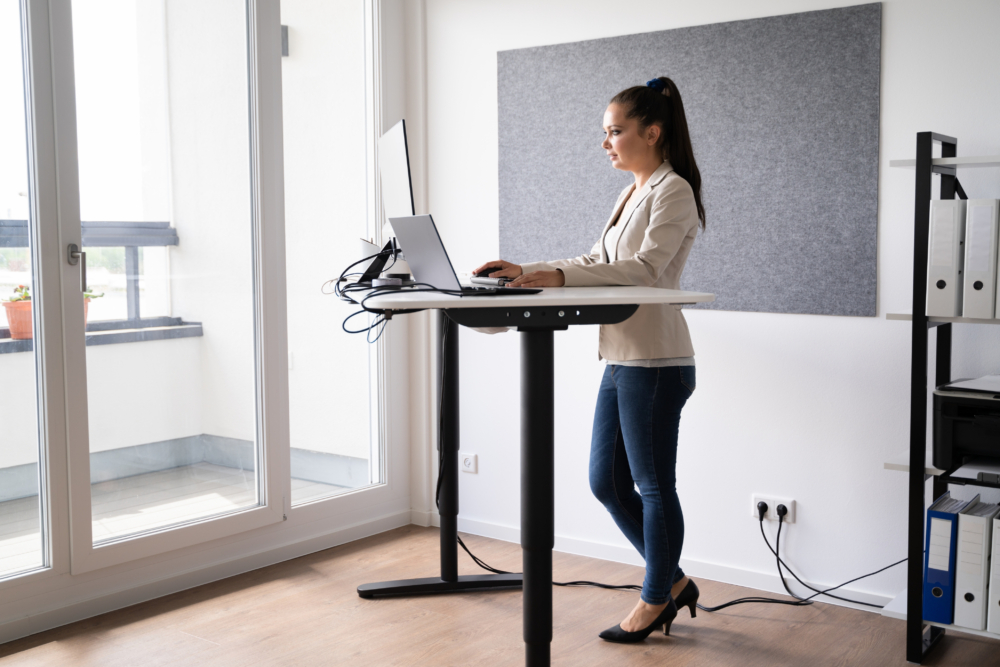
Desks that allow height adjustment give employees the option to alternate between sitting and standing, which encourages movement and reduces prolonged pressure on the lower back. Monitor positioning also plays a role, with correct screen height helping prevent neck strain caused by looking down or craning forward.
Over time, these adjustments help correct poor habits that develop through static working positions. Maintaining better posture reduces stress on muscles and joints, which contributes to fewer long-term issues such as chronic back pain. For organisations, this leads to a workforce that remains physically capable of performing consistently without avoidable discomfort interfering with daily tasks.
Greater Comfort For Employees
Comfort has a direct impact on how employees experience their working day. Furniture that adapts to individual needs allows each person to find a position that suits their body, rather than forcing a fixed setup that may only work for a small proportion of users.
Features such as adjustable armrests, seat depth control, and responsive back support help distribute weight more evenly. This reduces pressure points and allows the body to remain supported without constant repositioning. Employees can stay focused on their work instead of adjusting their seating throughout the day.
Improved comfort also contributes to overall job satisfaction. When employees feel physically supported, there is less distraction caused by discomfort or fatigue. This contributes to a more stable working rhythm and a better perception of the workplace environment.
Over extended periods, reduced fatigue supports sustained energy levels, which play a role in maintaining consistent output across the working week.
Reduced Risk Of Strain And Workplace Injuries
Musculoskeletal issues remain one of the most common causes of workplace absence. Conditions such as lower back pain, neck stiffness, and repetitive strain injuries can develop gradually when workstations are not properly configured.
Ergonomic setups aim to reduce these risks by aligning equipment with the user’s body and movement patterns. This lowers the strain placed on muscles and joints during repetitive or prolonged tasks.
Common issues addressed include:
Lower back pain from unsupported seating
Neck strain caused by poor monitor positioning
Wrist and forearm discomfort linked to incorrect desk height
Repetitive strain injuries from limited movement
Reducing these risks has a clear impact on absence rates. Fewer injuries lead to fewer sick days and less disruption to business operations. It also supports compliance with workplace health and safety expectations, which is a key consideration for Facilities Managers and Occupational Health Advisors.
Addressing these concerns early reduces the likelihood of long-term conditions developing, which can otherwise lead to higher costs through ongoing treatment, adjustments, or employee absence.
Improved Productivity And Focus
Discomfort creates distraction. When employees are adjusting their position, stretching to relieve tension, or managing ongoing aches, their attention shifts away from the task at hand.
Ergonomic furniture reduces these interruptions by supporting the body in a stable and comfortable position. This allows employees to maintain focus for longer periods without the need for constant adjustment. A well-configured workspace supports smoother workflows, as tasks can be completed without physical disruption.
Better posture and reduced strain also contribute to clearer concentration. Employees are less likely to experience fatigue that affects decision-making or slows progress. This has a measurable impact on output, particularly in roles that require sustained attention or precision.
For organisations, the link between comfort and productivity provides a clear justification for investment. Even small improvements in daily performance can accumulate into noticeable gains over time, particularly across larger teams.
Stronger Support For Long-Term Employee Wellbeing
Providing ergonomic furniture demonstrates a clear commitment to employee well-being. It shows that the organisation recognises the impact of the working environment on health and is willing to address it in a practical way.
This approach supports retention by improving the overall employee experience. Staff are more likely to remain in roles where their comfort and health are considered, especially in environments where long hours at a desk are required.
It also contributes to the employer’s reputation. Businesses that invest in workplace wellbeing are viewed more positively by both current employees and potential hires. This can influence recruitment outcomes, particularly in competitive sectors.
Flexible and hybrid working models have increased the need for adaptable solutions. Ergonomic furniture supports these setups by allowing consistent working conditions across different locations, whether in the office or at home.
Maintaining this consistency helps protect long-term health, reducing the risk of issues developing due to varied or unsuitable work environments.
Why Ergonomic Furniture Is A Smart Business Investment
Initial costs can lead some organisations to question whether ergonomic furniture is necessary. However, the long-term value becomes clear when considering the wider impact on performance, absence, and employee retention.
Reduced injury rates lead to lower absence costs and less disruption to operations. Improved comfort and posture contribute to sustained productivity, which helps offset the upfront investment. Over time, these factors combine to create a more stable and efficient workforce.
From a procurement perspective, ergonomic solutions provide measurable benefits that support decision-making. They address both compliance requirements and operational performance, making them a practical addition to workplace planning.
Businesses looking to upgrade their workspace can explore a range of Wave Office options within ourergonomic office furnitureofferings.For tailored advice or project support, teams cancontact usto discuss specific requirements and workspace goals outside of the normal office set-up.
Limited office space can restrict how effectively a team works, particularly where every area needs to serve a clear purpose. The right desk choice helps improve layout, movement, and day-to-day efficiency without requiring more room.
Modern office desks for small spaces are designed to balance practicality with usability. Many now combine storage, ergonomic support, and flexible features within a compact footprint.
Our guide highlights a selection of desks, all available from Wave Office, including corner designs, sit-stand options, and integrated storage solutions, all suited to smaller environments where space needs to work harder.
What To Look For In Office Desks For Small Spaces
Compact footprint Smaller desk dimensions help maintain clear walkways and avoid overcrowding in tighter office layouts.
Built-in storage options Desks with integrated drawers or shelving reduce the need for additional furniture, freeing up valuable space.
Multi-functionality A desk that supports more than one task helps reduce the number of separate workstations required.
Ergonomic considerations Proper desk height and positioning still matter in smaller spaces, supporting comfort over longer working periods.
Cable management Built-in cable routing keeps work areas organised and prevents unnecessary clutter around the desk.
Top 10 Office Desks For Small Spaces
Maestro 25 Left Hand Radial Desk + Desk High Pedestal
This desk is designed with a left-hand return, meaning the extended workspace sits on the left side when seated. This layout supports a more structured workflow, allowing users to separate tasks or position equipment without increasing the overall footprint.
Key Features:
Left-hand radial return for extended workspace
Desk-high pedestal positioned for easy access
Efficient use of corner space
Durable surface for daily office use
Ideal Use Case: Best suited to corner layouts where a defined left-hand workflow or room configuration dictates desk orientation.
Maestro 25 Desk and 2 Drawer Pedestal
For a compact workstation with practical storage, theMaestro 25 desk with drawer pedestaloffers a balanced solution for smaller offices. Its clean design keeps the setup professional while giving users enough room for daily tasks.
Key Features:
Compact rectangular design
Two-drawer pedestal included
Clean, professional appearance
Easy to position in smaller offices
Ideal Use Case: A reliable option for individual workstations where space is limited but storage is still needed.
Endurance Dual Motor Sit-Stand Desk R800
Flexible working can still be achieved in tighter layouts with thedual motor sit-stand desk. It allows smooth height adjustment and supports healthier movement through the working day without increasing the overall desk footprint.
Key Features:
Dual motor height adjustment
Stable frame across height settings
Supports ergonomic working
Suitable for flexible working environments
Ideal Use Case: Suitable for offices introducing sit-stand working in a compact layout.
Electric Height Adjustable Gaming Desk
For more adaptable setups, theelectric height adjustable gaming desk offers a modern option that works well in multi-purpose environments. It suits users who want flexibility, whether the desk is used for focused office work, hybrid setups, or longer periods at a workstation.
Key Features:
Electric height adjustment
Contemporary design
Adaptable for multiple users
Suitable for varied tasks
Ideal Use Case: A strong option for hybrid environments or multi-use workstations with limited space.
Elev8 Contract Single Motor Sit Stand Desk
A practical entry point into ergonomic working, thesingle motor sit-stand desk helps bring height adjustability into smaller offices without pushing costs too far. It is a sensible choice where budget and floor space both need careful consideration.
Key Features:
Single motor adjustment
Space-efficient frame
Entry-level ergonomic support
Suitable for daily use
Ideal Use Case: Best suited to budget-conscious offices looking to improve workstation flexibility.
Cairo Home Office Desk
Where simplicity is the priority, theCairo home office deskprovides a clean and understated solution for smaller rooms. Its minimal structure helps keep the workspace open, which is useful in both commercial and home settings.
Key Features:
Minimalist structure
Compact footprint
Lightweight and easy to position
Clean visual appearance
Ideal Use Case: Ideal for home offices or smaller rooms requiring a simple desk setup.
Goal-Post Home Office Desk
TheGoal-Post Home Office Desk uses an open frame design to maintain legroom and reduce visual bulk. That makes it a practical choice for layouts where every piece of furniture needs to feel proportionate to the room.
Key Features:
Open frame design
Efficient use of space
Sturdy construction
Flexible positioning
Ideal Use Case: Suitable for offices where maintaining open floor space is a priority.
Tikal Home Office Desk with Storage
For users who need both a workstation and extra organisation, theTikal desk with storagecombines desk space with shelving in one compact unit. This helps reduce the need for separate storage furniture and keeps everyday items close to hand.
Key Features:
Integrated shelving
Space-saving design
Keeps essentials within reach
Suitable for organised work setups
Ideal Use Case: A practical choice for users needing desk space and built-in storage in one footprint.
Delphi Home Office Workstation
TheDelphi Home Office Workstationis designed for users who need a compact all-in-one setup. Its structure supports a range of day-to-day tasks while helping smaller rooms feel organised rather than overcrowded.
Key Features:
Compact workstation layout
Multi-use design
Efficient use of vertical space
Suitable for varied tasks
Ideal Use Case: Ideal for users needing a complete workstation within limited space.
Coba Home Office Workstation
In very tight environments, theCoba Home Office Workstation provides an efficient all-in-one solution. Combining desk space with integrated storage elements, it helps make the most of smaller rooms without the need for extra furniture.
Key Features:
All-in-one workstation design
Compact footprint
Integrated storage elements
Suitable for small rooms
Ideal Use Case: Best suited to very limited spaces where efficiency is essential.
How To Maximise Space In A Small Office
Use vertical storage to reduce reliance on floor space
Position desks in corners to make better use of the layout
Choose multi-functional furniture to reduce duplication
Keep layouts minimal to avoid overcrowding
Consider sit-stand options where flexibility is needed
Small offices can still support efficient and well-organised workspaces when the right furniture is in place. Choosing between small office desks, storage-led designs, and height-adjustable options depends on the way the space is used each day.
For teams comparing compact office desks or reviewing desks for small home offices, Wave Office offers a strong range of solutions designed to support practical, space-conscious working. If you’re still not quite sure of the right office desk that’s best for you, we have even more options available at Wave Office, and you can speak to the team directly if you wish to contact usthrough our website.
Choosing the right office desk plays a direct role in how people work, how they feel during the day, and how smoothly a business runs. A desk is more than a surface for a laptop or paperwork. It shapes posture, influences focus, and affects how easily tasks get completed.
Workplaces have shifted over recent years, with more emphasis placed on comfort, flexibility, and long-term usability. Teams expect workstations that support movement, reduce strain, and fit around changing needs. Businesses, on the other hand, need furniture that lasts, fits the space properly, and supports productivity without constant adjustments.
Selecting the right desk means balancing these expectations. Size, layout, materials, and functionality all play a part. Getting this right can reduce inefficiencies, improve organisation, and create a more consistent working environment.
Wave Office supports businesses through this process by helping identify practical, well-suited solutions that match both current requirements and future growth.
Why Choosing The Right Office Desk Matters
How Your Desk Impacts Productivity
The structure of a desk setup influences how work flows throughout the day. A poorly arranged workspace can slow tasks down, create unnecessary movement, and increase distractions. A well-planned desk, on the other hand, allows everything to remain within reach, supporting smoother task transitions.
For individual roles, desk layout affects concentration and task completion speed. Enough surface space allows documents, screens, and tools to stay organised without overlap. In team environments, desk positioning can either support collaboration or create barriers between colleagues.
Bench systems or grouped layouts tend to support communication, while individual desks suit roles requiring focused attention. The desk becomes part of the workflow, rather than just a static piece of furniture.
The Link Between Comfort And Daily Performance
Discomfort during the working day leads to fatigue, reduced concentration, and lower output. Poor desk height, limited legroom, or awkward positioning can create strain across the back, neck, and shoulders.
Ergonomics addresses these issues by aligning the workspace with the user. Desks that support correct posture help maintain energy levels across longer periods. This has a direct effect on performance, as employees can work without constant physical distraction.
Over time, improved comfort also contributes to job satisfaction. Staff are more likely to remain engaged when their environment supports their well-being.
Different Types Of Office Desks To Consider
Executive Desks
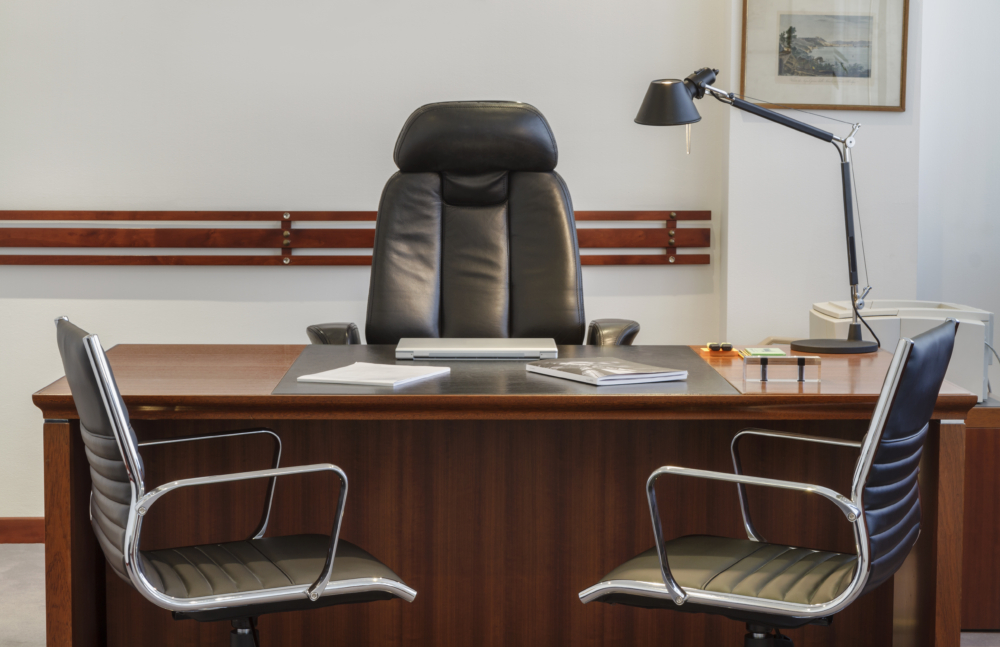
Executive desks are designed for leadership roles where presence and functionality both matter. These desks are typically larger, offering generous surface space alongside built-in storage.
They suit private offices or meeting-focused roles where paperwork, devices, and storage all need to be accessible. The design usually leans towards more traditional or premium finishes, reinforcing a professional appearance.
Bench Desks
Bench desks are widely used in open-plan offices. They consist of shared desk systems where multiple users sit within a continuous layout.
This design supports collaboration while making efficient use of floor space. Bench desks are also cost-effective when scaling teams, as additional positions can be added without major layout changes.
They are particularly useful in environments where communication between team members is a priority.
Corner Desks
Corner desks are built to maximise unused areas within a room. By fitting into corners, they free up central space while still providing a large working surface.
They are well-suited to smaller offices or roles requiring multiple screens or work zones. The extended shape allows different tasks to be separated across the desk without clutter.
Standing Desks
Standing desks offer a fixed-height solution for working while standing. They encourage movement throughout the day and can help reduce time spent sitting.
These desks are best used for shorter work periods or as part of a varied routine. They suit roles where quick access to workstations is required without long periods of seated work.
Height Adjustable Desks
Height-adjustable desks allow users to switch between sitting and standing positions. This flexibility supports different working styles and reduces strain caused by staying in one position.
These desks are increasingly used in modern offices, where well-being and adaptability are a priority. They suit a wide range of roles and can be adjusted to match individual preferences.
Choosing The Right Desk Size For Your Space
Measuring Your Office Layout
Accurate measurements are essential before selecting any desk. Room dimensions, doorway access, and fixed features such as radiators or columns all need to be considered.
Planning ahead prevents issues during installation and avoids layouts that feel cramped. Mapping out the space allows businesses to visualise how desks will fit alongside walkways and shared areas.
Even small miscalculations can affect usability, particularly in tighter environments.
Allowing Space For Movement And Storage
Desk placement must allow enough room for chairs to move freely and for staff to access storage. Restricted movement can make even a well-designed desk feel uncomfortable.
Clearances around desks also support safety and accessibility. Storage units such as pedestals or cabinets need to fit without blocking pathways.
Avoiding overcrowding helps maintain a functional workspace where movement feels natural rather than restricted.
Desk Shapes And Layouts That Suit Different Offices
Straight Desks For Simple Layouts
Straight desks are the most common option in office environments. Their rectangular shape makes them easy to position in rows or along walls.
They work well in structured layouts where consistency is needed. Businesses can scale these setups quickly by adding more desks in line with existing arrangements.
L-Shaped Desks For Maximising Corners
L-shaped desks make better use of corner spaces while providing a larger working area. They are suitable for roles that involve multitasking or dual-screen setups.
The extended layout allows different activities to be separated across the desk, improving organisation without increasing clutter.
Cluster Desks For Team Environments
Cluster desks group multiple workstations together, supporting collaboration within teams. These setups are common in open-plan offices where communication is frequent.
They help create defined team zones while maintaining an open layout. This structure encourages interaction without removing individual work areas.
How Desk Materials Affect Style And Durability
Wood And Wood Effect Finishes
Wood and wood-effect desks offer a balance between durability and visual appeal. They suit a wide range of office styles, from traditional to modern.
These finishes tend to handle daily use well while maintaining a consistent appearance. They are commonly used in professional environments where a neutral design is preferred.
Metal Frame Desks
Metal frame desks provide strength and long-term durability. The structure supports heavier loads and resists wear over time.
They are often paired with minimalist or industrial designs, making them suitable for high-traffic environments. These desks perform well in offices where longevity is a priority.
Glass Desks And Modern Styles
Glass desks create a clean, contemporary appearance. They are typically used in design-led spaces where visual impact matters.
Maintenance requires more attention, as surfaces show marks more easily. These desks are best suited to lighter use or areas focused on presentation rather than heavy daily tasks.
Storage Features To Look For In An Office Desk
Storage supports organisation and helps maintain a clear working surface. Without it, desks become cluttered, which can slow tasks and affect focus.
Choosing the right storage setup depends on how the desk is used, with some roles needing frequent access to documents and others prioritising device organisation. Integrated options can also reduce the need for extra furniture, helping keep layouts efficient.
Built In Drawers And Pedestals
Drawers and pedestals keep essential items close without taking up additional space. They reduce surface clutter and support roles that rely on regular access to documents or supplies.
Cable Management Solutions
Cable trays and ports keep wiring organised and out of sight. This improves safety, reduces clutter, and allows equipment to be adjusted without disruption.
Integrated Storage Options
Desks with built-in shelving or compartments help maximise space. They combine storage and workspace, making them suitable for smaller or more compact office layouts.
How To Match An Office Desk To Your Working Style
The way work is carried out should guide desk selection. Different roles require different levels of focus, interaction, and flexibility. A desk that suits the working style helps reduce friction during tasks and supports a more consistent routine. Matching layout and function to daily use can improve both comfort and efficiency without unnecessary adjustments.
Desks For Focused Individual Work
Individual roles benefit from desks that limit distractions and support concentration. A clear surface, appropriate size, and ergonomic setup allow work to be completed without interruption. Positioning also plays a part, with quieter areas helping maintain focus across longer periods.
Desks For Collaborative Environments
Collaborative settings require desks that support interaction and shared access. Bench or cluster layouts allow teams to communicate easily while maintaining individual workspaces. This setup suits roles where tasks rely on regular discussion or shared resources.
Choosing A Desk For Home Offices vs Commercial Offices
Desk selection changes depending on where the workspace is based. Home and commercial environments come with different constraints, from available space to daily usage demands. Choosing a desk that fits the setting helps avoid layout issues and supports a more practical working setup over time.
Considerations For Home Workspaces
Home offices usually have limited space, which means desks need to fit comfortably without dominating the room. Compact or multi-purpose designs can support both work and personal use. Style also plays a part, as the desk often needs to blend with existing interiors rather than stand out.
Considerations For Business Premises
Commercial offices require desks that handle regular use and support multiple users where needed. Durability becomes more important, along with consistency across the workspace. Layout planning should allow for team structure, movement, and future growth without requiring frequent changes.
The Importance Of Desk Height And Everyday Comfort
Desk height affects posture, comfort, and how easily tasks can be carried out during the day. If the height does not suit the user, it can lead to strain across the neck, shoulders, and back.
Over time, this can reduce concentration and make it harder to maintain a steady workflow. Choosing the right height helps create a more supportive working position and reduces unnecessary physical pressure.
Standard Desk Heights Explained
Standard desk heights in the UK are designed to suit a wide range of users. They work well in general office settings but do not account for individual differences. In shared environments, this can limit comfort for some users, particularly during longer periods of work.
Benefits Of Adjustable Height Desks
Adjustable desks allow users to change positions throughout the day. This supports better posture and helps reduce strain caused by sitting for extended periods. They also provide flexibility for different users within the same workspace.
How Office Desks Support Productivity And Organisation
Office desksplay a direct role in how work is managed and completed throughout the day. A well-structured desk setup helps reduce delays by keeping tools, documents, and equipment within easy reach. When everything has a place, tasks can move forward without constant adjustment or searching for items. This supports a more consistent workflow and reduces unnecessary interruptions.
Reducing Clutter With Smart Design
Desks with built-in storage and organised layouts help keep surfaces clear. Removing excess items from the workspace makes it easier to focus and reduces visual distraction. A cleaner desk also supports a more structured approach to daily tasks.
Creating Efficient Workstations
An efficient workstation is arranged around how tasks are carried out. Screen placement, keyboard position, and access to materials all need to align with the user. This reduces unnecessary movement and helps maintain a steady pace of work.
Design Features That Help Create A Professional Look
Desk design influences how an office is perceived by both staff and visitors. A consistent look across workstations helps create a more organised and structured environment. This can support brand identity while also making the space feel more considered. Choosing desks that align with the overall interior avoids a disjointed appearance and helps maintain a cohesive layout.
Matching Desks With Office Interiors
Desks should complement existing furniture, flooring, and layout choices. Consistency across materials and styles helps create a unified space that feels intentional rather than pieced together. This is particularly relevant in client-facing environments where presentation matters.
Choosing Colours And Finishes
Colours and finishes affect both appearance and practicality. Neutral tones tend to work across different spaces, while darker finishes can help mask wear over time. The right choice depends on how the space is used and maintained.
Common Mistakes To Avoid When Choosing An Office Desk
Choosing an office desk without proper planning can lead to issues that affect comfort, layout, and long-term use. Small oversights at the selection stage can create ongoing problems, from limited space to reduced efficiency. Taking time to assess needs before purchasing helps avoid unnecessary adjustments later.
Choosing Style Over Function
Focusing on appearance without considering how the desk will be used can cause practical limitations. A desk may look suitable but fail to support daily tasks, leading to frustration and inefficiency. Function should guide the decision, with design following where possible.
Ignoring Space Limitations
Selecting desks without accurate measurements can result in overcrowded layouts. Limited movement affects comfort and makes it harder to maintain an organised workspace. Proper planning helps create a more balanced environment.
Overlooking Storage Needs
Insufficient storage leads to clutter and disorganisation. Without adequate space for documents and equipment, desks quickly become difficult to manage during daily use.
How To Choose An Office Desk That Works Long Term
Choosing a desk with long-term use in mind helps avoid frequent replacements and unnecessary costs. Office needs can change over time, so desks should be able to adapt without disrupting the overall layout. Considering durability, flexibility, and future requirements at the start supports a more stable workspace that continues to function as the business develops.
Planning For Business Growth
As teams expand, desk layouts need to adjust without requiring a complete redesign. Modular systems or scalable desk options allow additional workstations to be added with minimal disruption. This approach supports growth while maintaining consistency across the office environment.
Investing In Quality And Durability
Higher-quality desks are built to handle regular use without wearing down quickly. Strong materials and reliable construction reduce the need for repairs or replacements. While the initial cost may be higher, long-term value comes from consistent performance and fewer disruptions.Hopefully, you have the knowledge now to help support your decision for which office desk is best for you; however, if not, do not worry, as for any more tailored advice on selecting durable solutions, you cancontact usat Wave Office to discuss your workspace requirements.
Meeting rooms are where decisions move from discussion to action. Contracts are agreed, strategies are challenged, people are hired and partnerships often begin within those four walls. In many organisations, the most commercially sensitive conversations take place around a single central surface. When visitors enter a meeting room, their attention naturally settles on the table before anything else.
Within minutes, impressions begin to form. The size, condition and design of the meeting table can subtly communicate authority, creativity, stability or openness. A substantial rectangular boardroom table may suggest structure and control. A lighter round format may indicate collaboration and shared leadership. Even the finish and integration of technology contribute to the message being absorbed.
Furniture might appear secondary compared with people or presentation materials, yet the environment quietly shapes how conversations unfold. A well-considered meeting space can reinforce confidence, while a poorly specified one may create subtle friction before discussions even begin.
Selecting meeting tables therefore becomes more than a routine purchasing decision. The table influences communication dynamics, visitor perception and the overall sense of professionalism within the room. This guide explores how meeting tables shape brand identity, workplace culture and interaction, helping organisations approach selection with greater strategic clarity.
Why Meeting Tables Matter in Professional Spaces
Meeting tables sit at the centre of how organisations collaborate, plan and make decisions. Strategic discussions, financial reviews, interviews and client negotiations all unfold around this shared surface. In many workplaces, the meeting room acts as a focal point where direction becomes commitment and ideas translate into action.
The design and scale of the table influence how comfortably people interact. When spacing feels balanced and sightlines remain clear, discussion tends to flow naturally. Participants can maintain eye contact, share materials and engage without physical barriers interrupting the conversation. Poorly proportioned tables can disrupt that rhythm and create subtle obstacles to participation.
Meeting tables also influence how visitors experience the organisation. A well-specified table positioned within cohesive office meeting room furniture signals preparation and attention to detail. The environment suggests that the organisation values professionalism and understands the role of workspace design in supporting performance.
There is also a behavioural dimension. People respond to cues within their surroundings. A balanced and structured environment often encourages focus and clarity during discussions. When the room feels thoughtfully arranged, participants tend to approach conversations with greater confidence and engagement.
For organisations balancing practicality with brand identity, meeting tables represent a strategic design element rather than a purely functional purchase.
First Impressions Created by Meeting Tables
When a client enters a meeting room, the table often becomes the visual anchor of the space. Its scale, finish and placement immediately influence perception. A well-proportioned conference table can communicate confidence and readiness. By contrast, a surface that appears undersized, worn or poorly positioned may create quiet doubt about attention to detail.
Proportion plays a particularly important role. Oversized conference tables placed within compact rooms can feel restrictive and imposing. Participants may sense imbalance before the meeting even begins. Conversely, a table that appears too small for the space can suggest limited capacity or short-term thinking.
Design language also shapes perception. Clean lines and restrained detailing often convey clarity and organisation. Traditional finishes may reflect heritage and stability. The key is ensuring that the design reinforces brand positioning rather than contradicting it.
Condition is equally revealing. Scratches, fading finishes or outdated cable ports may suggest that maintenance has slipped down the priority list. Visitors rarely comment on these details directly, yet they contribute to the overall impression being formed.
In competitive environments, subtle environmental cues influence confidence. A well-specified meeting table supports credibility by reinforcing the message that the organisation values quality, preparation and professionalism.
How Meeting Tables Reflect Company Culture
The configuration of meeting tables often mirrors how decisions are made within an organisation. Formal boardroom tables with clearly defined head positions typically reinforce hierarchy. Leadership occupies one end, while reporting lines become visually structured around the perimeter.
Round tables create a noticeably different dynamic. Without a designated head position, conversation tends to feel more balanced. Participants often contribute more freely, which can encourage collaborative problem solving and shared ownership of decisions.
Minimalist table designs frequently appear in technology-driven environments or growing companies where agility and flexibility are emphasised. Clean surfaces and understated finishes align with flatter organisational structures and faster decision-making processes.
Traditional wood finishes often reflect heritage brands or professional services environments where continuity and stability remain important. These designs can communicate experience, credibility and institutional memory.
Modular or reconfigurable meeting tables signal adaptability. They support workshops, training sessions and evolving team structures without locking the organisation into a rigid layout. For businesses anticipating growth or change, flexibility becomes part of the cultural message conveyed through the workspace.
Culture ultimately reveals itself through everyday interactions. The meeting table becomes the stage on which those interactions unfold, quietly reinforcing how people collaborate, contribute and make decisions.
Choosing Styles That Match Your Brand Identity
Brand identity extends beyond logos and colour palettes. It also includes how workspaces feel, function and guide interaction. Meeting tables should align with the design language established across reception areas, executive offices and collaborative spaces.
Finishes can subtly reflect brand colours without appearing overly literal. A restrained accent within leg detailing or edging may reference corporate tones while maintaining a professional appearance. Neutral surfaces often allow presentation materials and digital displays to remain the focal point during meetings.
Consistency across reception, meeting rooms and executive spaces helps create a coherent visitor experience. If reception areas present a contemporary aesthetic while meeting rooms feel dated or mismatched, the environment may appear fragmented.
Style choices also signal positioning. Industrial materials and exposed structures may suit creative studios or design-led organisations. Polished corporate styles often align with legal, financial or consultancy environments where professionalism and stability remain central to brand identity.
Modern meeting tables incorporating integrated technology and clean architectural lines can reinforce a forward-thinking brand position. By contrast, ornate detailing may signal tradition and continuity.
Selecting a meeting table therefore benefits from strategic planning. When furniture choices align with brand narrative, the workspace communicates intention rather than appearing assembled through isolated purchases.
The Role of Size and Shape in Communication
Modern office boardroom interior with laptops documents on conference table and big window, empty company meeting room with no people after corporate group briefing, business real estate for rent
The shape of a meeting table influences how discussion unfolds within the room. Rectangular formats typically reinforce structure and direction. Participants sit along defined sides, and leadership often occupies the head position. This arrangement supports formal presentations and clear reporting structures.
Round tables create a more balanced conversational dynamic. Without a defined head, hierarchy becomes less visible and participation often feels more equal. This format can work well for collaborative discussions, workshops or creative sessions.
Boat-shaped conference tables provide a hybrid approach. Their tapered centre improves sightlines across larger groups, allowing participants to maintain visual connection more easily while preserving the structured layout associated with rectangular designs.
Key considerations include:
Rectangular shapes reinforcing clarity, authority and direction
Round formats encouraging shared discussion and balanced participation
Boat shapes improving visibility while maintaining structured seating
Capacity planning also plays a critical role. Each participant requires sufficient space to sit comfortably, access materials and use technology without crowding neighbouring seats. Clearance around the table supports circulation and accessibility, particularly in rooms used frequently for client meetings.
Selecting the correct size requires balancing current meeting patterns with future growth. Tables that feel either oversized or undersized can disrupt the natural flow of discussion. Shape and scale should therefore support the intended communication style rather than being chosen purely for visual appeal.
Materials and Finishes That Send a Message
Material choice communicates subtle signals about brand identity and organisational priorities.
Solid wood often conveys permanence and prestige. It suits executive boardroom furniture where the intention is to project longevity, experience and stability. The natural variation within timber can also introduce warmth into formal meeting environments.
Veneer provides a similar executive appearance with improved cost efficiency. It allows organisations to maintain visual consistency across multiple rooms while managing refurbishment budgets carefully. For many commercial meeting tables, veneer strikes a practical balance between aesthetics and financial planning.
Laminate surfaces prioritise durability. In high-traffic meeting rooms or training environments, resistance to scratches, stains and cleaning chemicals becomes important. While laminate may lack the depth of natural wood, it performs reliably in spaces used throughout the day.
Glass surfaces contribute a contemporary visual language. They can create a sense of openness and light within modern meeting room design. However, maintenance requirements such as cleaning and fingerprint visibility should be considered before specification.
Sustainability is increasingly shaping material decisions. Responsibly sourced timber, recyclable components and low-emission finishes reflect broader environmental commitments. These factors may also support internal procurement frameworks and corporate responsibility policies.
Evaluating materials in terms of appearance, maintenance and lifecycle cost helps ensure that meeting tables continue to represent the organisation positively over many years.
Technology Integration and Modern Expectations
Modern meeting rooms must support digital collaboration as seamlessly as they support face-to-face conversation. Meeting tables now function as technology platforms as much as physical work surfaces.
Built-in power modules allow participants to charge laptops and devices without trailing cables across the floor. Integrated cable management systems maintain order and prevent visual clutter that might distract attention during presentations.
Audio-visual compatibility has become equally important. Screens, microphones and video conferencing systems need to align with the table’s layout so that participants both in the room and joining remotely can engage effectively.
Camera placement, microphone positioning and screen visibility increasingly influence how meeting tables are configured. Poorly positioned furniture can restrict camera angles or make remote participants feel disconnected from the discussion.
Discreet technology solutions often support organisations seeking a clean, minimalist aesthetic. Hidden cable trays and pop-up power modules preserve visual simplicity while maintaining connectivity. In more technology-led environments, visible connectivity may reinforce the perception of capability and readiness.
Hybrid working has raised expectations across industries. Clients and colleagues may join meetings from different locations, and seamless participation is now assumed. Meeting tables designed without considering this requirement may quickly appear outdated.
Thoughtful integration of technology therefore plays a central role in future-proofing meeting spaces.
Adapting Meeting Tables for Different Types of Visitors
Not every meeting serves the same purpose, and the meeting table should support those differences.
Client-facing boardrooms often benefit from a more formal presence. A substantial table with high-quality finishes can reinforce credibility during negotiations or presentations. In these settings, proportion and layout help create a structured environment where discussions feel organised and purposeful.
Internal meetings frequently demand greater flexibility. Brainstorming sessions, team updates and project planning discussions benefit from layouts that encourage visibility and participation. Modular commercial meeting tables can adapt to different configurations, supporting evolving collaboration styles.
Interview settings require careful balance. A table that feels overly imposing may create unnecessary pressure for candidates. More proportionate formats can encourage open conversation while maintaining professionalism.
Training environments introduce additional practical considerations. Tables may need to separate into smaller groups or combine into larger arrangements. Durability also becomes important due to frequent movement and varied use.
Multi-purpose meeting rooms, particularly in smaller organisations, must support several functions across the week. Selecting meeting tables that adapt without compromising visual consistency helps maintain brand alignment across different types of interaction.
When It’s Time to Upgrade Your Meeting Tables
Even well-built meeting tables eventually reach a point where replacement becomes necessary. Visible wear is often the first signal. Scratched surfaces, fading finishes or unstable legs can weaken the impression created by an otherwise professional workspace.
Brand evolution may also prompt an upgrade. When organisations modernise their identity, refresh reception areas or reposition their market presence, outdated meeting room furniture can create inconsistency across the office environment.
Technology limitations provide another trigger. Older tables may lack integrated power modules, cable routing or compatibility with modern conferencing equipment. Retrofitting these features can prove difficult and may compromise aesthetics.
Business growth often exposes capacity issues. A table originally selected for small teams may no longer support larger discussions comfortably. Overcrowded meeting layouts can reduce productivity and create unnecessary friction during conversations.
Office relocation presents an ideal moment to reassess furniture standards. Moving into a new workspace while retaining outdated meeting tables may dilute the opportunity to establish a stronger brand presence.
Strategic upgrades ensure that meeting rooms continue to reflect professionalism, support communication and reinforce organisational identity.
Frequently Asked Questions About Meeting Tables
What size meeting table do I need?
Table size should reflect room dimensions and typical meeting attendance. Allow comfortable spacing between chairs and ensure there is sufficient clearance around the perimeter for movement.
Are round tables better for collaboration?
Round tables often encourage more balanced participation because they remove a defined head position. Rectangular tables may be better suited to formal presentations or structured discussions.
How long should a meeting table last?
Quality meeting tables can remain in service for many years when properly maintained. Lifespan depends on material durability, frequency of use and the overall environment.
What material is best for heavy daily use?
Laminate surfaces typically perform well in high-use environments due to their resistance to scratches and stains. Veneer can provide a more executive appearance while still offering durability.
Can meeting tables include built-in power?
Yes. Many modern meeting tables incorporate integrated power modules, USB ports and cable management systems to support laptops and conferencing equipment.
How do I choose the right supplier?
Look for suppliers with experience in office meeting room furniture who understand workspace design, installation planning and long-term maintenance. If you are considering an upgrade or refurbishment, you can contact us to discuss your requirements in more detail.
Interest in ergonomic office desks has grown steadily in recent years. For many organisations, this shift reflects changing expectations around employee wellbeing, productivity and workplace design. As businesses review their office environments, furniture decisions increasingly sit alongside wider conversations about health, comfort and long-term performance.
At the same time, investment decisions face close scrutiny. A desk purchase must do more than look modern. It needs to support daily work, remain reliable over time and justify its cost within wider operational budgets.
Height adjustable desks sit at the centre of this debate. They promise greater flexibility and movement throughout the working day, yet they also introduce higher upfront costs and new considerations around implementation.
This guide takes a practical look at how these desks function, where they add measurable value, where they may fall short, and how organisations can approach adoption in a structured way. If you are evaluating ergonomic improvements or planning an office refurbishment, this article aims to provide a clear and balanced perspective.
What Are Height Adjustable Desks?
Height adjustable desks are workstations designed to move between seated and standing positions. Unlike fixed desks, they allow users to alter their working height throughout the day, supporting sit stand desks functionality within standard office layouts.
At a basic level, these desks consist of a desktop surface supported by adjustable legs connected to a lifting mechanism. The user can raise or lower the desk to suit their posture, enabling transitions between sitting and standing without leaving the workstation.
Two main configurations exist. Manual models rely on a crank handle or similar mechanism to adjust the height. Electric height adjustable desks use one or more motors integrated within the frame, controlled by buttons mounted beneath the desktop. Some systems include memory presets so users can save preferred heights.
It is also useful to distinguish between domestic and commercial standing desks. Domestic models are often designed for occasional use and lighter equipment. Commercial versions are built to support heavier monitors, accessories and continuous daily operation across larger teams.
Across modern workplaces, these desks are becoming more visible in both corporate and public sector environments. They are rarely introduced on their own. Instead, they typically form part of broader workplace ergonomics strategies designed to improve comfort and support long-term employee wellbeing.
How Height Adjustable Desks Work
Understanding how height adjustable desks operate can help organisations evaluate durability, stability and long-term performance.
Electric systems use motors housed inside telescopic lifting columns within the desk legs. When activated, these motors raise or lower the desktop smoothly. In commercial settings, dual motor systems are common because they distribute lifting power evenly across wider work surfaces.
Control panels mounted beneath the desk allow users to adjust height at the press of a button. Some models include programmable presets that store preferred positions, making it easier to switch between sitting and standing throughout the day.
Manual crank systems operate through mechanical gearing. Turning a handle engages an internal spindle that extends or retracts the desk legs. These models often cost less initially, although adjustments can take longer and may be less convenient in shared environments.
Pneumatic systems use gas-assisted lift mechanisms. They allow relatively quick adjustment but are usually found in lighter-duty desks with lower weight capacities.
Weight capacity is an important specification. Monitors, docking stations, document trays and desktop accessories add significant load. A commercial specification desk typically supports 100 kilograms or more, ensuring stability even at full height.
Frame construction also affects performance. Steel frames with cross support reduce lateral movement, particularly when the desk is fully extended. Stability becomes noticeable in open-plan environments where excessive wobble can distract nearby colleagues.
Cable management is another practical feature. Integrated cable trays, ports and modesty panels help organise wires and minimise trip risks, which is especially relevant during larger workplace rollouts.
The Benefits of Height Adjustable Desks
The primary advantage of height adjustable desks lies in encouraging movement during the working day. Rather than remaining seated for extended periods, employees can alternate between sitting and standing, introducing variation in posture without leaving their workstation.
Research into sedentary behaviour has linked prolonged sitting with a range of health concerns, including musculoskeletal discomfort and metabolic risk factors (British Journal of Sports Medicine, 2015). The Health and Safety Executive also highlights the importance of suitable workstation design and posture variation in reducing strain (HSE, 2021).
While a desk alone cannot address every ergonomic issue, it can contribute to a more flexible working setup.
From a practical perspective, posture variation can reduce complaints of stiffness in the lower back, shoulders or neck. Changing position periodically allows muscles to remain active rather than locked in a static posture for long periods.
Some employees also report improved concentration when alternating positions, particularly during longer tasks or virtual meetings. Even small adjustments can refresh attention and energy levels during the afternoon.
Employee perception plays a role as well. Workplaces increasingly communicate their values through physical environments. Investment in adjustable office furniture can signal a commitment to comfort and wellbeing.
When introduced alongside ergonomic assessments and clear guidance, these desks can support a wider workplace ergonomics strategy rather than acting as a standalone solution.
Potential Drawbacks to Think About
Despite their advantages, height adjustable desks also introduce practical considerations that organisations should evaluate carefully.
The most obvious factor is cost. Commercial electric models typically cost more than fixed desks, and across large offices the price difference can influence capital approval decisions.
Infrastructure can also affect implementation. Electric desks require power access, which may involve additional floor boxes or cable routing in older buildings. These adjustments can extend installation timelines during refurbishment projects.
User behaviour also matters. Standing continuously is not automatically beneficial. Without guidance, some people may overuse the standing function, leading to fatigue or lower limb discomfort. Gradual adoption and clear usage recommendations help avoid these issues.
Noise levels are generally low, yet repeated adjustments in open-plan offices may cause minor distraction if desks are raised or lowered frequently throughout the day.
Adjustable desks are also heavier than standard desks due to their motors and reinforced frames. This additional weight can affect relocation logistics during office moves or layout changes.
Finally, height adjustable desks do not replace a comprehensive ergonomic setup. Chair support, monitor placement and keyboard positioning remain essential. Introducing adjustable desks without reviewing the wider workstation configuration may limit the overall benefits.
Who Gets the Most Value from Height Adjustable Desks?
Height adjustable desks tend to deliver the greatest value in environments where employees spend long periods working at a screen.
In large offices where desk-based tasks dominate the working day, the ability to change posture without interrupting workflow can support comfort over extended periods.
Hybrid workplaces also benefit from adjustable desks. Shared workstations used by different individuals across the week require flexibility. Adjustable height settings allow each user to adapt the desk quickly to suit their posture.
Public sector environments often integrate adjustable desks within structured wellbeing initiatives. When introduced following workstation assessments or ergonomic reviews, they can support targeted interventions for staff experiencing discomfort.
Office relocations and refurbishments provide another opportunity. Integrating adjustable desks during redesign projects simplifies power planning and allows layouts to accommodate the additional functionality.
Smaller organisations may also benefit, although a selective rollout often proves more cost effective. Prioritising teams with intensive screen-based work or specific ergonomic risks can generate clearer value than universal installation.
Cost vs Long Term Return on Investment
Comparing a standard fixed desk with an electric height adjustable desk reveals a clear difference in purchase price. However, the financial conversation rarely ends at the initial investment.
Over a lifecycle of five to ten years, several factors influence overall value. Frame quality, motor reliability and warranty length affect maintenance requirements and replacement cycles.
Commercial desks often include warranties ranging from seven to ten years. A higher specification model may reduce mid-term expenditure by avoiding premature replacement or repair.
Consider a hypothetical organisation with 100 employees. If improved workstation flexibility reduces discomfort for even a small proportion of staff, the resulting reduction in short-term absence can offset part of the initial cost.
Productivity gains are harder to measure directly, yet incremental improvements across large teams can accumulate over time. Even small increases in focus or efficiency may contribute to long-term output.
There is also reputational value to consider. Investment in office wellbeing solutions can strengthen employer branding and support staff retention. Recruitment and onboarding costs often exceed the price difference between desk types.
Return on investment depends on correct specification, thoughtful rollout and effective user guidance. Viewing adjustable desks purely as furniture rather than workplace infrastructure may underestimate their potential value.
Key Features to Look For
When evaluating height adjustable desks for commercial use, decision makers should prioritise durability, safety and long-term reliability.
Weight capacity – Confirm the desk can comfortably support monitors, docking stations and additional accessories. Higher load ratings often indicate stronger internal components.
Stability at full height – Test the desk when fully extended. A rigid frame with cross support helps minimise movement in open-plan environments.
Height range – A wider adjustment span accommodates both shorter and taller users, supporting inclusive workplace ergonomics.
Anti collision safety features – Quality desks stop automatically if resistance is detected during movement, protecting equipment and reducing risk.
Motor quality and warranty – Longer warranties typically reflect confidence in motor durability and long-term performance.
Cable management integration – Built-in trays, ports and modesty panels help maintain organised workstations.
Desktop material durability – Commercial surfaces should resist scratches, heat and cleaning products used in busy offices.
Noise level during adjustment - Quieter motors help prevent distraction in open-plan environments.
How Height Adjustable Desks Compare to Traditional Desks
This comparison highlights how adjustable desks introduce greater flexibility but also additional considerations during installation and planning.
Feature
Height Adjustable Desks
Traditional Desks
Flexibility
Sit or stand working positions
Fixed height only
Ergonomic adaptability
High, supports posture variation
Limited to chair adjustments
Cost
Higher upfront investment
Lower purchase price
Installation
May require power access
Simple assembly
Maintenance
Moving components require occasional checks
Minimal maintenance
Visual impact
Modern, wellbeing-focused workspace
Conventional office appearance
Tips for Introducing Height Adjustable Desks into the Workplace
Adopt a phased rollout – Introducing adjustable desks gradually allows organisations to gather feedback and refine implementation. Starting with departments where desk work is most intensive often provides the clearest insights.
Provide staff education sessions – Adjustment alone does not guarantee benefit. Short guidance sessions can explain how to alternate between sitting and standing and how to avoid fatigue.
Carry out ergonomic assessments – Review chair support, monitor height and keyboard positioning alongside the new desks. Treating the desk as part of a wider workstation setup improves outcomes.
Issue clear usage guidance – Simple written instructions or digital reminders can encourage balanced posture changes rather than prolonged standing.
Measure impact post installation – Monitoring absence levels, reported discomfort and employee feedback over six to twelve months can help evaluate the effectiveness of the rollout.
Align with wider refurbishment projects – Introducing adjustable desks during relocations or redesigns simplifies power planning and reduces disruption.
Frequently Asked Questions About Height Adjustable Desks
Are height adjustable desks good for posture? They can support healthier posture by allowing movement between sitting and standing. Remaining in one position for long periods often contributes to discomfort, so alternating positions can help reduce strain.
How long do height adjustable desks last? Commercial models are typically designed for daily use over five to ten years. Lifespan depends on motor quality, frame construction and frequency of adjustment.
Are electric desks better than manual? Electric height adjustable desks provide smoother and quicker adjustment, which tends to suit shared or frequently used workstations. Manual versions may suit smaller offices with tighter budgets.
Do height adjustable desks use a lot of electricity? Energy consumption is generally low because motors only operate during adjustments that last a few seconds.
Are they suitable for shared desks? Yes. Preset controls allow different users to switch between preferred heights quickly, making them useful in hybrid workplaces.
What is the best way to introduce adjustable desks? A phased rollout combined with ergonomic guidance and staff education usually delivers the best results.If you are evaluating adjustable desks for your workspace or planning a wider office redesign, you can contact us to discuss practical options aligned with your organisation’s needs.
A desk may seem like a simple work surface, yet the type you choose affects storage, workspace layout and how clients perceive your office.
Size, storage and design influence workflow, organisation and how visitors view your business. For many companies, desk choice reflects hierarchy, culture and long-term planning.
If you are comparing executive desks with standard alternatives, you are likely balancing layout, budget and image. This guide offers a clear, practical comparison to help you decide which option suits your workspace.
What Is an Executive Desk?
Italy, leather office chair and desk
Executive desks are larger workstations typically used in private offices by senior leaders. They feature a wider surface area and often include integrated returns or built-in storage. You will commonly see executive office desks made from veneer, hardwood or high-quality laminate, chosen for a refined finish.
Lots of executive desks include return sections or L-shaped configurations, creating a larger working surface for meetings, documents and multiple screens.
Many include drawers, cupboards and modesty panels as part of the structure. Their scale and design create presence, which is why they are frequently positioned in director or partner offices.
What Is a Standard Desk?
A standard desk is a practical workstation designed for everyday use across teams. It usually has a compact rectangular shape, making it suitable for open-plan offices and tighter layouts. Standard office desks are commonly made from durable laminate or engineered wood to balance cost and longevity.
Storage is typically provided through separate pedestal drawers rather than built-in cupboards. The overall design supports flexibility, straightforward installation and easy scaling as teams grow.
Key Differences Between Executive Desks and Standard Desks
Feature
Executive Desks
Standard Desks
Size
Larger footprint, often with returns or extended tops
Compact rectangular design
Storage
Integrated drawers and cupboards
Separate pedestal or mobile storage
Materials
Veneer, hardwood, glass, high-grade laminate
Laminate and engineered wood
Cost
Higher upfront cost due to size and materials
Lower initial outlay, suited to volume
Office Placement
Private offices
Open-plan and shared spaces
Visual Impact
Creates a stronger leadership presence
Functional and consistent
Typical User
Directors and senior leaders
General staff and operational teams
This office desk comparison highlights how each option supports different operational needs and visual priorities.
Size and Presence in the Office
Executive desks command space, and in many rooms they become the central feature.
In many leadership offices, the desk also acts as a small meeting point where visitors sit opposite during short discussions.
Their extended surfaces and built-in storage units require more clearance around the perimeter, which affects circulation and meeting space within the office. Before committing, it helps to measure doorways, wall lengths and walkways with care.
Standard desks, by contrast, suit collaborative layouts and denser workstation arrangements. In open-plan settings, rows or clusters of commercial office desks allow teams to sit together without overwhelming the floorplate. Linking desk dimensions to your wider office design strategy prevents awkward gaps or overcrowded zones later on.
Storage and Functionality
Maximize Your Workspace with Efficient Office Storage Cabinets and Desk Organizers for Ultimate Organization
One of the clearest distinctions lies in storage. Many executive desks include built-in cable channels or grommets, helping keep devices organised and wires hidden from view. This design supports leaders who handle confidential paperwork or require a tidy, enclosed setup.
Standard desks rely more on add-on units such as pedestals, under-desk drawers or shared filing cabinets. While this may appear simpler, it allows modular adjustments as teams expand or reorganise. Considering daily workflow is key. If a role demands regular access to documents and multiple devices, built-in storage might suit. For task-based roles with lighter paperwork, flexible desk storage solutions can feel more adaptable.
Materials and Build Quality
Materials influence durability and perception. Executive models often use veneer finishes over engineered cores or solid wood elements to create a polished appearance. Some incorporate reinforced frames or thicker desktops, which can handle heavier equipment over time.
Standard desks typically use laminate surfaces bonded to engineered wood. While less ornate, modern laminates resist scratches and wear effectively in busy environments. Metal frame reinforcement is common across both categories, supporting stability and load capacity. Edge protection also matters. Reinforced or sealed edges help prevent chips and peeling in high-use environments.
When assessing build quality, review warranty terms and expected lifespan. In high-traffic offices, surfaces and edges experience steady use, so choosing materials that tolerate long-term wear matters more than surface appearance alone.
Who Typically Chooses Executive Desks?
In client-facing industries, desk choice can influence first impressions when visitors enter a leadership office.
Executive desks are commonly selected by managing directors, senior partners and board-level leaders. In sectors such as law and finance, leadership office furniture often reflects hierarchy and client-facing expectations. A larger desk can subtly signal decision-making authority during meetings.
On the other hand, start-ups and cost-conscious SMEs frequently opt for standard desks across all levels, including management. This approach promotes a flatter structure and consistent aesthetic. The decision often ties back to branding. Organisations seeking a premium impression may favour executive options in senior offices, while those emphasising collaboration and agility may prefer uniform layouts throughout.
Cost Considerations
Upfront costs differ noticeably. Higher-quality desks often remain in place for many years, which spreads the cost across a longer lifecycle.
Executive desks usually involve a higher initial investment due to size, materials and integrated storage. For a single director’s office, this may be proportionate to the role’s visibility and long-term use.
Standard desks offer economies of scale, particularly when purchasing in larger quantities. Bulk ordering reduces per-unit costs, which can help procurement teams manage refurbishment budgets across entire floors. Long-term value depends on durability and adaptability.
A well-built desk that lasts through several team restructures may provide stronger return on investment than a cheaper option requiring early replacement.
Which Option Fits Your Workspace?
Choosing between executive and standard options depends on several factors. Consider the size of your office and whether rooms can accommodate larger footprints without restricting movement. Smaller offices or growing teams often prioritise standard desks for flexibility, while established leadership suites may justify executive options.
Reflect on the company culture, whether hierarchy is emphasised or collaboration takes priority.
Budget constraints will shape decisions, especially during phased refurbishments. Future growth also plays a role. If headcount is likely to increase, scalable layouts using standard desks may offer flexibility. Reviewing your floorplan in detail before committing helps align furniture choices with long-term operational plans.
Frequently Asked Questions About Executive Desks
Are executive desks only for directors? No. While they are often used by senior leaders, some businesses place premium office desks in client-facing offices where image is central.
Do executive desks require more space? Yes. Their larger footprint and integrated storage typically demand additional clearance compared with standard office desks.
Are executive desks worth the investment? Executive desks can offer value when used for many years in leadership offices where presence, storage and durability matter.
Can executive desks work in open-plan offices? They can, though careful space planning is needed to avoid disrupting collaborative layouts.
What materials last the longest? High-quality laminates, reinforced engineered wood and well-finished veneers all perform well when properly maintained.If you are still weighing up which style fits your environment, it may help to speak through your layout and objectives in more detail. You can always contact us to explore options that suit your space, budget and future plans.
Classroom chairs rarely sit high on a purchasing list, yet they affect how pupils sit, concentrate and behave throughout the school day.
Poor seating can distract, affect posture and gradually impact behaviour. Comfort connects closely with concentration, particularly during longer lessons.
Schools and colleges also face ongoing budget pressure, where every purchase must justify its value. Facilities buyers often balance compliance, durability and tight installation windows. This guide simplifies the decision process, helping you compare options clearly and select seating that supports both students and long-term planning.
Choosing the Right Classroom Chairs for Your Learning Space
Before reviewing styles or materials, it helps to assess the room itself. You’ll want to measure floor space, check desk heights and think about how students move around during a typical day. Layout shapes seating needs more than many expect.
Teaching style also influences selection. A traditional front-facing classroom may suit standard four-leg designs, while collaborative spaces often call for lighter, easy-to-move models. In rooms where pupils shift between activities, flexibility matters.
Age group and average height deserve attention early on. Younger children require proportionate support, while older students may need stronger frames. Storage constraints, particularly in smaller schools, affect stacking requirements. Cleaning routines should also guide choices, especially in busy environments where wipe-down surfaces save time each week.
Types of Classroom Chairs Available
Several common designs appear across classroom furniture for schools, each suited to different activities.
Four-leg classroom chairs remain widely used for standard teaching spaces because they offer dependable stability and simple maintenance. Sled base chairs move more smoothly, which can help in collaborative layouts.
Polypropylene shell chairs are lightweight, wipe-clean and practical for busy environments. Upholstered classroom chairs tend to suit sixth form areas or college classroom seating where sessions run longer.
Stools work well in science labs or art rooms where movement around benches is needed. Soft seating, including bean bags in reading corners, supports more flexible classroom seating in informal learning areas.
How Classroom Chairs Support Posture and Comfort
Well-designed classroom chairs contribute to healthy posture during long teaching sessions. Growing children and young adults spend hours seated each day, and poor support can lead to discomfort or fidgeting.
BS EN 1729 standard highlights how correctly sized classroom seating supports posture and reduces strain during extended learning sessions.
Seat height should align with desk level, allowing feet to rest flat on the floor. When knees sit at a natural angle, pressure reduces on the lower back. Backrests with gentle lumbar shaping encourage an upright position without forcing rigidity.
Movement-friendly designs, such as slightly flexible backs, can support concentration by allowing small shifts in posture. Ergonomic classroom chairs aim to reduce strain during extended lessons, helping students remain focused without constant adjustment or distraction.
When students sit comfortably, they are less likely to shift constantly or lose focus during longer lessons.
Durability and Materials to Look For
Material choice directly affects lifespan and overall cost. Polypropylene seats resist scratches and wipe clean quickly, which suits high-use classrooms. Wooden chairs may offer a traditional appearance, though they can show wear over time. Metal frames add strength and stability, especially in secondary schools and colleges.
Look for reinforced legs and anti-tilt features that limit rocking. Stain-resistant finishes support hygiene routines, particularly in shared spaces. Durable classroom chairs often come with warranties reflecting confidence in construction quality. More durable materials often reduce replacement frequency, which can lower lifecycle costs across several academic years.
It also matters that products meet UK safety standards for educational environments, including relevant guidance linked to BS EN 1729 sizing and stability principles.
Classroom Chairs for Different Age Groups
Age and height alignment remain central to comfort and behaviour.
Early years settings require lower seat heights and rounded forms suited to smaller frames. Primary school pupils benefit from proportionate support as they grow rapidly across year groups. Many schools mix two or three chair heights within a classroom to accommodate growth across year groups.
Secondary school environments often need stronger frames with slightly larger seat dimensions. In further education and colleges, seating may resemble adult workplace models, though flexibility still helps.
When chair height mismatches desk level, posture suffers and concentration may dip. Adjustable or varied-height options allow schools to accommodate mixed-age groups without constant replacement, supporting educational seating solutions that adapt as cohorts change.
Flexible and Stackable Seating Options
Stackable classroom chairs provide practical space-saving benefits, particularly in halls used for assemblies or exams. When stored vertically, they free valuable floor area between activities.
Lightweight designs support quick reconfiguration, helping staff switch from rows to group clusters with minimal effort. Storage trolleys simplify movement during holiday resets or refurbishments.
Flexible classroom seating has grown in popularity as schools adopt more adaptable teaching approaches. Seating that moves easily supports this shift without requiring a full furniture overhaul.
Matching Chairs with Classroom Layouts
Layout shapes how seating performs day to day. Traditional row arrangements favour stable, uniform models aligned neatly with desks. Group-based pods benefit from chairs that shift smoothly and allow closer interaction.
Exam setups often require quick transitions, making stackability useful. Hybrid classrooms, blending digital and face-to-face learning, may need more adaptable arrangements. In multi-purpose classrooms, stackable classroom chairs allow rooms to switch quickly between lessons, exams and assemblies.
Colour choice can support branding or house systems, tying into wider refurbishment projects. Aligning seating with broader design plans helps maintain a consistent environment across departments.
Safety Considerations When Buying Classroom Chairs
Safety should sit at the centre of any purchasing decision. Stable, anti-tip designs reduce the likelihood of accidents during busy lessons. Rounded edges limit minor injuries, particularly in early years and primary settings.
Fire safety compliance remains essential, especially in upholstered models. Load testing and clear weight ratings offer reassurance in secondary schools and colleges.
Non-marking feet protect flooring, reducing maintenance costs. Working with a reliable supplier who offers aftercare support helps address issues quickly, limiting disruption during term time.
Budget Planning and Long-Term Value
Upfront price rarely reflects true value. Lifecycle cost, including durability and maintenance, provides a clearer picture over several years. Higher quality models may reduce replacement frequency, lowering disruption in the long run.
Bulk purchasing can unlock efficiencies for larger trusts or phased refurbishments. Warranties add reassurance, particularly when installation aligns with tight school holiday windows. Many schools plan furniture upgrades around summer holidays to minimise disruption during term time.
Investing in durable classroom chairs often supports smoother operations, fewer emergency replacements and more predictable budgeting across academic cycles.
Frequently Asked Questions About Classroom Chairs
How long should classroom chairs last? With proper use and care, quality models can last several years, though their lifespan depends on daily wear and student age.
What height classroom chair do I need? Seat height should match desk level and allow feet to rest flat. Age group guidance and supplier advice help determine the correct size.
Are stackable classroom chairs durable? Many stackable designs use reinforced frames and remain suitable for everyday use in busy schools.
Are upholstered classroom chairs suitable for schools? They can suit sixth form areas or colleges, provided fabrics meet fire safety standards and cleaning needs.
How do I request a quote? If you’re planning a classroom refresh or furniture upgrade, you can contact us to discuss layouts, timelines and suitable chair options.
Buying seating can feel a bit confusing, especially when so many options look similar at first glance.
Still, not every chair suits every role, and that is where knowing the different types of office chair actually helps.
Some chairs are made for short bursts of use, others support people through long days at a desk, and a few focus more on how a space looks than how it feels after several hours.
This guide walks through the main office chair types you are likely to come across, explaining what each one is designed for and where it tends to work best. That way, you are not choosing based on guesswork or price alone.
Whether you are comparing mesh office chairs for shared spaces, looking at task chairs for all-day desk use, or considering executive office chairs for leadership areas, the aim is the same.
Standard Office Chairs
Standard office chairs are usually the most straightforward option you will see when browsing office chairs.
They tend to have a simple shape, basic padding, and limited adjustment, which is fine in the right setting. These chairs are not trying to cover every scenario, and that is often why they remain popular.
You will usually see standard office chairs used where people sit for short periods rather than full working days. Training rooms, hot desking areas, and occasional-use desks are common examples. Most designs include seat height adjustment and a swivel base, though support features are fairly minimal.
For anyone seated for long stretches, these chairs can start to feel uncomfortable. Still, as part of a wider seating mix, standard office chairs can be a sensible choice when usage is light, and expectations around comfort are modest.
Mesh Back Office Chairs
Mesh back office chairs are often chosen for everyday desk work where people stay seated for longer periods. The mesh back allows air to move more freely, which helps users stay cooler, especially in busy or warm offices. That breathable design is usually the main reason people choose this type of chair.
Many mesh office chairs also include a reasonable level of adjustment, but not all. Just because a chair has a mesh back don't assume it has the best ergonomic adjustments.
Mesh back office chairs are often chosen for aesthetic reasons. If you looking for ergonomic benefits you need to make sure these options are included with the chosen chair. So ask for some advice.
Executive Leather Office Chairs
Executive leather office chairs are usually selected for their appearance as much as their comfort. With high backs, thicker cushioning, and a more solid build, these chairs make a strong visual statement. They are commonly found in senior offices and client-facing rooms.
In terms of feel, executive office chairs are often comfortable for meetings and shorter periods of desk work. They suit roles where time is split between sitting, meetings, and calls. Adjustment options vary, though they are often simpler than what you would find on task-focused seating.
For all-day desk use, these chairs may not suit everyone. Still, when presentation and comfort both matter, executive leather office chairs can be the right fit in the right space.
Task Chairs
Task chairs are designed for people who spend most of their working day at a desk. What sets task chairs apart is adjustability. These chairs are built to adapt to the user rather than forcing the user to adapt to the chair.
Most task chairs allow adjustments to seat height, back position, and arm support. Some also offer fine-tuning for posture and movement. This flexibility is useful in offices where different people may use the same chair over time, or where workstation assessments have taken place.
For roles involving long hours at a screen, task chairs usually provide better day-to-day comfort than standard or executive seating. They might not draw much attention visually, yet they are often the most practical option when comfort, well-being, and lifespan all matter.
Stool Chairs and Drafting Chairs
Stool chairs and drafting chairs are made for desks that sit higher than average. These chairs are often paired with standing desks, lab benches, studios, or service counters where people move between sitting and standing.
You will usually see features like a taller seat height range and a foot ring for support. The seating position encourages an upright posture, which helps when working at raised surfaces. Comfort is still considered, though movement and access tend to take priority.
These chairs are not typically used across an entire office. However, in specialist environments, they are often the most sensible solution.
Guest Chairs and Visitor Seating
Guest chairs and visitor seating are designed for short-term use rather than full working days. They are most commonly found in reception areas, meeting rooms, and breakout spaces where people sit briefly.
Comfort still matters, though deep adjustment is rarely needed. Instead, these chairs focus on being easy to sit on and durable enough to handle frequent use. Materials and frame strength are usually more important here than flexibility.
Choosing visitor seating often means balancing comfort with longevity. The right choice helps shared spaces feel welcoming while avoiding frequent replacements.
Below is a quick comparison to help bring the main types of office chairs together.
Type of office chair
Best For
Usage Time
Adjustability
Standard office chairs
Light use desks and training rooms
Short periods
Low
Mesh back office chairs
Everyday desk roles and shared offices
Medium to long hours
Varies
Executive office chairs
Senior offices and meetings
Short to medium periods
Low to medium
Task chairs
All day desk work
Long hours
High
Stool and drafting chairs
High desks and specialist environments
Variable
Medium
Guest and visitor seating
Reception and meeting spaces
Short periods
Very low
If you are reviewing seating options and want advice tailored to how your team actually works, you can contact us to talk through the options.
A wellness space filled with beautiful furniture that gets no employee engagement is like a gym no one uses visually impressive, but functionally empty
Wellness rooms have become a visual hallmark of modern company culture. Scroll through any corporate Instagram feed and you’ll see dreamy images of softly lit rooms filled with spa music, essential oil diffusers and reclining massage chairs. They’re often used to attract new recruits and showcase a progressive approach to employee wellbeing. But for many organisations, especially those without large budgets this can feel out of reach or, worse, out of touch.
For businesses operating with tighter margins and less square footage, the idea of a wellness room doesn’t have to be an all-or-nothing luxury. In fact, with the right planning and practical support from dealers, effective wellness spaces can be created affordably, without sacrificing functionality or stealing space from business-critical areas.
More Than Mood Lighting: Understanding the Purpose
One of the most common mistakes organisations make is equating wellness with decor. A couple of beanbags and a salt lamp don’t create a meaningful wellness experience. To design a space that truly supports mental and physical recovery, the starting point should be a conversation. Dealers should ask their customers: What does wellness look like for your team?
For example, a high-stress, fast-paced retail or customer-facing environment may benefit most from a quiet, calming space to decompress, a room that offers employees a sensory break from noise, screens and human interaction. In contrast, a mentally demanding workplace such as a law firm, healthcare office, or accounting practice might need a space that fosters mental clarity, reflection and mindfulness practices.
Fitting Wellness Into the Real World
Once the purpose is clear, the next step is figuring out where it can happen. Does the customer have a dedicated room? Or are they trying to carve out space in a shared environment?
If a separate room is available, dealers can offer all-in-one wellness room packages that include lounge seating, soft lighting, acoustic wall panels and modular storage units to keep the space tidy and calm. Acoustic chairs can also provide enclosed seating that supports solitude and quiet. In many cases, space will be shared, a corner of a breakroom or multi-purpose room. This makes it even more essential to create physical and visual boundaries. Encourage customers to use moveable partitions, acoustic panels, colour-coded rugs or vinyl flooring and vertical storage to zone off a wellness corner. Add natural elements like potted plants or greenery walls to increase comfort and calm. Sound masking machines or white noise units can further block out the bustle of a busy environment.
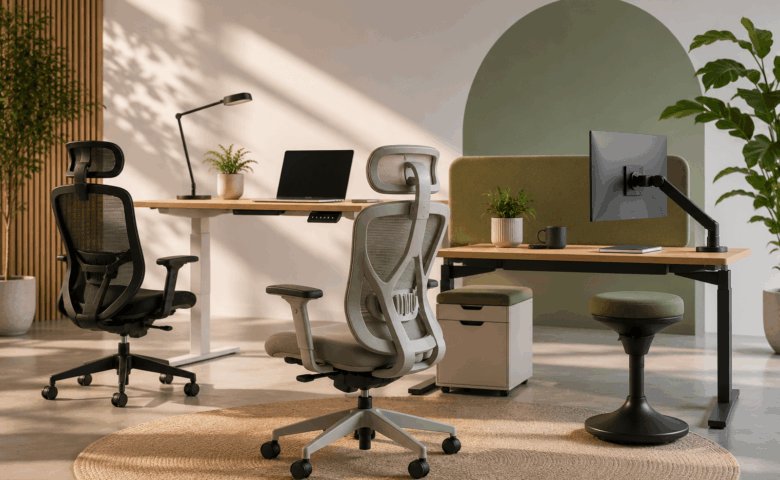
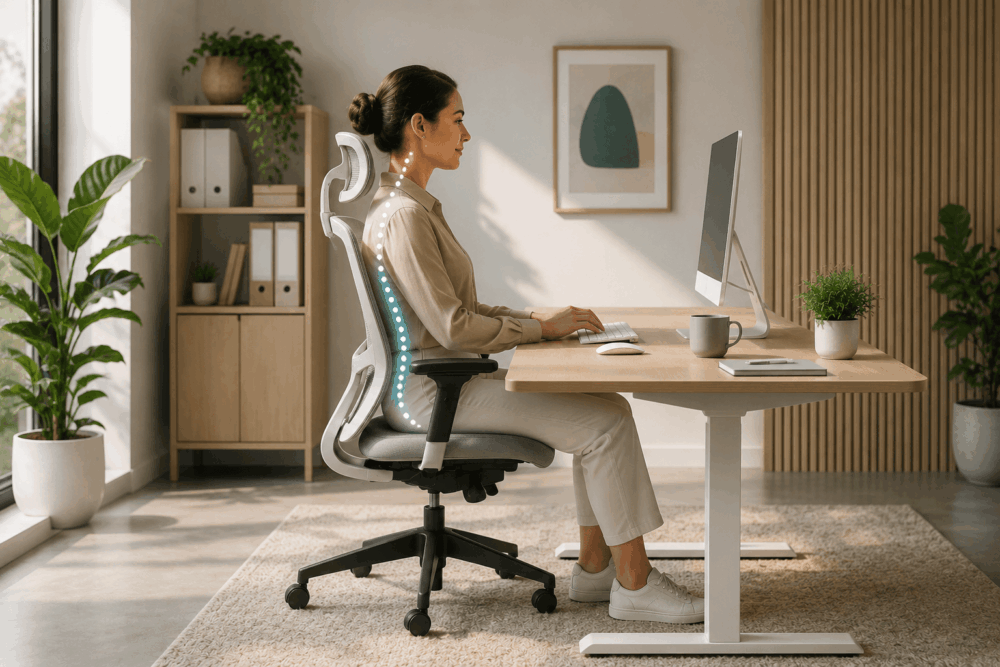
If No One Uses it, it’s Just Decor
Designing a wellness space is only half the job. If employees don’t feel comfortable or encouraged to use it, the space becomes nothing more than aesthetic. Leaders must make it clear that taking a moment to recharge is not just allowed but supported. Wellness spaces should not become yet another box to tick on a company culture checklist. They need to be embraced, lived in and built into the rhythm of the workday. The more people interact with the space, the more value it delivers.
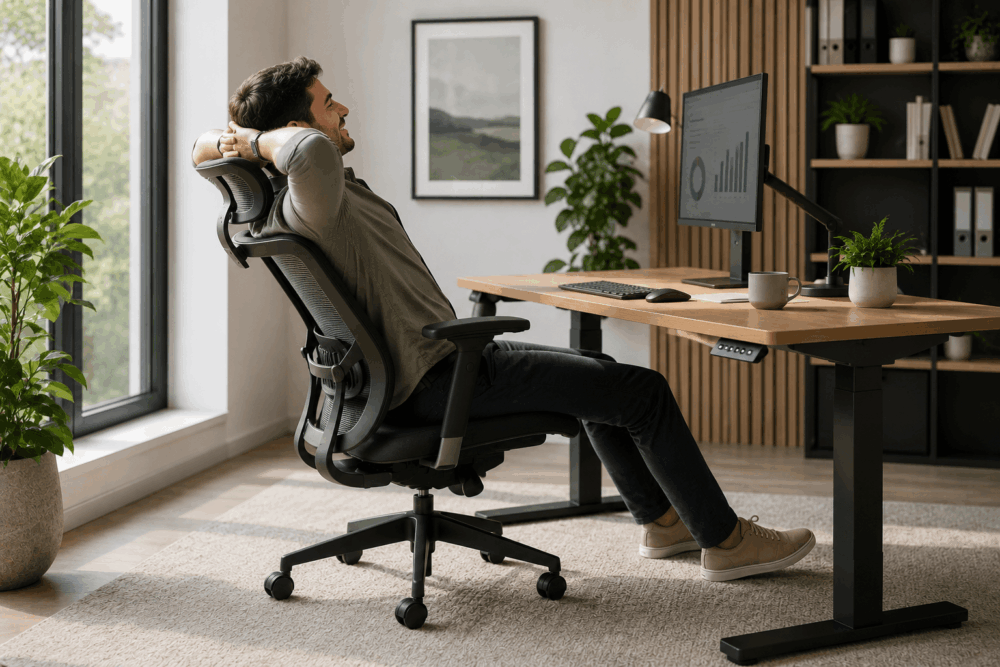
Dealers can guide customers in curating not only the layout but also the content of the room. Add accessible activities that draw people in, headphones with relaxing playlists or nature sounds, tactile elements like stress balls or puzzles to support mental reset. These small additions make the space come alive, transforming it from a set of chairs and mood lighting into a living, usable part of the workplace culture.
The future of workplace wellbeing won’t be measured by how luxurious a space looks, but by how intentionally it’s used. With the right furniture, space planning and employee engagement strategies, wellness rooms become more than just quiet places. They become essential tools for morale and long-term performance.
Maintaining a comfortable workplace temperature is crucial for productivity here’s how office managers can help find the right solutions to keep employees comfortable and operations running smoothly:
The British summer is famously unpredictable, making it difficult to maintain a consistent and comfortable working environment. Sudden changes in weather, coupled with individual temperature preferences, can significantly impact productivity. Research has shown that temperature fluctuations can reduce worker efficiency by up to 10%, with excessive heat leading to fatigue, lack of concentration and increased errors. Conversely, being too cold can lead to discomfort, distraction and higher rates of absenteeism due to illness.
To create a comfortable working environment, businesses must invest in flexible temperature control solutions. Below, we explore various products that dealers should recommend helping workers manage heat at individual workstations, as well as throughout the entire workplace.
Personalised Control Solutions
Providing employees with personalised temperature control options is one of the most effective ways to ensure comfort without excessive energy use. Personal desk fans and air conditioners allow employees to control airflow at their workstations while under-desk heating solutions, such as heated footrests or under-desk heaters, ensure that warmth is focused on the individual rather than the entire office, reducing overall energy consumption. Wearable cooling and heating accessories, such as neck coolers, cooling wristbands and heated clothing, provide employees with personal temperature control, helping to improve comfort.
These solutions also provide an affordable alternative to costly full-office air conditioning or heating systems where employees gain greater autonomy over their work environment, improving morale and productivity.
Natural Light Solutions
Harnessing natural light and heat can make a significant difference in workplace comfort and energy efficiency. Reflectors and light panels can be positioned and angled to direct natural heat where it is needed most. For example, they can warm entryways where cool air is trapped or keep meeting areas cool and airy by reflecting heat away. Reflective window films also reduce glare and redirect sunlight, preventing excessive heat buildup in offices and making cooling more efficient. Smart blinds and curtains that adjust based on external temperatures provide insulation during colder months and block heat during warmer periods, further optimizing energy use.
These natural light solutions offer several advantages for businesses. By reducing reliance on artificial heating and cooling systems, they help cut energy costs. They also provide greater control over office temperatures without requiring major infrastructure changes.
Smart Technology Solutions
Smart technology can greatly improve workplace temperature management, allowing businesses to heat and cool spaces more efficiently based on occupancy and usage patterns. Air sensors monitor office temperature and air quality in real-time, adjusting heating and cooling systems accordingly to maintain optimal conditions. This is particularly useful for meeting rooms or shared workspaces that are occupied infrequently.
By ensuring energy is only used when necessary, they help reduce heating and cooling costs. They also offer a seamless and automated solution, eliminating the need for manual adjustments. Most importantly, they improve workplace efficiency by maintaining a stable and comfortable environment for employees.
A comfortable workforce is a productive workforce. By implementing targeted temperature control solutions, businesses can reduce energy costs, improve employee wellbeing and create a more efficient working environment. For dealers, encouraging businesses to invest in smarter, more personalized heating and cooling solutions enhances workplace comfort while ensuring long-term energy efficiency and productivity gains.
Here at Wave Office, we know you're always looking for the best ways to get the most out of your technology. You've invested in a fantastic new laptop, probably a high-end model with all the latest bells and whistles. That's exciting! But here's a thought: are you getting its full potential?
Often, people focus so much on the laptop itself that they overlook the crucial role of supporting accessories. These aren't just add-ons; they're essential tools that can enhance your laptop’s lifespan, functionality, and performance. Think of it this way: your top-of-the-line laptop is a race car, but without the right tires, fuel, and pit crew, it won't truly perform at its peak.
That's where we come in. By offering a comprehensive suite of essential laptop accessories, we don't just help you protect your investment; we help elevate your entire experience of using your laptop, making sure it stays functional and efficient for years to come. When it comes to laptop essentials, we can provide the total package, making Wave Office your one-stop shop for all your accessory needs.
Wellbeing and Comfort: Work Smarter, Feel Better
We understand that you're spending a lot of time in front of your screen, especially if you're using your laptop for work. While you might be aware of ergonomic solutions, we want to go the extra mile to highlight products that truly promote your overall wellbeing.
Consider how much more comfortable and productive your workday could be with adjustable lifter stands and risers. These simple additions can significantly improve your posture and reduce strain on your wrists. And for those long hours, blue light filters and anti-glare screen protectors are game-changers. They help reduce eye strain, which is crucial when you're staring at a screen all day. Investing in your eye care is a smart move, and we believe these accessories are indispensable for a comfortable, long-term laptop experience.
Privacy and Security: Protect Your Valuable Assets
Your laptop holds valuable information, and ensuring its security and privacy is absolutely vital, especially if you travel frequently or work in public spaces. We can help you with practical accessories like detachable or magnetic privacy screens. These handy tools limit who can see your screen, keeping sensitive information confidential in crowded environments. USB media hubs can also expand your connectivity while adding an extra layer of privacy by managing your connections securely.
And for peace of mind, consider laptop locks and anti-theft devices like cable locks. Imagine being able to physically secure your device to a fixed object, preventing theft. We can also discuss options like anti-theft software that can track and remotely lock a stolen device. These privacy and security accessories are all about safeguarding both the functionality and safety of your laptop.
Maintenance and Operation: Keep Your Laptop Running Smoothly
To ensure your laptop continues to operate smoothly and lasts longer, we can recommend essential maintenance and operational accessories that are often overlooked but incredibly beneficial. Cleaning kits, including screen wipes, keyboard brushes, and microfibre cloths, will help you keep your laptop in pristine condition and maintain its performance. And to prevent overheating during prolonged use, cooling pads are essential for optimal performance and extending your laptop's life.
We can even suggest lesser-known accessories like thermal paste (for improving heat transfer in older laptops) or portable laptop fans to help you maximise performance and extend battery life. These items contribute to smoother operations and can significantly increase the longevity of your device.
By putting together these wellbeing, security, and operational products, we aim to offer you a thoughtful, comprehensive laptop accessory solution that goes beyond the basics. This approach not only adds significant value to your purchase but also ensures that Wave Office becomes your trusted partner in your ongoing tech needs.
Ready to unlock the full potential of your new laptop? Talk to us today about the best accessory bundles for you! Call us on 01293 510553 or web@waveoffice.co.uk
Return-to-office (RTO) strategies are a hot topic and a headache for many employers. Businesses are encouraging people to spend more time in the office, often to make the most of their property; but this has prompted pushback from some, who are asking: “What’s the point of returning to a space that doesn’t serve us?”
According to Focus Forward, a 2025 whitepaper from workplace experience experts Leesman, 69% of senior corporate real estate leaders admit their organisation has not yet found the right RTO approach. They believe their current hybrid model still needs either some or major improvement. Employers, therefore, are working hard to enhance workplace setups and better accommodate hybrid working.
Earning its place
Furniture can be one of the most cost-effective ways to design a space that will entice staff back to the workplace. To achieve this, the furniture must be thoughtfully chosen. Hippo Waste reports that over 22 million pieces of furniture are discarded in the UK each year, with ‘fast furniture’ accounting for 670,000 tonnes of waste. Opting for high-quality, ergonomic and modern pieces signals that a company values not only employee wellbeing, but also sustainability and longevity.
Home offices continue to outperform traditional office spaces on several fronts. Staff consistently report that their home environments support them better, particularly for individual, desk-based work, and when it comes to maintaining privacy and low noise levels during video calls or virtual meetings.
That said, when offices feel human-centred, supportive, adaptable and inclusive, they become places people want to be in. That’s the real benchmark for a successful hybrid structure, not just occupancy, but enthusiasm.
Design for collaboration
Interactions in the office should be meaningful. While technology has made it easier than ever to hold off-site meetings and bring people together virtually, it has its limits. Having employees physically present enables spontaneous conversations and cross-team connections, making meetings feel more open, fluid and collaborative.
To make this work, the space must support those objectives. The right furniture, think soft seating clusters, writable walls and standing tables, can help dissolve hierarchies, spark discussions and break down both physical and psychological barriers to genuine teamwork.
Silent stressors
In 2024, Mental Health First Aid England reported that 79% of UK employees experienced moderate to high stress levels in the workplace. It’s a striking statistic and one that can’t be ignored when encouraging people back to the office.
We often underestimate how much our environment contributes to that stress. It’s one of the reasons home offices continue to outperform traditional workplaces. A chair that digs into your back, a desk that’s too low or a space with nowhere to escape the noise, these are all silent stressors that build up throughout the day. Over time, discomfort becomes distraction, which in turn becomes fatigue.
Furniture can either fuel that stress or help diffuse it. Ergonomic seating that supports good posture, height-adjustable desks which promote movement and acoustically mindful pieces such as high-back chairs or upholstered dividers can all contribute to a more grounded, calming workspace. Even details such as a well-placed coffee table or gently curved furniture edges can make a noticeable difference.
Crucially, offering a variety of furniture types, whether it’s a quiet solo nook, a soft collaborative booth or a lounge chair for reading, gives employees more power over their environment. That sense of autonomy can significantly reduce workplace anxiety.
Fully inclusive
There’s a reason people often feel more focused at home, and it comes down to control. When individuals feel physically comfortable, their cognitive load is reduced, allowing them to concentrate more deeply on their work. This is especially true for neurodiverse staff who often find home environments more accommodating to their unique sensory and focus-related needs.
In contrast, traditional office setups can be overstimulating, unpredictable and full of potential distractions. For example, harsh lighting, background noise and rigid furniture layouts present a minefield of sensory triggers.
Furniture that allows personal control over lighting, sound and seating positions can make all the difference. Comfortable seating, quiet pods, sensory-friendly zones and adjustable, non-fluorescent lighting aren’t luxuries; they’re essential components of inclusive design.
Purposeful spaces
As businesses continue to refine their hybrid strategies, it’s clear the physical workspace needs to earn its place in employees’ weekly routines. With Gen Z now in the office and Gen Alpha not far behind, expectations are higher than ever. Furniture plays a vital, often underestimated, role in this equation.
It’s not just about filling space; it’s about shaping experiences. The right furniture supports wellbeing, fosters collaboration, embraces neurodiversity and creates environments where people can thrive. When thoughtfully selected and strategically placed, it becomes a silent ally in making the workplace feel inclusive, inspiring and worth the commute.
In short, if RTO is going to succeed, it should start with a rethink of the furniture. Comfort, choice and connection aren’t perks; they’re expectations.
Sarah Payne is Head of Design at Kerr Office Group
When you walk into a great classroom you can feel it straight away. The space is bright, welcoming and most importantly, set up so pupils and teachers can focus on learning rather than fighting against the furniture. At Wave Office Ltd, educational environments are our speciality, and we’ve spent decades perfecting three core product families that make the biggest difference:
Robust, ergonomic school tables
Comfort-first student chairs
All-in-one TeacherWalls that give educators the control centre they deserve
Below, we unpack why each element matters and how Wave Office’s design know-how turns everyday classrooms into flexible, future-ready spaces.
1. The Science (and Art) of the School Table
A classroom table takes more punishment in one term than most office desks see in a year. Spilt paint, kicked chair legs, impromptu science experiments your tables need to take it all in their stride.
Frame strength: We use fully-welded steel frames with corner bracing, so there’s no wobble on day one or year ten.
Surface durability: High-pressure laminate tops resist scratches and chemicals; edge banding is heat-sealed so it won’t peel.
Flexible footprints: Rectangular, trapezoidal, curved “wave” and even kite-shaped options allow you to re-configure for group work, exams or STEM layout in minutes.
Height matters: Our junior and senior ranges follow BS EN 1729 height guidance, so posture is supported as pupils grow.
Why it matters: A stable, correctly sized work surface helps students maintain attention and reduces fatigue. Teachers spend less time rearranging the room and more time teaching.
2. Chairs that Care About Posture
Ask any teacher: fidgety students often equal drifting focus. The right chair can make a surprising difference.
Ergonomic shell design supports the natural ‘S’ curve of the spine, encouraging healthy sitting habits from Reception to Sixth Form.
Lightweight but tough: Injection-moulded polypropylene seats with a one-piece design mean no screws to loosen and no joints to fail.
Stackable & colour-coded: Stack 15 high to reclaim floor space at the end of the day, and pick colours that match year groups or subject zones for easy organisation.
Optional extras: Glide feet to protect polished floors, integrated book baskets, and height-adjustable gas-lift stools for science labs or art rooms.
Why it matters: When pupils sit comfortably, concentration goes up and back complaints go down. For staff, lightweight stackability slashes setup time between lessons.
3. TeacherWalls The Command Centre of Modern Teaching
Think of a TeacherWall as the Swiss Army Knife of classroom storage and presentation. One seamless installation combines:
Feature
Benefit
Interactive panel space (or whiteboard)
Central focal point for lessons, cabled neatly behind the fascia
Lockable cupboards & trays
Secure laptops, STEM kits or confidential coursework
Open shelving
Keep teaching aids visible and within arm’s reach
Cable management & power modules
End the trip-hazard spaghetti under desks
Acoustic panels (optional)
Soften noise and improve speech intelligibility
Wave Office designs Teacher Walls to your exact wall dimensions, integrating existing smartboards or specifying new AV if needed. With everything in one place, transitions are faster and classroom floors stay uncluttered.
Built-In Sustainability
Parents, governors and pupils alike increasingly ask how furniture choices affect the planet. Our commitment:
FSC-certified wood across all TeachingWall carcasses
Made in the UK to minimise transport miles and support local jobs
Consultation, Delivery, After-Care Handled
Furniture is only half the story; getting it in on time and trouble-free matters just as much. Wave Office’s turnkey service includes:
Free space planning & 3-D layouts so you can visualise before you buy.
Staged deliveries during holidays or weekends to avoid lesson disruption.
Certified installation teams who work cleanly and safely (and are DBS-checked, of course).
Five-year warranty with real people at the end of the phone if something goes wrong.
Ready to Refresh Your Learning Spaces?
Whether you’re fitting out a brand-new academy or breathing new life into a much-loved Victorian school hall, Wave Office Ltd is here to help. From indestructible tables and posture-perfect chairs to show-stopping Teacher Walls, we bring the expertise, products and passion that let education flourish.
Let’s start the conversation reach us on 01293 510 553 or web@waveoffice.co.uk, and see how tomorrow’s classrooms begin with today’s furniture choices.
Why Your Office Furniture Matters More Than You Think
At Wave Office, we believe that your office isn't just a place where work happens it's a dynamic environment that profoundly impacts productivity, creativity, and the well-being of your team. And at the heart of that environment? Your office furniture.
It might seem like a straightforward decision, but the truth is, investing in the right office furniture is one of the smartest moves you can make for your business. It's not just about filling a space; it's about crafting an experience.
Beyond the Basics: Why Good Office Furniture is a Game-Changer
Forget the days of uncomfortable, one-size-fits-all desks and drab chairs. Modern office furniture, especially the kind we champion at Wave Office, is designed with a multitude of benefits in mind:
Boosted Productivity: Ever tried to concentrate when your back aches or your monitor is at the wrong height? Uncomfortable furniture is a major distraction. Ergonomic chairs, height-adjustable desks, and well-designed storage solutions minimize physical strain and allow your team to focus on their tasks, not their discomfort.
Enhanced Well-being and Morale: A comfortable and aesthetically pleasing workspace shows your employees you value them. It contributes to a positive atmosphere, reduces stress, and can even decrease absenteeism. Happy employees are engaged employees!
Sparking Collaboration & Creativity: The right furniture can actively encourage interaction. Breakout areas with comfortable seating, collaborative tables, and adaptable meeting spaces foster idea-sharing and teamwork.
Reflecting Your Brand & Culture: Your office is a physical manifestation of your brand. Modern, stylish, and functional furniture communicates professionalism, innovation, and attention to detail. It helps create an impression that resonates with clients and attracts top talent.
Maximizing Space Efficiency: Cleverly designed furniture, including modular systems and smart storage, can help you make the most of every square foot, especially in today's often compact office environments.
Wave Office: Your Partner in Workspace Transformation
At Wave Office, we don't just sell furniture; we offer solutions. We understand that every business is unique, with its own specific needs, budget, and aesthetic preferences. That's why we pride ourselves on:
A Curated Selection: We offer a wide range of high-quality, durable, and stylish office furniture, from ergonomic seating and executive desks to collaborative tables and innovative storage solutions. We handpick pieces that combine functionality with contemporary design.
Ergonomic Expertise: We champion ergonomic principles because we know they lead to healthier, happier, and more productive employees. We can guide you through choosing furniture that supports good posture and reduces strain.
Design & Layout Consultation: Not sure where to start? Our team can help you plan your office layout, ensuring optimal flow, functionality, and aesthetics. We can help you envision a space that truly works for you.
Exceptional Service: From initial consultation to delivery and installation, we're committed to providing a seamless and stress-free experience. Your satisfaction is our priority.
Ready to Make a Splash?
Don't underestimate the power of great office furniture. It's an investment in your team, your brand, and your future. Let Wave Office help you create a workspace that inspires, supports, and propels your business forward.
Contact us today to discuss your office furniture needs and let's ride the wave to a better workspace, together!
Workplace frustration is a common emotion that arises when you face obstacles preventing you from achieving your goals. Understanding its root cause can help you manage it more effectively
CREDIT: This is an edited version of an article that originally appeared in Fast Company
Frustration is a feeling that often arises when external or internal barriers prevent you from reaching your goals. While anger is usually directed outward toward an external obstacle, frustration tends to be focused on internal or systemic issues that seem beyond your control. This difference can make frustration feel more difficult to overcome, as it’s often tied to situations where you can’t simply act physically or change the environment around you.
What Do You Need?
Identifying the root cause of workplace frustration is crucial for finding a solution. Sometimes, the source of frustration isn’t immediately obvious, and you might feel stuck without fully understanding why. Take a moment to reflect on the situation: What exactly is stopping you from completing your work? Are you feeling unprepared or lacking the necessary skills? If so, consider creating a proposal to your supervisor that outlines the resources or training you need to become more effective in your role. On the other hand, your frustration might be due to organisational barriers, such as needing approval from someone else to move forward with a task, or a colleague hindering your progress. Identifying the exact nature of the obstacle is the first step in overcoming it.
How Do You Feel?
It’s also important to take a step back and manage your energy levels. Research has shown that there is an optimal level of mental energy required for effective performance. Low energy can lead to disengagement, while too much energy can cause anxiety and difficulty focusing. A small amount of frustration can serve as a useful signal to pay attention, but too much frustration can impair your ability to address the issue at hand. When your frustration becomes overwhelming, it’s harder to think clearly or come up with effective solutions.
Look Inside and Out
While it’s easy to blame workplace frustration on external factors such as poor management or organisational issues, it’s worth considering whether your own reactions might be exacerbating the problem. Sometimes, we interpret others’ actions as obstacles, even when they’re not meant to be. Overestimating your own abilities and taking on more work than you can handle can also contribute to feelings of frustration. It’s important to manage expectations, both your own and others’, and to learn how to respond to frustrations in a way that allows you to move forward constructively.
By understanding the sources of your frustration and taking a step back to evaluate your reactions and the environment, you can address workplace challenges more effectively and maintain a healthier, more productive mindset.
As AI continues to revolutionise workplace productivity, email remains the cornerstone of communication, yet its growing security vulnerabilities demand urgent attention
CREDIT: This is an edited version of an article that originally appeared in SME Today
When it comes to workplace communication, AI has taken centre stage, bringing a wave of innovative applications and productivity tools to businesses and employees alike. However, despite this technological surge, email remains the backbone of workplace communication.
It is still the primary channel for everything from casual exchanges to sharing sensitive documents. Research reveals that over 90% of employees consider email “important” or “very important” to their daily work. Yet, while businesses often take email for granted, this reliance has created a significant security blind spot.
While IT leaders are understandably focused on inbound threats like phishing attacks, ranked as the top concern by 47% of them two-thirds admit that outbound security breaches, often stemming from simple human errors, are responsible for more incidents of data loss.
Policy Awareness
Alarmingly, only 73% of employees are aware of their organisation’s email security policies, and just over half (52%) follow them consistently. This highlights two key challenges: businesses need to improve how they communicate their email security policies, and employees need better tools and support to make it easier to follow those policies.
Email may seem like a familiar and safe tool, but the threat landscape has evolved. AI-driven attacks are making phishing and ransomware more deceptive, with techniques like payloadless phishing enabling attackers to impersonate trusted contacts and manipulate recipients into revealing sensitive information, without the need for traditional malware.
Outbound Risks
Outbound risks, such as sending emails to the wrong recipient, accidentally sharing sensitive data, or failing to properly encrypt attachments, are just as, if not more, prevalent. Even the most conscientious employees make mistakes, especially under pressure or due to simple oversight. More than half of employees admit to making email errors at least once every few months, with 30% saying they make mistakes on an almost weekly basis.
The gap between perceived risks and reality is something IT leaders are increasingly aware of. The rise of hybrid and remote working introduces new vulnerabilities, as employees work across multiple devices and networks, making it harder to enforce email security policies effectively.
Building Robust Security
To achieve robust email security, organisations must adopt a multi-faceted approach that addresses both human and technical vulnerabilities. First, fostering a culture of security awareness is crucial. Training programs should go beyond the basics and equip employees with the skills to recognise not only phishing attempts but also the risks associated with outbound email mistakes. Clear communication of security policies is equally important, helping employees understand the “why” behind the rules and feel empowered to follow them. With less than three-quarters of employees aware of their organisation’s email security policies, and adherence still a challenge, this is a critical area for improvement.
Technology also plays a key role. Instead of focusing solely on inbound threats, organisations should invest in solutions that address outbound risks. These tools should seamlessly integrate into daily workflows, balancing usability with security. AI-driven solutions can provide real-time guidance to employees, alerting them to potential errors before they happen. For instance, attachments can be flagged as sensitive, recipients can be automatically verified based on email content and emails can be recalled if sent mistakenly. This level of automation empowers employees to avoid costly mistakes while ensuring adherence to security policies and compliance requirements.
The path to effective email security requires a combination of awareness, clear policies and the right technological tools to support employees. By addressing both human and technical vulnerabilities, organizations can ensure email remains a safe and reliable communication channel.
In today's fast-paced world, where many of us spend a significant portion of our day at a desk, the importance of a comfortable and supportive workspace cannot be overstated. Ergonomic furniture is no longer a luxury; it's a necessity for maintaining well-being, boosting productivity, and preventing long-term health issues. If you're in the Crawley, West Sussex area and looking to upgrade your office environment, look no further than Wave Office.
Wave Office, based right here in Crawley, is a local expert in providing comprehensive office furniture solutions. They understand that a well-designed workspace goes beyond just aesthetics; it needs to support the people who use it every day. This is where their range of ergonomic furniture and related products comes into play.
What is Ergonomic Furniture and Why Does it Matter?
Ergonomics is the science of designing and arranging things people use so that the people and things interact most efficiently and safely. In the context of office furniture, this means creating chairs, desks, and accessories that support your body's natural posture and movements, reducing strain and the risk of musculoskeletal disorders.
Investing in ergonomic furniture offers a multitude of benefits, including:
Improved Posture: Ergonomic chairs, for example, are designed with features like adjustable lumbar support, seat height, and armrests to help you maintain a healthy spine alignment.
Reduced Pain and Discomfort: By supporting your body correctly, ergonomic furniture can alleviate common office-related aches and pains in the back, neck, shoulders, and wrists.
Increased Productivity: When you're comfortable and not distracted by discomfort, you can focus better on your tasks, leading to improved concentration and productivity.
Enhanced Well-being and Morale: A workspace that prioritizes employee health and comfort contributes to higher job satisfaction and overall morale.
Prevention of Long-Term Health Issues: Properly aligned seating and workspace setups can help prevent the development of chronic conditions like carpal tunnel syndrome and chronic back pain.
Ergonomic Solutions Available at Wave Office
Wave Office in Crawley offers a variety of products designed to enhance the ergonomics of your workspace. While their full range is extensive, you can typically find essential ergonomic items and related accessories to create a more supportive environment. Their offerings are likely to include:
Ergonomic Office Chairs: Look for chairs with adjustable features such as lumbar support, seat depth and height, armrests, and tilt mechanisms to customize the fit to your body.
Ergonomic Accessories: Products like arm and wrist supports can help maintain neutral wrist positions while typing, reducing the risk of strain. Desk screens can also contribute to a better work environment by managing privacy and acoustics.
Height-Adjustable Desks: While not explicitly listed as a separate category, many modern office furniture suppliers like Wave Office offer height-adjustable or standing desks that allow you to alternate between sitting and standing throughout the day, promoting better circulation and reducing the negative effects of prolonged sitting.
By choosing ergonomic furniture from a local supplier like Wave Office in Crawley, you not only invest in your own or your employees' health and comfort but also support a local business. Their expertise in office interiors means they can help you create a complete workspace solution that is both functional and ergonomic.
If you're ready to experience the benefits of a truly supportive workspace, consider exploring the ergonomic furniture and related products available at Wave Office in Crawley, West Sussex. Your body will thank you!
As reported by DfE, thousands of parents can access free childcare to support their return to work. Ensure your staff know their current entitlements plus how and when to apply
Who can get 30 hours of free childcare?
Working parents or carers of children aged three to four in England are currently entitled to 30 hours free childcare a week.
The childcare provider must be approved so informal providers such as grandparents don’t count and the support stops when your child starts reception class.
Some providers may ask you to pay for extra costs like meals, nappies or trips.
Eligibility depends on whether you’re working, your income, your child’s age and circumstances and your immigration status.
There are different childcare support schemes in Scotland, Wales and Northern Ireland.
Who can get 15 hours of free childcare?
All parents of children aged three to four can access 15 hours of free childcare. It doesn’t matter how much you earn or how many hours you work.
Currently, parents of two-year-olds can access 15 hours a week of free childcare if they are in receipt of income support benefits, such as Universal Credit, and earn less than £15,400 a year.
From April 2024, working parents of two-year-olds will also be able to access 15 hours of free childcare. Applications opened on 2 January 2024.
When will the 30 hours of free childcare be extended?
We’re introducing free childcare gradually, to make sure that providers can meet the needs of more families, starting with 15 hours of free childcare for working parents of two-year-olds. If eligible, you can apply now.
From September 2024, 15 hours of free childcare will be extended to all children from the age of 9 months.
From September 2025, working parents of children under the age of five will be entitled to 30 hours of free childcare a week.
If your child is age three or four and you want to access 15 hours of free childcare, you don’t need to make an application as your childcare provider will do this for you automatically.
You’ll just need to show them a copy of your child’s birth certificate, and you’ll also have to sign a declaration form. Talk to your childcare provider directly to find out more.
Working parents of two-year-olds can also apply for 15 hours of free childcare, to be accessed from April. Parents can apply via Childcare Choices.
If your child is three or four years old and you’re eligible for 30 hours of free childcare, you’ll need to fill out an application form online.
If you’re eligible, you’ll get a childcare account and a code which you’ll need to show to your childcare provider, along with your child’s date of birth and your National Insurance number.
You’ll need to reconfirm your details every three months, or your code will expire.
When should I apply for free childcare?
You can make an application at any point in the year. However, to make sure you receive your code, leave plenty of time to apply. The best time to apply depends on when your child turns three work out when is best for you at this link.
You will be asked to reconfirm you’re still eligible every 3 months. This means that if you apply at least 3 months before your child starts going to your childcare provider, you’ll need to reconfirm you’re still eligible before you take up a place.
For parents of two-year-olds to access 15 hours of free childcare, we recommend those eligible apply between mid-January and the end of February so that parents won’t need to reconfirm eligibility before taking up a place. Parents can apply via Childcare Choices.
From October 1, 2023, England will crack down on single-use plastics, including polystyrene cups, cutlery, and more, as part of its commitment to reduce plastic pollution and protect the environment, so businesses, get ready to make the switch
The upcoming ban includes polystyrene cups and food containers, single-use plastic cutlery and single-use balloon sticks. There will also be a restriction to the supply of single-use plastic trays and bowls to members of the public, although businesses can continue to supply these items if they are used as packaging in shelf-ready pre-packaged food items.
How to prepare for the single-use plastics ban:
The government response to the consultation on these bans, published in January, set out that these restrictions would be introduced from October 2023 instead of April 2023, giving businesses more time to prepare.
Businesses will need to use up existing stock and find alternative substitutes or reuse solutions by 1 October 2023.
The government is committed to tackling plastic pollution and littering and to reduce avoidable waste. Single-use plastics have damaging environmental impacts as they are commonly littered and are difficult to recycle. These impacts need to be managed so that we can protect our environment.
Damaging environmental impacts: Plastic pollution takes hundreds of years to break down and inflicts serious damage to the environment. It is also a source of greenhouse gas emissions, from the production and manufacture of the plastic itself to the way it is disposed of.
Unnecessary littering: England uses around 2.7 billion items of single-use cutlery most of which are plastic and 721 million single-use plates per year, but only 10% are recycled.
We know that people and businesses want to do the right thing for the environment and support our ban on single-use plastics. However, if the rules are not complied with, a range of enforcement options have been provided, including both civil and criminal sanctions. The bans will be enforced by Trading Standards.
You can also visit the Defra stand at the Restaurants and Takeaway packaging EXPO on 10-11 October, where you can speak directly with the Department’s SUP experts.
Sign up to the UK Plastics Pact
Members of the UK Plastics Pact have achieved an 84% reduction in unnecessary single-use plastics since 2018 by successfully driving the reuse of problematic plastic items. To find out more and to be part of this success please sign up here.
Thank you to businesses and trade associations who have already offered to share information to help businesses comply with the ban by generating further public awareness and understanding of the need to minimize single-use plastic waste.
From Stress to Success: The 4-Day Workweek Revolution as reported in SME today, almost every UK company that took part in the world’s biggest four-day week trial, has decided to continue with the reduced working hours model, 92% of the 61 participating companies confirming the policy is a permanent change
While this shift towards a better work-life balance is promising, Adrian Lewis, Co-founder and Global Lead at Activ People HR advises caution to firms looking to follow suit and ensure they have the right systems in place to make this a success.
Adrian says, “The four-day working week is something many employees would value as it can help them achieve a better work-life balance. This in turn can make them more motivated and enthusiastic, which boosts productivity. It’s easy to see why firms might want to implement this model.
“However, we would urge caution and for employers to think carefully about offering a four-day week, as if not managed correctly, it can be detrimental to the business and to employees, as they try to squeeze their workload into a shorter working week.”
The UK trial showed the main benefits of shorter working hours were around wellbeing with 39% of employees saying they were less stressed, and 71% having reduced levels of burnout at the end of the trial. Also, levels of anxiety, fatigue and sleep issues decreased, while mental and physical health both improved.
Results showed increased productivity and engagement too, with organisations reporting revenue increases of 35% on average, compared with other periods, and the number of staff leaving decreasing significantly, dropping by 57% over the trial period.
However, it hasn’t been plain sailing for all involved as it’s not a model that suits all businesses. Disadvantages reported included staff being exhausted by the time they reached their day off, and employers struggling to get staff cover or facing extra staff costs if the business is customer-facing such as a restaurant or shop.
Adrian adds: “For firms considering implementing a four-day week, forward planning and adopting the right HR systems can ensure a smooth transition. Going digital and using tools like absence management software can offer an accurate way to keep track of staff, so they know who is off when, and allow managers to plan ahead.
“Digital tools give instance visibility over the workforce as well as accurate data on other absences such as sick days or holidays. This can help them spot any changes to behaviour which may indicate that the four-day week isn’t working for some.
“For example, if someone ends up stressed by trying to cram work into fewer days this could lead to them taking more time off sick if they can’t cope. Identifying such patterns helps companies address any concerns promptly and make adjustments to maintain a healthy work environment.
“Introducing a four-day working week can bring substantial benefits when managed correctly and proactively monitored for changes in behaviour. Using digital tools can support the decision to offer this whilst at the same time staying attentive to any negative impacts.”
From Stress to Success: The 4-Day Workweek Revolution
We use cookies on our website to give you the most relevant experience by remembering your preferences and repeat visits. By clicking “Accept All”, you consent to the use of ALL the cookies. However, you may visit "Cookie Settings" to provide a controlled consent.
This website uses cookies to improve your experience while you navigate through the website. Out of these, the cookies that are categorized as necessary are stored on your browser as they are essential for the working of basic functionalities of the website. We also use third-party cookies that help us analyze and understand how you use this website. These cookies will be stored in your browser only with your consent. You also have the option to opt-out of these cookies. But opting out of some of these cookies may affect your browsing experience.
Necessary cookies are absolutely essential for the website to function properly. These cookies ensure basic functionalities and security features of the website, anonymously.
Cookie
Duration
Description
cookielawinfo-checkbox-analytics
11 months
This cookie is set by GDPR Cookie Consent plugin. The cookie is used to store the user consent for the cookies in the category "Analytics".
cookielawinfo-checkbox-functional
11 months
The cookie is set by GDPR cookie consent to record the user consent for the cookies in the category "Functional".
cookielawinfo-checkbox-necessary
11 months
This cookie is set by GDPR Cookie Consent plugin. The cookies is used to store the user consent for the cookies in the category "Necessary".
cookielawinfo-checkbox-others
11 months
This cookie is set by GDPR Cookie Consent plugin. The cookie is used to store the user consent for the cookies in the category "Other.
cookielawinfo-checkbox-performance
11 months
This cookie is set by GDPR Cookie Consent plugin. The cookie is used to store the user consent for the cookies in the category "Performance".
viewed_cookie_policy
11 months
The cookie is set by the GDPR Cookie Consent plugin and is used to store whether or not user has consented to the use of cookies. It does not store any personal data.
Functional cookies help to perform certain functionalities like sharing the content of the website on social media platforms, collect feedbacks, and other third-party features.
Performance cookies are used to understand and analyze the key performance indexes of the website which helps in delivering a better user experience for the visitors.
Analytical cookies are used to understand how visitors interact with the website. These cookies help provide information on metrics the number of visitors, bounce rate, traffic source, etc.
Advertisement cookies are used to provide visitors with relevant ads and marketing campaigns. These cookies track visitors across websites and collect information to provide customized ads.