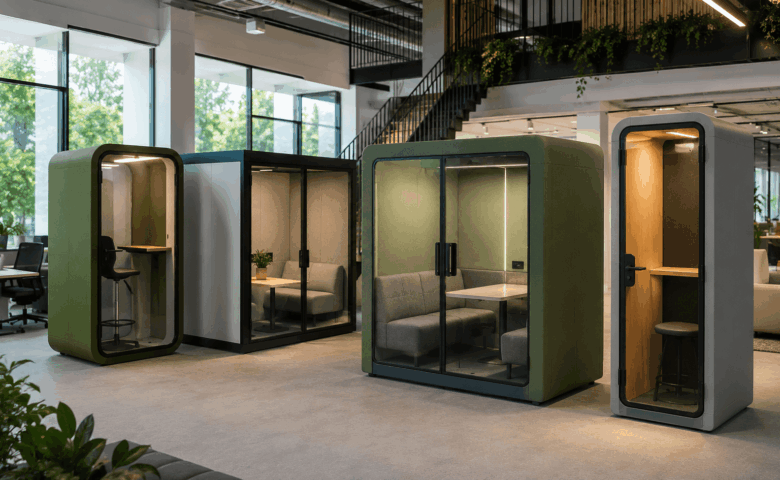
10 Office Pods for Modern Workplaces and How to Choose the Right One
Walk through most modern offices, and you'll see the same challenge appearing in different forms.
Somebody is taking a Teams call at their desk because every meeting room is occupied. A manager is trying to have a confidential conversation in a breakout area. A project team has gathered around a table only to be interrupted by noise from the surrounding workspace.
Open-plan offices have delivered many benefits over the years, but privacy is rarely one of them.
At the same time, many organisations have reduced their office footprint, introduced hybrid working policies, and changed the way their workspace is used. While these changes have increased flexibility, they have also created greater pressure on meeting rooms, quiet spaces and collaboration areas.
This is where office pods can help.
The challenge is that "office pod" now covers everything from a single-person phone booth to a fully enclosed modular meeting room. Choosing the wrong type can leave you with an expensive solution that doesn't solve the problem you were trying to address in the first place.
At Wave Office, conversations about office pods rarely start with products. They usually start with questions.
- How many people need the space?
- What activities will take place there?
- Is the challenge privacy, noise, lack of meeting rooms, or all three?
The answers often lead to very different recommendations.
This guide looks at ten office pod solutions and the workplace challenges they are designed to solve, helping you identify which option may be the best fit for your organisation.
What Should You Look for When Choosing an Office Pod?
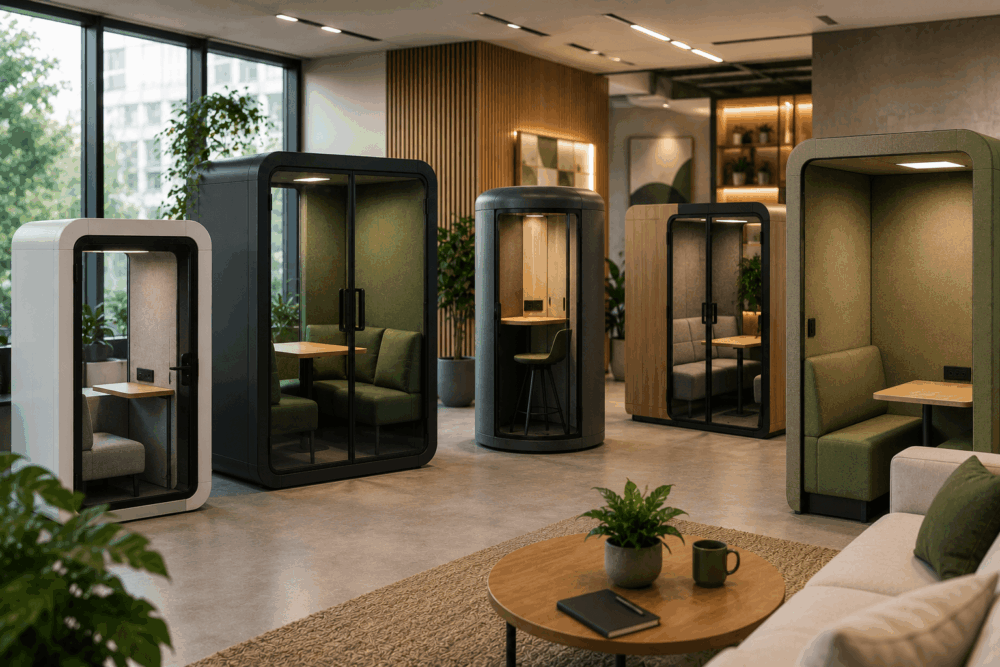
The best office pod depends less on features and more on how people will actually use it.
A beautifully designed booth can still be the wrong choice if it doesn't support the way your team works.
Before looking at products, consider:
- How many people need access each day?
- Will it mainly be used for calls, meetings or focused work?
- How much floor space is available?
- Are you solving a privacy problem or a meeting room shortage?
- Is the office likely to change over the next few years?
The answers will usually narrow down your options very quickly.
The Biggest Mistakes Businesses Make When Buying Office Pods
Choosing a Product Before Identifying the Problem
One of the most common mistakes is starting with a product rather than a workplace challenge.
A business looking for additional meeting space may initially focus on phone booths. A company struggling with noise might assume it needs a large meeting pod when individual focus booths would solve the issue more effectively.
Underestimating Demand
A single booth often seems sufficient during the planning stage. Then it becomes the most popular space in the office.
In hybrid workplaces where Teams calls and video meetings are common, demand for private space is often higher than organisations expect.
Assuming Every Acoustic Pod Performs the Same Way
Different products provide different levels of privacy, enclosure and acoustic performance.
A partially enclosed collaboration booth serves a very different purpose to a fully enclosed meeting room pod.
Focusing Only on Today
It’s important to remember that office layouts evolve, teams grow, working patterns change; business never sleeps and how your space handles that matters.
Some organisations benefit from choosing solutions that can adapt alongside the business rather than solving a short-term requirement.
1. The Bob Office Privacy Booth: When One Space Needs to Do More Than One Job
The Bob Office Privacy Booth is one of the more versatile solutions in this guide.
Rather than being designed around a single activity, The Bob can support focused work, private conversations and informal collaboration depending on the configuration selected.
Available in two, four and six-person layouts, The Bob combines upholstered acoustic walls with integrated tables and optional additions such as lighting, ventilation and glass doors.
What makes The Bob particularly interesting is its flexibility.
Many organisations are still learning how employees use the workplace following changes to hybrid working patterns. A booth that supports multiple activities can often deliver more long-term value than a highly specialised solution.
The Bob is well-suited to organisations looking for adaptable workplace space without moving towards larger modular room systems.
2. The Bea Acoustic Meeting Booth: Designed for Informal Collaboration
Not every meeting requires a formal boardroom.
The Bea Acoustic Meeting Booth is designed around a more relaxed style of collaboration, combining deep cushioned seating with a distinctive pitched roof design that creates a comfortable, den-like environment.
This makes The Bea particularly suitable for:
- Project discussions
- Informal catch-ups
- One-to-one meetings
- Hybrid collaboration sessions
Where traditional meeting rooms can sometimes feel formal and underused, The Bea creates a space people are more likely to use naturally throughout the day.
For businesses looking to encourage spontaneous collaboration without introducing additional meeting rooms, it offers an attractive middle ground.
3. The Bill Meeting Pod: Creating Privacy Within Busy Offices
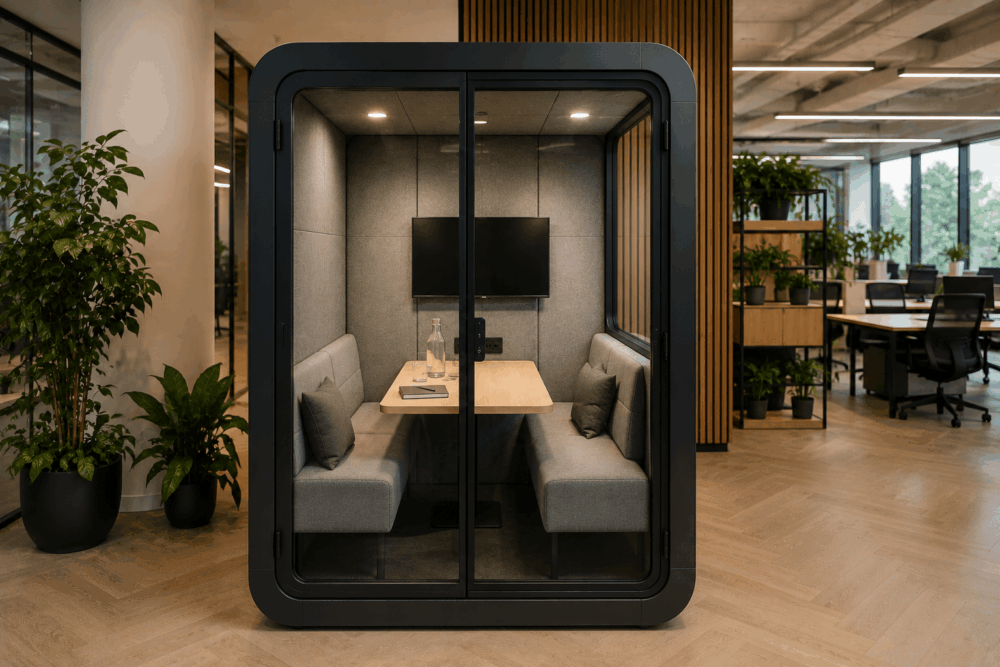
While The Bea focuses on collaboration, The Bill Meeting Pod leans more towards privacy.
Its angular design, upholstered structure and optional glass door help create a dedicated environment for conversations that need greater separation from surrounding workplace activity.
The Bill is often a strong choice for:
- Management discussions
- HR meetings
- Client conversations
- Interview spaces
- Video meetings
In many open-plan offices, confidential conversations become difficult simply because there is nowhere suitable to have them.
The Bill addresses that challenge without requiring permanent construction or dedicated meeting rooms.
4. The Solus Acoustic Office Pod: The Most Adaptable Option in the Collection
If you're unsure how workplace requirements might evolve over the next few years, The Solus Acoustic Office Pod deserves serious consideration.
Unlike many products that serve a single purpose, The Solus is available as:
- A phone booth
- An individual work pod
- A private office pod
- Two-person meeting pods
- Four-person meeting pods
That flexibility makes it one of the most adaptable solutions available.
The Solus is particularly well suited to organisations embracing hybrid working, activity-based working or flexible office layouts.
Integrated lighting, ventilation and optional power connectivity support longer periods of use, while the variety of configurations allows organisations to create a consistent look across multiple workspace types.
For businesses still defining how their office will be used in the future, The Solus offers a level of adaptability that few alternatives can match.
5. The Bob Rooms: When a Booth Isn't Enough
There comes a point where adding another booth no longer solves the problem.
If meeting rooms are constantly booked, teams struggle to find enclosed spaces and larger discussions regularly spill into open-plan areas, the issue may not be privacy. It may be a shortage of rooms.
This is where The Bob Rooms Modular Meeting Room stands apart.
Available in depths from 1200mm through to 4800mm, The Bob Rooms create fully enclosed modular spaces without the disruption associated with traditional construction.
Unlike standard office booths, they are designed to function as genuine rooms.
Businesses can configure panel layouts, glazing, furniture arrangements and technology integration to create spaces that support:
- Team meetings
- Training sessions
- Project rooms
- Client presentations
- Larger collaboration sessions
For organisations that have outgrown smaller pods, The Bob Rooms can provide a practical alternative to permanent building work.
6. Connection Rooms: Reimagining How Space Is Used
Connection Rooms solve a slightly different challenge.
While The Bob Rooms create enclosed destinations, Connection Rooms focus on shaping the workplace itself.
Built around a modular post-and-beam system, Connection Rooms allow organisations to create meeting spaces, focus areas, breakout zones and collaborative environments without losing the openness of the wider office.
This makes them particularly appealing for:
- Workplace refurbishments
- Agile working environments
- Growing businesses
- Multi-functional office layouts
Rather than simply adding a room, Connection Rooms help define how space is organised.
For Facilities Managers planning long-term workplace flexibility, that distinction can be significant.
7. The Say Box Acoustic Booth: Built Around Frequent Calls
If employees spend a large portion of their day on calls, comfort becomes just as important as privacy.
The Say Box Acoustic Booth is designed specifically around this type of use.
Featuring upholstered acoustic panels, integrated ventilation, motion-activated lighting, USB charging and a perch table, it creates an environment that supports regular phone and video conversations throughout the day.
The premium design also makes it well-suited to customer-facing environments where appearance matters.
Sales teams, recruiters and customer service departments often generate the highest demand for individual booths. In those situations, creating a comfortable experience can make a meaningful difference to how frequently the space is used.
8. The Retreat Box: A Dedicated Space for Focus
Open-plan offices are excellent for collaboration.
They are not always ideal for concentration.
The Retreat Box is designed to provide a dedicated space for focused work, private calls and virtual meetings within a remarkably compact footprint.
At just 1000mm x 1000mm, it can fit into locations where larger pods may not be practical.
Integrated lighting, ventilation and power supply help support extended use, while the enclosed environment creates separation from surrounding distractions.
For organisations looking to introduce focus space without sacrificing large amounts of floor space, The Retreat Box offers a practical solution.
9. The Hana Compact Acoustic Booth: Privacy for Smaller Workplaces
Not every office has the space for larger acoustic pods.
The Hana Compact Acoustic Booth is specifically designed for environments where every square metre matters.
Its compact footprint, plug-and-play installation and integrated power options make it particularly suitable for:
- Smaller offices
- Co-working spaces
- Reception areas
- Shared workplaces
The Hana also offers a straightforward user experience. Lighting and ventilation activate automatically, while integrated power and USB connectivity support modern working requirements.
For businesses looking to create private space quickly and efficiently, The Hana can be an attractive option.
10. The Session Pod Collection: One Range, Multiple Workplace Solutions
The Session Pod Collection is difficult to describe as a single product because it is really a family of workplace solutions.
The range includes:
- Single-person phone booths
- Two-person booths
- Four-person collaboration pods
- Six-person meeting booths
- Glass-front enclosed pods
- Accessible Session Rooms
This breadth makes Session particularly appealing for organisations seeking consistency across multiple workspace settings.
Rather than mixing products from different collections, businesses can create a coordinated environment using a single design language throughout the workplace.
With multiple roof styles, seating configurations, enclosed and open options, Session adapts to a wide variety of workplace requirements.
For larger organisations planning multiple collaboration zones, breakout spaces and meeting areas, few collections offer the same level of flexibility.
Which Office Pod Is Right for Your Workplace?
The right office pod depends on the challenge you're trying to solve.
| If your workplace needs... | Consider... |
| Private calls and video meetings | The Say Box, The Retreat Box, The Hana |
| Focused individual work | The Retreat Box, The Hana, The Solus |
| Informal collaboration | The Bea, The Bob |
| Private meetings | The Bill, The Bob |
| Flexible workplace layouts | The Solus, Connection Rooms |
| Additional meeting rooms | The Bob Rooms |
| Consistency across multiple workspace types | The Session Pod Collection |
| Future adaptability | The Solus, Connection Rooms, Session |
The best solution is rarely the largest booth or the most feature-rich product.
It is the one that aligns most closely with the way your people work.
Office pods have become an important part of modern workplace design because they address challenges that many traditional office layouts struggle to solve.
Whether the priority is focused work, confidential conversations, hybrid meetings or additional collaboration space, there is no single solution that suits every organisation.
The most successful projects start by understanding workplace behaviour, identifying where friction exists and selecting solutions that genuinely support the way people work.If you're exploring office pods and would like guidance on which solution best fits your workplace, why not contact us and our Wave Office team can help you compare options, assess your available space and create a more effective environment for focus, collaboration and privacy.