

7 Ways Office Furniture Can Improve Employee Productivity
A productive workplace relies on more than motivated employees. Office furniture, workspace planning and layout all influence how comfortably and efficiently people can carry out their daily tasks.
Rather than viewing furniture as a standalone purchase, it's worth considering how desks, seating, storage and collaborative spaces work together to support different ways of working.
Whether you're updating part of your office or planning a complete refurbishment, thoughtful planning can help you make better long-term decisions. If you're considering a workplace upgrade, at Wave Office, we have plenty of office design build services to help create a workspace tailored to your business and the way your team works.
Why Office Furniture Matters For Employee Productivity

Office furniture helps employees work more effectively by supporting comfort, organisation and collaboration within a well-planned workspace.
Employees interact with desks, chairs, storage and shared spaces throughout the working day. When these elements are planned around daily tasks, work becomes easier to organise and teams can move more efficiently between focused work and collaboration.
Furniture should support how people work rather than simply fill available space. Replacing individual items without reviewing the overall layout may solve one issue while creating another.
Before investing in new furniture, consider:
- How employees move around the office.
- Which teams collaborate most frequently.
- Whether there are enough quiet spaces for focused work.
- If storage meets current working practices.
- How the workspace can adapt as the business grows.
Taking a strategic approach helps businesses create an office that supports day-to-day operations while making better long-term use of their furniture investment.
Ergonomic Office Chairs Improve Comfort And Focus
Adjustable office chairs help accommodate different users, making it easier to work comfortably throughout the day.
No single chair suits every employee. Differences in height, role and working style mean seating should allow users to adjust their workstation to meet individual requirements. Features such as lumbar support, seat height adjustment and adjustable armrests help employees achieve a comfortable working position while supporting Display Screen Equipment (DSE) assessments.
This flexibility is particularly valuable in hybrid offices where multiple employees may share the same workstation throughout the week. Chairs that can be adjusted quickly allow each user to tailor the setup before starting work.
When choosing office seating, consider:
- Seat and backrest adjustability.
- Lumbar and armrest support.
- Compatibility with desk height.
- Shared or assigned workstations.
- Durability for commercial use.
Replacing every chair at once may not be necessary. Many businesses prioritise departments where employees spend the most time at a desk before introducing improvements across the wider workplace.
Office chairs deliver the greatest value when considered alongside desks, monitor positioning and workspace layout. Taking a wider planning approach helps create workstations that support employees' daily tasks while making better long-term use of your furniture investment.
Adjustable Desks Support Flexible Working Styles
Height-adjustable desks allow employees to adapt their workstations to suit different tasks and personal preferences.
Modern offices rarely operate in exactly the same way they did a decade ago. Hybrid working, flexible schedules and shared workstations have changed how businesses use office space, creating greater demand for adaptable furniture.
Height-adjustable desks give employees the option to alter their working position throughout the day according to personal preference or the task they're completing. While research continues into the wider effects of sit-stand working, these desks primarily provide flexibility rather than guaranteed productivity improvements.
They can also simplify workstation setup within hybrid environments. Employees using hot desks can adjust the desk to suit their preferred working position without requiring separate furniture for each individual.
Businesses considering height adjustable desks should think beyond the desk itself. Monitor positioning, cable management, power access and storage all contribute to creating a workstation that functions effectively.
Questions worth considering include:
- Which employees would benefit most?
- Will desks be permanently allocated or shared?
- Is there sufficient cable management?
- Does the surrounding layout provide enough movement space?
- Can existing storage integrate with new desks?
Taking a broader planning approach helps ensure adjustable desks fit naturally into the workspace rather than becoming standalone features.
Better Desk Layouts Help Teams Work More Efficiently
Even the best furniture cannot compensate for a poor office layout. A well-planned workspace improves movement, supports communication and gives employees the flexibility to work in ways that suit their roles.
The way desks, meeting areas and shared spaces are arranged has a direct impact on how easily employees complete everyday tasks. A layout designed purely to maximise capacity can create bottlenecks, increase distractions and make collaboration less efficient.
Before changing your furniture, review how teams use the office. Customer-facing departments may benefit from sitting together, while finance, HR or administrative teams may need quieter areas for focused work.
When planning desk layouts, consider:
- Clear circulation routes throughout the office.
- Team neighbourhoods that encourage collaboration.
- Separate areas for focused work and informal meetings.
- Enough space around desks for comfortable movement.
- Flexibility to accommodate future growth or changing team structures.
Hybrid working also influences layout decisions. Shared desks, touchdown spaces and collaborative zones can help businesses make better use of available space while adapting to changing occupancy levels.
Reviewing your office layout before purchasing new furniture helps ensure every workstation, meeting area and shared space supports the way your business operates, delivering greater long-term value from your investment.
Storage Solutions Reduce Workplace Clutter And Distractions
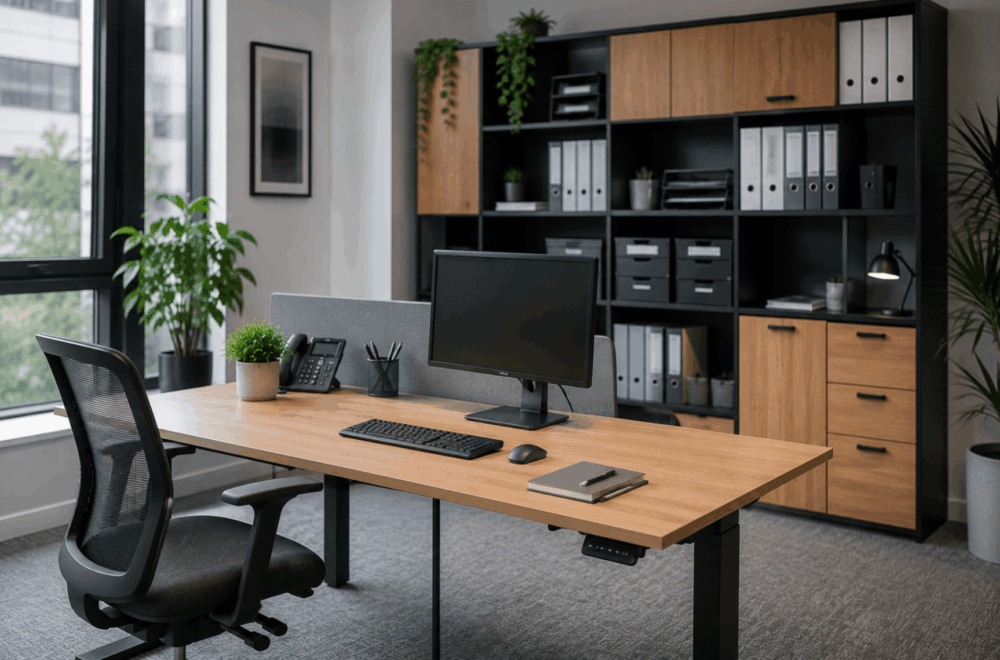
Accessible storage helps keep workspaces organised and allows employees to spend less time managing paperwork and equipment.
An organised workspace makes daily tasks easier to manage. Searching for files, moving equipment between desks or working around unnecessary clutter can interrupt workflow and reduce the usability of the office.
The right storage solution depends on how your business operates. A workplace using assigned desks may benefit from personal pedestals and filing cabinets, while hybrid offices typically rely more on shared storage, lockers and centralised filing systems.
When reviewing storage requirements, consider:
- How frequently documents need to be accessed.
- Whether employees require personal or shared storage.
- Security requirements for confidential information.
- Storage for laptops, peripherals and personal belongings.
- Future changes in staffing or office layout.
Mobile pedestals can provide flexibility where teams regularly move between workstations, while lockers help support desk-sharing by giving employees a secure place to store personal items throughout the day.
Storage should also complement the office layout. Placing cupboards, shelving and filing systems close to the teams using them reduces unnecessary movement without creating obstacles within circulation routes.
Reviewing storage during an office refurbishment can also identify opportunities to reduce underused cabinets, free up valuable floor space and create a cleaner working environment without increasing the overall office footprint.
Acoustic Office Furniture Helps Improve Concentration
Acoustic furniture can help reduce everyday distractions by creating quieter areas for focused work and private conversations.
Modern offices frequently combine collaborative working with individual tasks, creating competing demands within the same space. While open-plan layouts encourage communication, they can also generate background noise that makes concentration more challenging.
Acoustic furniture provides businesses with additional options for managing these environments. Rather than altering the building itself, products such as acoustic screens, privacy booths and meeting pods create dedicated spaces for activities requiring greater separation from surrounding office noise.
Depending on workplace requirements, businesses may consider:
- Desk-mounted acoustic screens.
- Freestanding acoustic panels.
- Phone booths for private calls.
- Meeting pods for small group discussions.
- Enclosed collaboration spaces.
These solutions should be viewed as part of a wider workspace strategy rather than standalone fixes. Furniture cannot eliminate every source of workplace noise, although thoughtful planning can help separate quieter work from more collaborative activities.
For example, locating phone booths away from open desk areas allows employees to take video calls without disturbing colleagues, while small meeting pods reduce pressure on larger meeting rooms for short discussions.
Businesses should assess how employees currently use their workspace before investing in acoustic furniture. Understanding where distractions occur provides a stronger foundation for selecting suitable solutions.
Collaborative Furniture Encourages Better Team Communication
Flexible meeting furniture gives teams spaces that support collaboration without disrupting employees carrying out focused work.
Not every conversation belongs around a workstation. Providing dedicated areas for meetings, project discussions and informal catch-ups allows collaborative working to take place without interrupting colleagues completing individual tasks.
Meeting spaces no longer need to follow a single format. Different activities require different environments, making flexibility an important consideration during furniture selection.
For example:
- Formal boardrooms suit presentations and client meetings.
- Smaller meeting tables support project discussions.
- Soft seating encourages informal conversations.
- Modular furniture allows layouts to adapt for different group sizes.
- Breakout tables provide spaces for quick collaboration throughout the day.
Choosing the right furniture begins with understanding how employees interact. Organisations holding frequent client meetings may prioritise larger meeting rooms, while creative teams may benefit from adaptable collaboration spaces that support workshops and brainstorming sessions.
Furniture should also allow spaces to evolve. Modular seating, mobile tables and reconfigurable layouts help businesses respond to changing team structures without requiring major refurbishment work every time requirements change.
Investing in flexible collaboration spaces can also reduce pressure on formal meeting rooms by providing alternative locations for shorter discussions and everyday teamwork.
Comfortable Breakout Areas Support Employee Wellbeing And Motivation
Breakout spaces provide employees with alternative environments for informal meetings, breaks and collaborative working throughout the day.
A productive workplace includes more than desks and meeting rooms. Employees also benefit from having spaces where they can step away from their workstation, hold informal conversations or work in a different setting when appropriate.
Breakout areas vary considerably between organisations. Some businesses create café-style environments, while others introduce lounge seating, high tables or quieter relaxation spaces depending on available space and working culture.
When planning a breakout area, consider:
- How employees currently use communal spaces.
- Whether the area will support informal meetings.
- The balance between collaboration and relaxation.
- Proximity to working areas.
- Future flexibility if office requirements change.
Well-designed breakout spaces also help make better use of underutilised areas within the office. Rather than leaving awkward corners unused, businesses can create welcoming environments that support a wider range of workplace activities.
Furniture selection should reflect expected use. Durable finishes, comfortable seating and practical table layouts all contribute to creating spaces that employees are more likely to use throughout the working day.
As with every other part of the office, breakout areas work best when considered during the overall workspace planning process rather than added as an afterthought.
Before You Invest In New Office Furniture
Replacing furniture delivers the greatest value when it forms part of a wider workplace strategy rather than a series of isolated purchases.
Before making any investment, ask yourself:
- Does the current office layout still support the way your teams work?
- Which furniture creates the biggest day-to-day challenges?
- Are there opportunities to improve flexibility for hybrid working?
- Can existing furniture be retained alongside new products?
- Will today's decisions still meet your needs in three to five years?
Answering these questions helps prioritise investment where it will have the greatest practical impact while avoiding unnecessary expenditure.
Working with an office furniture and workspace planning specialist can also help identify opportunities that may not be obvious when reviewing individual products in isolation.
Frequently Asked Questions
Does office furniture affect productivity?
Office furniture can support productive ways of working by improving comfort, organisation and flexibility within a well-planned workspace. While furniture alone does not increase productivity, choosing solutions that suit your employees and daily operations can remove unnecessary obstacles.
What furniture should businesses upgrade first?
Start with the furniture employees use most. Desks and office chairs are usually the priority, followed by storage, meeting areas or collaborative spaces. A workspace review helps identify where investment will have the greatest impact.
Are ergonomic chairs worth the investment?
Adjustable office chairs allow employees to tailor their seating position to their individual needs. They are particularly beneficial in offices where people spend long periods at a desk or where workstations are shared between multiple users.
How do office layouts affect teamwork?
A well-planned layout makes communication easier while providing dedicated areas for focused work, meetings and collaboration. Balancing these spaces helps teams work more effectively without creating unnecessary distractions.
What furniture works best for hybrid offices?
Hybrid workplaces benefit from flexible furniture such as height-adjustable desks, shared storage, lockers, modular meeting furniture and collaborative spaces. The right combination depends on how frequently employees use the office and how the workspace is organised.
Should businesses replace all office furniture at once?
Not necessarily. Many organisations achieve better value by upgrading the areas that need attention first before introducing further improvements as budgets and business requirements evolve.
Creating a productive workplace starts with understanding how people work rather than selecting furniture from a catalogue. Office layouts, storage, seating, collaboration spaces and flexible workstations all contribute to an environment that supports everyday tasks when planned as part of a complete workspace strategy.
Whether you're refreshing a single department or planning a full office refurbishment, taking time to assess your team's requirements can help you make informed investment decisions that continue to support your business as it grows.
If you're looking to create a workspace that better supports your team, contact the Wave Office team through our contact us page to discuss office furniture, workspace planning, office design solutions and much more, tailored to the way your business works.