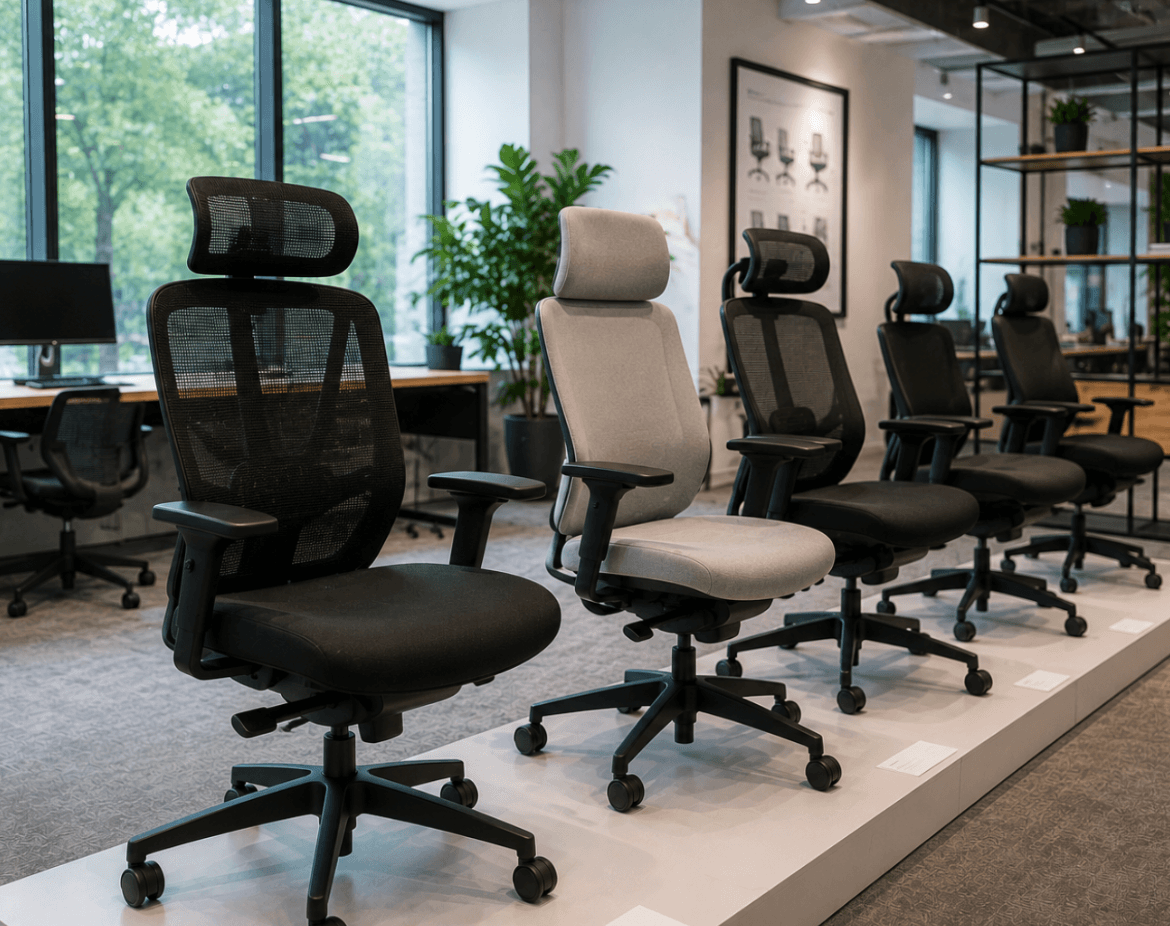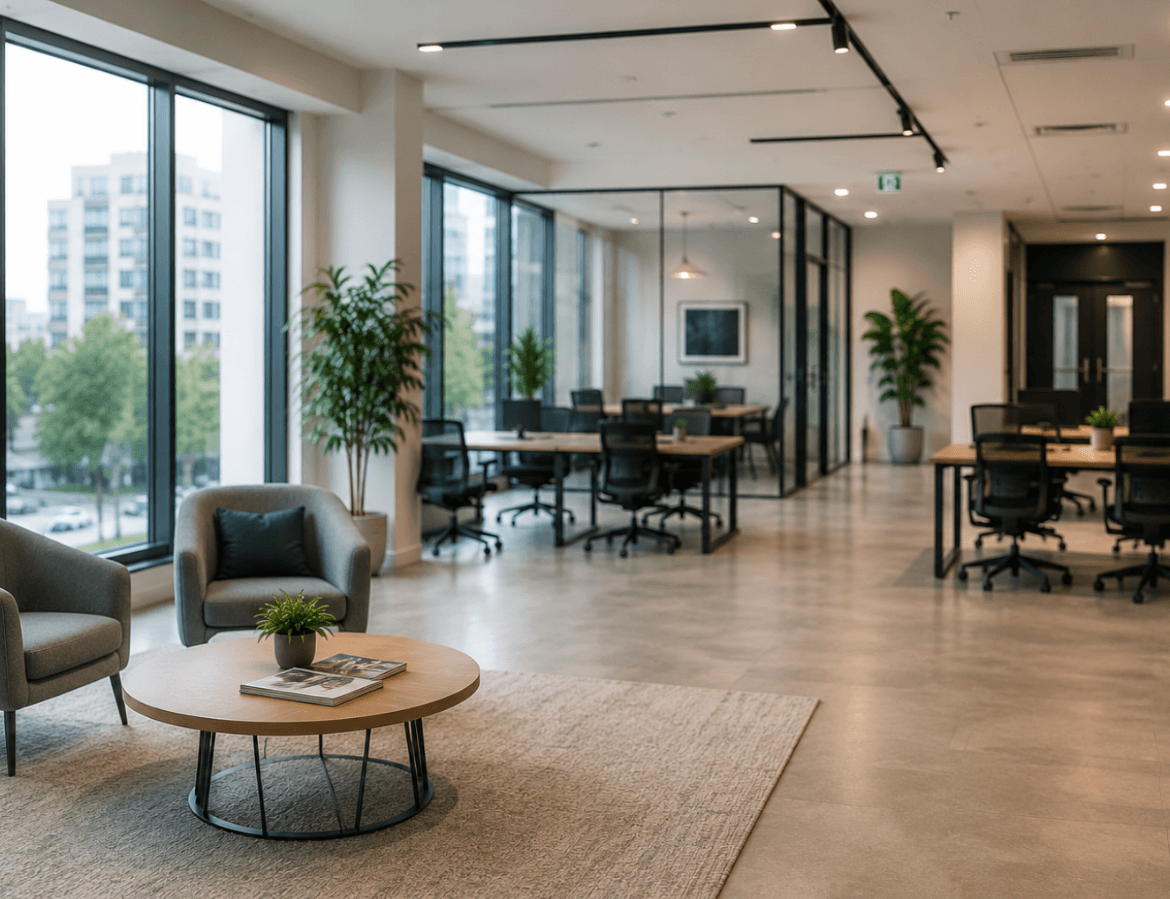
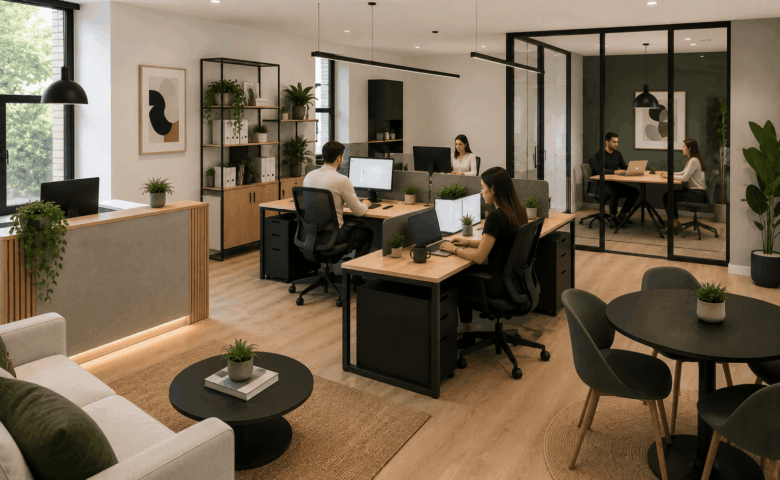
Small businesses tend to face a familiar set of challenges around office space. Teams grow, equipment builds up, and before long, the workspace feels tight, cluttered, and harder to manage day to day.
Limited square footage can make even routine tasks feel less efficient, especially where the layout has not kept pace with changing needs.
A well-planned office does not depend on size. Thoughtful design choices can help smaller spaces support productivity, improve movement, and create a more professional environment for both staff and visitors. Small adjustments to layout, furniture, and storage can shift how a workspace functions without requiring a full redesign.
Our guide below explores practical office design ideas for small businesses, focusing on changes that are realistic to implement and aligned with everyday working needs.
Use Space Saving Furniture To Maximise Floor Area
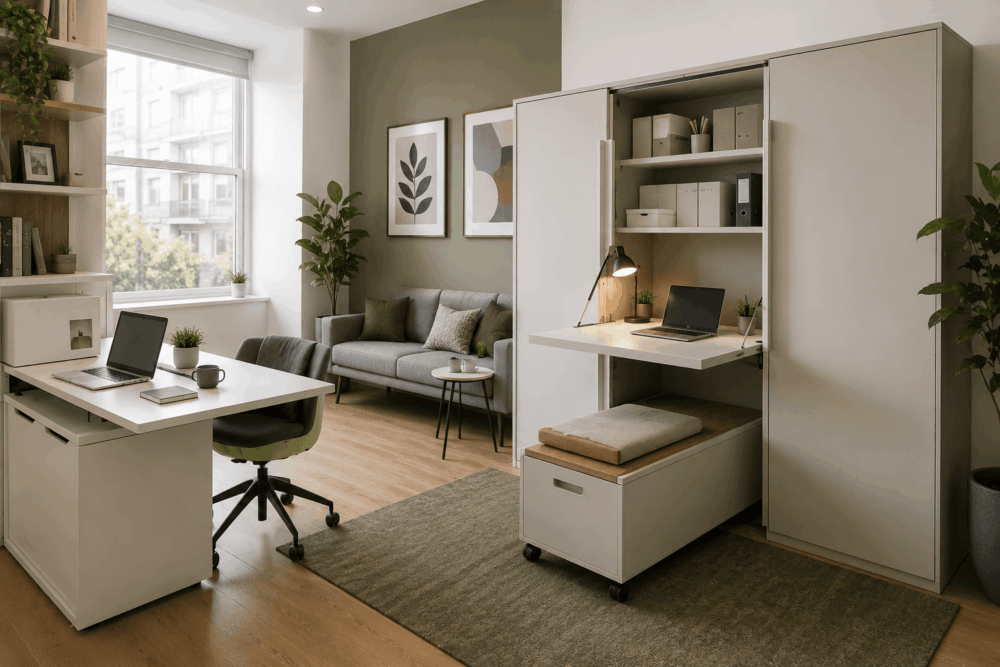
Furniture selection has a direct impact on how a small office performs. Oversized desks and bulky storage units can quickly reduce usable floor space, making movement more restricted and the environment feel crowded. Choosing space-saving office furniture allows businesses to retain functionality without overwhelming the room.
Multi-functional pieces provide a more efficient approach. Desks with built-in storage reduce the need for separate cabinets, while modular systems allow layouts to adapt as requirements shift. Foldable or compact desks can also be introduced in areas where flexibility is needed, such as shared workstations or occasional use spaces.
Freeing up floor area improves movement across the office and supports a more organised layout. Staff can navigate the space with fewer obstacles, and workstations can be arranged with greater intention. Businesses looking to update their setup may find a wide range of suitable office desks designed for smaller environments.
Smarter furniture choices contribute to a workspace that feels less restricted and more suited to daily demands.
Create Multi-Functional Zones Within The Office
Dividing a small office into clear zones helps maximise how each part of the space is used. Without defined areas, work tasks can overlap, leading to distractions and reduced focus. Zoning allows different activities to take place within the same room while maintaining structure.
Physical walls are not required to achieve this. Furniture placement can guide how the space is interpreted and used. Desks positioned together can form a focused work area, while a separate table or seating arrangement can support meetings or collaboration.
Typical zones within a small office may include:
- Individual workstations for focused tasks
- A shared space for meetings or team discussions
- A quieter corner for breaks or informal use
Flexible layouts allow these zones to shift depending on business needs. Mobile furniture, adaptable seating, and open layouts provide room for change without disruption.
Creating distinct areas supports better organisation and allows teams to use the office more effectively throughout the day.
Make The Most Of Natural Light
Natural light plays a key role in how a workspace feels and functions. Poor lighting can make an office appear smaller and less inviting, while well-lit environments tend to support concentration and overall comfort.
Positioning desks near windows allows staff to benefit from available daylight. This reduces reliance on artificial lighting during working hours and helps maintain a more balanced environment. Large furniture items should be kept away from windows where possible, preventing unnecessary obstruction of light sources.
Additional adjustments can help distribute light more evenly. Light-coloured surfaces reflect brightness across the room, while mirrors can extend the sense of openness in tighter areas.
Making better use of natural light contributes to a workspace that feels more open and supports a more productive atmosphere.
Choose Storage That Keeps The Office Clutter Free
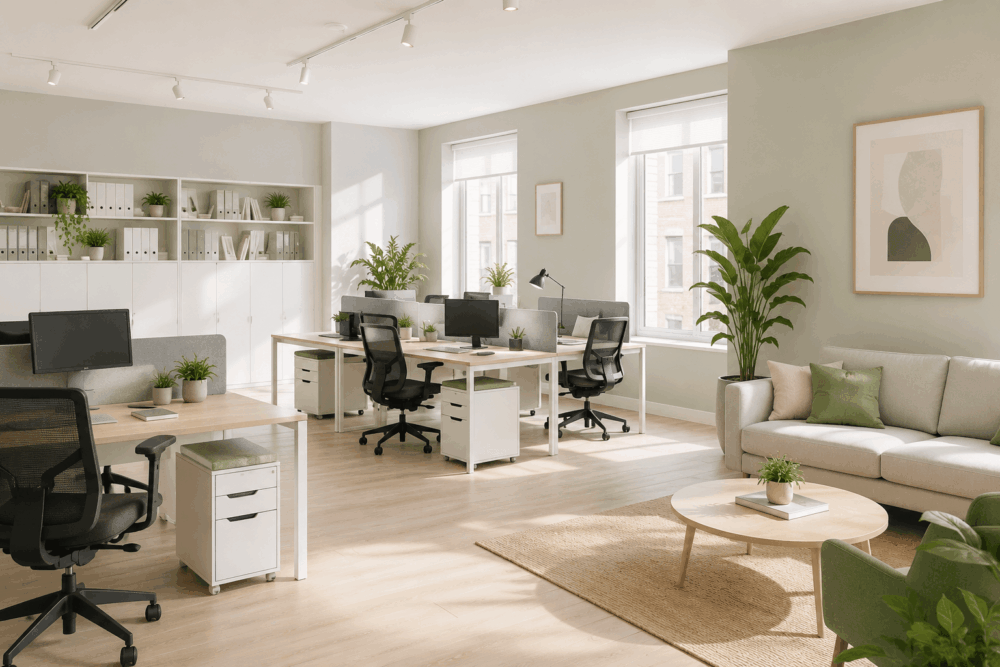
Clutter can quickly limit the effectiveness of a small office. Documents, equipment, and everyday items can build up across desks and shared areas, reducing available space and making the environment harder to manage. Structured storage helps maintain order and supports a more efficient workflow.
Vertical storage offers a practical solution where floor space is limited. Shelving units and tall cabinets allow businesses to store essential items without expanding the footprint of the office. Hidden storage options also help maintain a cleaner visual appearance, reducing distractions within the workspace.
Useful storage approaches include:
- Wall-mounted shelving to free up desk space
- Under-desk storage for frequently used items
- Lockable cabinets for documents and equipment
Keeping storage organised supports faster access to materials and reduces time spent searching for items. A well-structured system allows the office to function more smoothly and maintain a professional appearance.
Use Colour And Finishes To Make The Space Feel Larger
Colour choices influence how a small office is perceived. Lighter tones tend to reflect more light, helping the space appear more open and less confined. Dark or heavy colour schemes can have the opposite effect, making the room feel more enclosed.
Consistent finishes across furniture and walls support a more cohesive look. Matching tones and materials reduces visual interruption, allowing the space to feel more unified. This approach works particularly well in smaller offices where contrast can break up the room unnecessarily.
Subtle branding can still be incorporated without overwhelming the design. Accent colours, small details, or signage can reflect company identity while maintaining a balanced environment.
Careful use of colour and finishes contributes to a workspace that feels more spacious and visually organised.
How Smart Office Design Helps Small Businesses Work Better
Office design decisions influence how teams operate daily. Layout, furniture, and organisation all contribute to how easily staff can complete tasks and move through the workspace. A well-planned office supports efficiency by reducing obstacles and making better use of available space.
Improved organisation also affects employee experience. Clear layouts, accessible storage, and comfortable work areas contribute to a more positive environment. Staff are better equipped to focus on their responsibilities when the workspace supports their needs.
Small businesses do not require large budgets to improve their office setup. Careful planning and targeted changes can deliver noticeable improvements without major disruption.Businesses considering updates to their workspace can explore tailored solutions or contact us at Wave Office for guidance on suitable options.