

What Does Your Office Furniture Colour Say About Your Business?
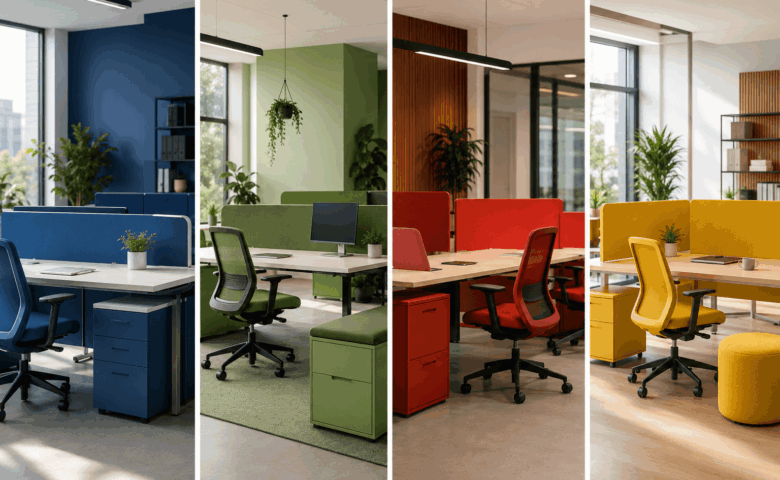
Walk into any workspace and the overall look tends to shape how the business is perceived almost immediately. Office design colour plays a key role in that first impression, influencing how people interpret professionalism, energy, and attention to detail.
Furniture often carries that visual weight more than expected. Office desks, storage, and shared areas create a consistent backdrop that people respond to, whether consciously or not. For businesses aiming to present a clear identity, these choices go beyond appearance.
This guide explores how different office furniture colours influence perception, mood, and brand identity, helping you make decisions that feel considered and aligned with how your business operates.
Why Office Furniture Colour Matters In The Workplace
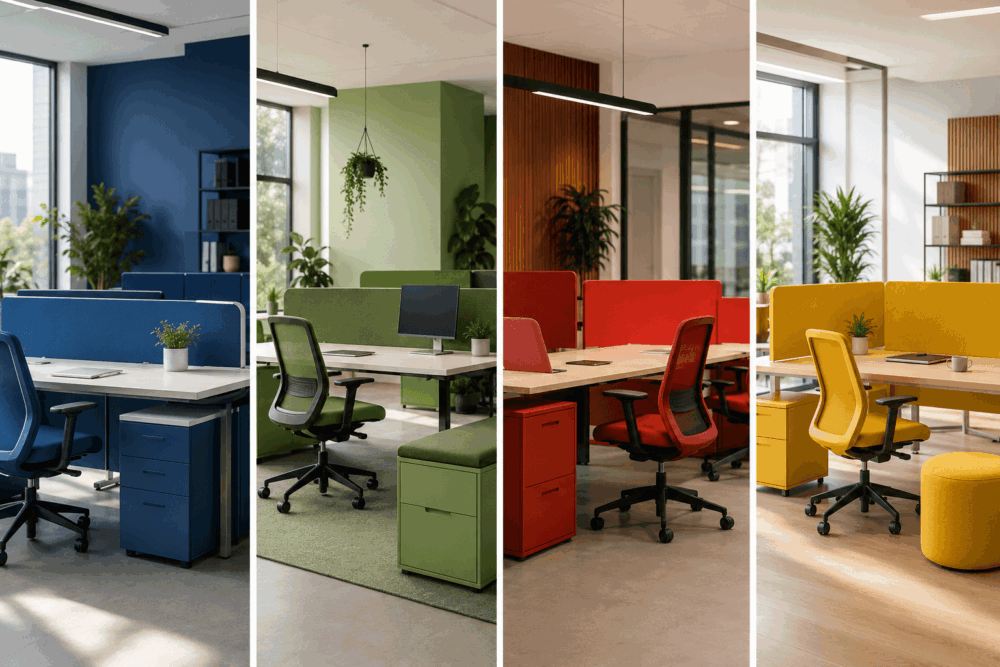
Office colour psychology is closely linked to how people experience a workspace day to day. Colour can influence focus, energy levels, and overall comfort, often in subtle ways that build over time.
For employees, the environment tends to shape how easy it feels to concentrate or collaborate. A balanced colour scheme can support productivity, while poorly matched tones may create distraction or fatigue.
Visitors also respond quickly. The look of a workspace can suggest organisation, credibility, and consistency before any conversation begins. This makes office furniture colours a practical part of how a business presents itself.
Choosing colours with intent allows a workspace to reflect both brand identity and the way teams actually work, rather than feeling like a series of disconnected decisions.
Blue Office Furniture And What It Says About Your Business
Blue is widely associated with trust, consistency, and a steady approach to work. It is commonly used in corporate environments where reliability is a priority, such as finance or professional services.
The tone supports focus, which can make it easier for teams to settle into detailed tasks. Lighter shades tend to feel calm and open, while deeper tones introduce a more formal, structured impression.
As part of an office interior colour scheme, blue works well for businesses aiming to appear organised and dependable. Used in excess, it can feel slightly reserved, so it often benefits from contrast through materials or softer accents.
Grey Office Furniture And The Message It Creates
Grey provides a neutral and modern foundation, which is why it appears so often in contemporary workplace design ideas. It allows other elements within the space to stand out without competing for attention.
This flexibility makes grey suitable across a wide range of industries. It pairs easily with brighter colours, natural finishes, or softer textures, helping create a balanced and cohesive environment.
Without variation, it can feel flat or impersonal. Layering tones or introducing contrast tends to keep the space visually engaging while maintaining a professional appearance.
Black Office Furniture And A More Executive Feel
Black furniture introduces a sense of authority and structure, often associated with leadership spaces and client-facing environments. It can give a workspace a more established and confident presence.
In a professional office design, black is typically used to create contrast and depth. It works particularly well alongside lighter surfaces, helping define key areas without dominating the entire space.
If overused, it can make a room feel enclosed or heavy. Balancing it with lighter colours or natural materials helps maintain a more open and accessible atmosphere.
White Office Furniture And A Clean Modern Identity
White is often used in modern office design in the UK, where clarity and simplicity are part of the overall look. It creates a clean and open environment, which can make spaces feel larger and more organised.
It also reflects light effectively, supporting a brighter workspace that feels easier to navigate. This can be useful in smaller offices or areas with limited natural light.
White furniture adapts easily to different styles, whether paired with bold features or kept minimal. The main consideration is maintenance, as marks and wear tend to show more quickly over time.
Green Office Furniture And A Focus On Balance And Wellbeing
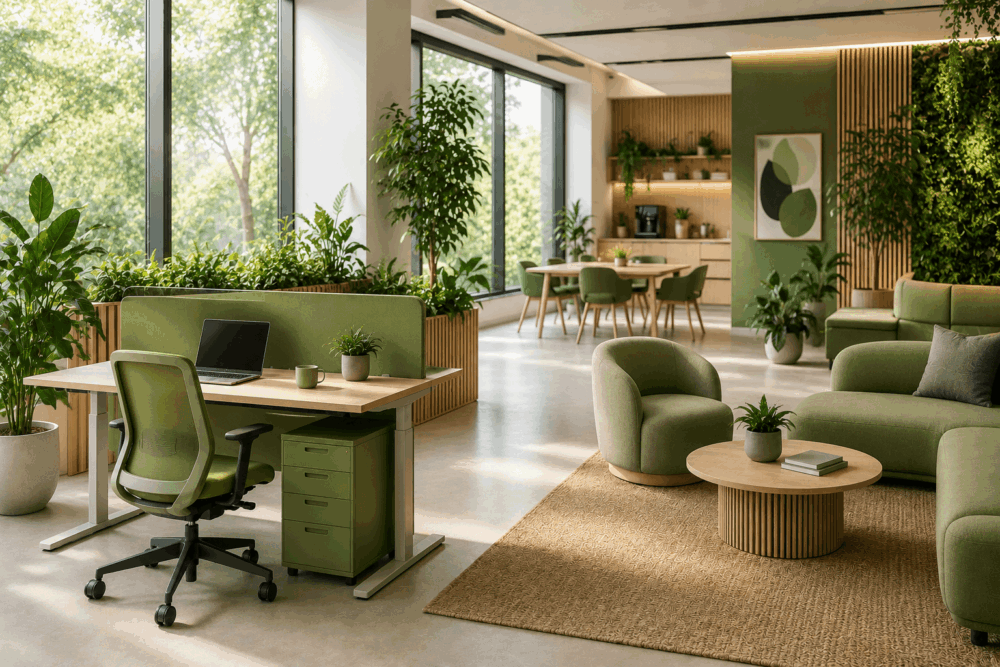
Green is closely linked to balance and wellbeing, which is why it is becoming more visible in workplace design. It introduces a calmer atmosphere that can help reduce tension during longer working days.
Softer tones tend to feel more restorative, while deeper shades create a more grounded and stable environment. This makes green a useful option in collaborative or flexible workspaces.
As part of office space colour ideas, green supports a shift towards environments that feel more considered, rather than purely functional.
Wood Finish Office Furniture And A Warm Professional Look
Wood finishes bring warmth and familiarity into a workspace, helping it feel more approachable without losing structure. They sit comfortably between traditional and modern styles, which makes them widely applicable.
Natural tones can soften sharper design elements, creating a more balanced environment. This can be particularly useful in areas where client interaction takes place.
Different finishes allow for variation. Lighter woods tend to feel more open, while darker tones introduce a more formal edge, giving flexibility within a consistent design approach.
Bright Colour Office Furniture And A More Creative Brand Personality
Brighter colours tend to signal energy, creativity, and a more expressive working culture. They are often used in industries where collaboration and new ideas play a central role.
Used carefully, they can support engagement and make specific areas stand out. Rather than applying them across the entire office, a more controlled approach usually works better:
- Accent seating in breakout areas
- Feature pieces within collaborative zones
- Selected workstations to introduce variation
This approach allows colour to support the environment without becoming distracting or overwhelming.
How To Choose Office Furniture Colours That Match Your Business
Choosing the right office design colour involves linking visual decisions to how the business operates day to day. It is not only about appearance, but how the space supports both employees and visitors.
A practical approach usually includes:
- Aligning colours with brand identity and values
- Considering how different areas are used throughout the day
- Balancing visual appeal with durability and maintenance
- Allowing flexibility for future changes
- Keeping consistency across the workspace
For businesses reviewing layout alongside colour, exploring options such as office desks can help shape both function and appearance within the same decision. For more specific guidance, contact us and speak to our specialist team here at Wave Office for support with more tailored decisions.
Related Posts
What to Look for When Buying an Ergonomic Office Chair
Choosing the right ergonomic office chair involves more than finding one that looks comfortable. The best chairs provide adjustable features that allow different users
What Are the Best Office Desk Layouts for Modern Workspaces?
Choosing the best office desk layout starts with understanding how your team works rather than selecting furniture first. Different layouts support different working styles,

What to Look for When Choosing an Office Space in 2026
Choosing office space in 2026 involves far more than finding the right location or comparing rental costs. The workplace should support how your business

7 Ways Office Furniture Can Improve Employee Productivity
A productive workplace relies on more than motivated employees. Office furniture, workspace planning and layout all influence how comfortably and efficiently people can carry

How Does Office Furniture Affect Employee Wellbeing?
When businesses talk about employee wellbeing, the conversation often focuses on benefits, culture or workload. Office furniture is sometimes treated as a secondary concern,