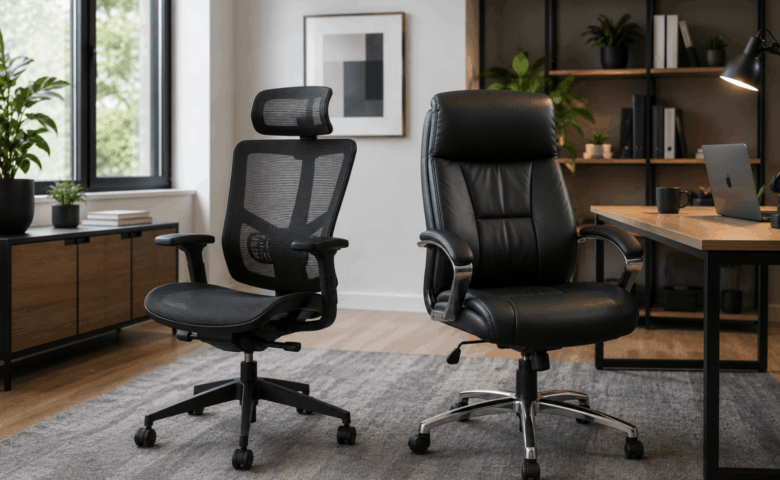
Choosing the right office chair involves more than deciding what looks best in your workspace. Material plays a major role in how a chair feels during daily use, how easy it is to maintain and how well it suits different office environments.
When comparing mesh vs leather office chairs, there is no universal winner. The better choice depends on how the chair will be used, who will use it and what your workplace needs from its seating.
A busy hybrid office with shared desks may prioritise airflow and easy adjustability. An executive office or client-facing meeting room may place greater importance on visual impact and premium styling. Comfort, maintenance, long-term value and working patterns all influence the right decision.
This guide compares mesh and leather office chairs to help you choose the most suitable option for your workspace.
What Are Mesh And Leather Office Chairs?
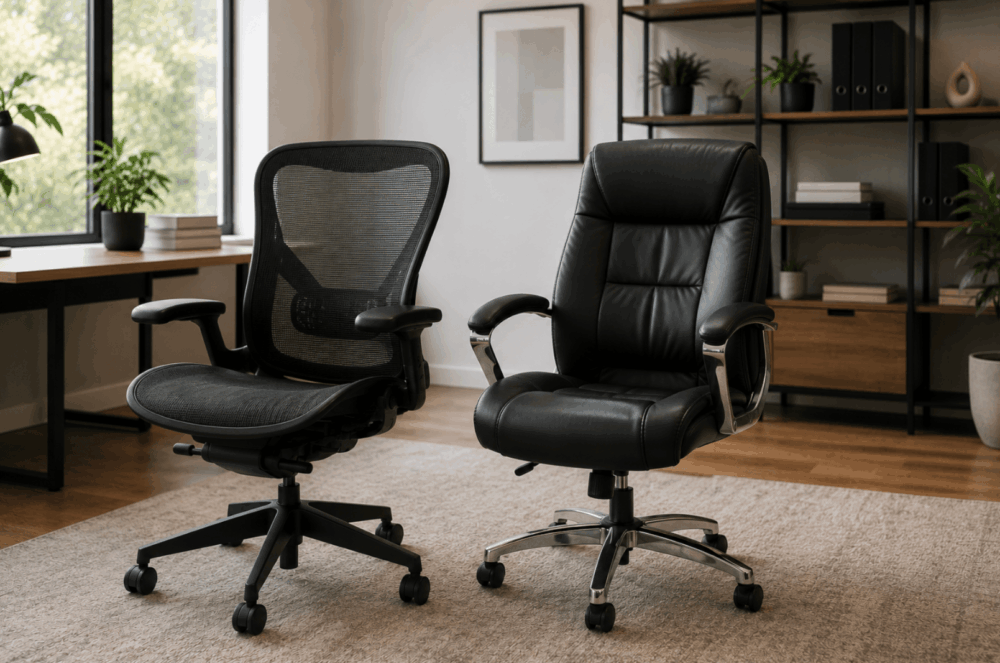
Mesh and leather office chairs offer different benefits, with mesh prioritising airflow and flexibility while leather often focuses on appearance, cushioning and executive styling.
A mesh office chair typically uses a woven synthetic material across the backrest, and sometimes the seat, stretched over a supporting frame. Many task chairs use mesh backs because the material allows airflow while maintaining shape. Mesh chairs are common in modern offices, especially in shared desk environments and open-plan spaces.
Leather office chairs usually feature padded cushioning upholstered in real leather or leather-look materials. These chairs often appear in executive offices, boardrooms and client-facing spaces where presentation matters. They commonly offer thicker seat padding and a more traditional premium aesthetic.
The material alone does not determine chair quality. Two mesh chairs can perform very differently depending on lumbar support, seat design and adjustment mechanisms. The same applies to leather seating. Material affects feel and maintenance, but design determines overall performance.
Mesh vs Leather Office Chairs At A Glance
The biggest differences between mesh and leather office chairs are breathability, appearance, maintenance and long-term ownership costs.
| Factor | Mesh Chairs | Leather Chairs |
| Appearance | Modern and practical | Premium and executive |
| Airflow | Strong airflow through backrest | More heat retention |
| Cleaning | Dust removal may be needed | Usually easier to wipe clean |
| Typical price | Wide range from entry to premium | Often mid to premium |
| Best for | Shared workspaces, hybrid offices | Executive spaces, boardrooms |
Mesh chairs often suit workplaces that prioritise function, flexibility and long periods of desk use. They are especially popular in task seating where multiple users may share the same workstation.
Leather chairs often appeal where appearance matters. They can help create a polished look in boardrooms, reception areas or executive offices. Buyers often associate leather with premium office furniture, although appearance alone should never drive the decision.
The best choice depends less on the material itself and more on the environment and expected use.
Comfort And Ergonomic Support
Comfort depends more on chair adjustment and overall design than the upholstery material alone.
This is one of the biggest misconceptions in office seating. Buyers often assume leather automatically means greater comfort because of thicker cushioning, or that mesh automatically means better ergonomics because it looks more supportive. Neither assumption is reliable.
A comfortable office chair should support the user throughout the working day while allowing movement and adjustment.
Key ergonomic features to consider include:
- Adjustable seat height
- Lumbar support
- Adjustable armrests
- Seat depth or slide adjustment
- Tilt or synchronised recline mechanisms
- Optional headrest support
- Stable base and movement
These features matter more than upholstery when evaluating support.
Mesh chairs often feel more responsive because the material flexes with body movement. Some users prefer this lighter, more adaptive feel, particularly during long periods of desk work. However, support varies greatly depending on frame design and lumbar structure.
Leather chairs often provide more noticeable cushioning, especially around the seat and backrest. Some users prefer the softer, more padded feel, particularly in executive seating. Others may find thick padding less supportive over longer periods if the chair lacks proper adjustment.
Body type and working habits also matter. Someone sitting at a workstation for most of the day may value adjustability above appearance. Someone using a boardroom chair for shorter meetings may prioritise comfort differently.
When comparing specialist ergonomic office chairs, ask not “Which material is more ergonomic?” but rather:
- Does this chair adjust properly?
- Can different users sit comfortably?
- Does the chair suit the intended duration of use?
That approach leads to better buying decisions.
Durability, Cleaning And Long-Term Value
Long-term value depends on how well the chair handles daily use, cleaning and wear rather than purchase price alone.
For office managers and procurement teams, this is often where the real decision sits.
A cheaper chair can become expensive if it wears quickly, becomes difficult to maintain or needs replacing sooner than expected. Total cost of ownership matters more than initial spend alone.
Mesh chairs typically handle daily airflow well and do not show heat-related wear in the same way padded materials can. However, mesh can collect dust and may require more regular cleaning, especially in high-traffic environments. Poor-quality mesh may also lose tension over time.
Leather chairs are often easier to wipe down after spills or daily use, which can make them appealing in client-facing or high-touch environments. However, wear patterns depend heavily on material quality and maintenance. Lower-quality finishes may show cracking, creasing or surface wear more quickly than better-made alternatives.
Before choosing seating, consider:
- Daily usage levels
- Number of users per chair
- Cleaning routines
- Risk of spills or stains
- Maintenance expectations
- Replacement planning
Hybrid offices introduce another factor: shared ownership. Chairs used by multiple people each week need to remain reliable and easy to maintain.
For procurement teams, durability should always be evaluated alongside serviceability and supplier support, not just unit price.
Which Office Environments Suit Each Chair Best?

Mesh and leather chairs suit different environments, so the best choice depends heavily on how and where the chair will be used.
Mesh Office Chairs Work Best For Flexible Workspaces
Mesh chairs are often well suited to modern work environments where functionality and adaptability matter most.
These include:
- Open-plan offices
- Hybrid workplaces
- Hot-desking environments
- High-occupancy desk areas
- Shared workstations
- Home offices
In these environments, airflow and ease of adjustment often matter. Different users may use the same chair across the week, so simple ergonomic controls become valuable.
Mesh chairs also pair well with contemporary workspace design, bench desking and collaborative layouts.
If your office uses hot-desking or flexible seating, exploring a dedicated mesh office chair range can help narrow suitable options based on task use and adjustability.
Leather Office Chairs Work Best For Premium And Client-Facing Spaces
Leather seating often works best where visual presentation plays a stronger role.
These environments include:
- Executive offices
- Boardrooms
- Reception spaces
- Client meeting rooms
- Director offices
In these spaces, aesthetics may matter alongside comfort. Leather chairs can contribute to a more traditional, premium or executive appearance.
That does not mean leather is only decorative. Many executive chairs include advanced adjustment features. The key is ensuring style does not come at the expense of support.
Office design should also influence chair choice. A sleek modern office may benefit from mesh task seating. A formal boardroom may benefit from coordinated leather visitor seating.
Neither choice is inherently superior. The surrounding environment helps determine suitability.
Common Mistakes To Avoid When Choosing Office Seating
The biggest office seating mistakes happen when buyers focus on appearance or price before considering how the chair will actually be used.
Buying On Appearance Alone
A chair may look impressive in a catalogue but perform poorly in daily use. This happens frequently with executive-style seating chosen mainly for aesthetics.
Always prioritise suitability over appearance.
Ignoring Adjustability
A chair without meaningful adjustment can limit comfort for different users. This becomes especially problematic in hybrid workplaces or shared desk environments.
Check the adjustment range before purchasing.
Choosing The Wrong Material For The Environment
A premium leather chair may suit a boardroom but be less practical in a heavily used hot-desk zone. Likewise, a lightweight mesh chair may look out of place in a formal executive suite.
Match material to usage.
Not Testing Chairs
Where possible, test seating before committing to large purchases. Small differences in seat shape, back support and armrest positioning can have a big impact on usability.
Forgetting Cleaning Requirements
This is often overlooked during procurement.
Ask:
- Who cleans the chairs?
- How often?
- What materials are easiest to maintain?
- How will the chairs look after months of daily use?
If you are still comparing options, our guide on what to consider when buying an office chair covers additional buying criteria before purchase.
Frequently Asked Questions
Is Mesh Better Than Leather?
Neither is universally better.
Mesh often suits flexible, high-use workspaces, while leather may suit premium client-facing areas. The best choice depends on usage, environment and user preference.
Which Office Chair Is Easier To Clean?
Leather or leather-look surfaces are often easier to wipe clean after spills or daily use. Mesh may require more detailed cleaning to remove dust or debris from the weave.
Which Is Best For Hot-Desking?
Mesh chairs are often preferred for hot-desking because they are commonly lightweight, breathable and easier to adjust for different users.
However, adjustability matters more than material alone.
Are Mesh Chairs Ergonomic?
Mesh chairs can be ergonomic, but ergonomics depends on chair design rather than mesh alone.
Look for proper lumbar support, seat adjustment and suitable armrest positioning.
When comparing mesh vs leather office chairs, the best option depends on your workplace requirements rather than the material alone.
Mesh chairs often suit hybrid offices, shared workstations and high-occupancy environments where airflow and adjustability matter. Leather chairs often suit executive spaces, boardrooms and client-facing areas where appearance and premium styling carry more weight.
The most important factor is not whether a chair is mesh or leather. It is whether the chair supports the people using it, fits the workspace and delivers long-term value.
If you’re choosing office seating for a new workspace or refurbishment, Wave Office can help you compare options and recommend chairs that suit your team, budget and working environment. Contact us today to discuss your office seating requirements.