
Buying seating can feel a bit confusing, especially when so many options look similar at first glance.
Still, not every chair suits every role, and that is where knowing the different types of office chair actually helps.
Some chairs are made for short bursts of use, others support people through long days at a desk, and a few focus more on how a space looks than how it feels after several hours.
This guide walks through the main office chair types you are likely to come across, explaining what each one is designed for and where it tends to work best. That way, you are not choosing based on guesswork or price alone.
Whether you are comparing mesh office chairs for shared spaces, looking at task chairs for all-day desk use, or considering executive office chairs for leadership areas, the aim is the same.
Standard Office Chairs
Standard office chairs are usually the most straightforward option you will see when browsing office chairs.
They tend to have a simple shape, basic padding, and limited adjustment, which is fine in the right setting. These chairs are not trying to cover every scenario, and that is often why they remain popular.
You will usually see standard office chairs used where people sit for short periods rather than full working days. Training rooms, hot desking areas, and occasional-use desks are common examples. Most designs include seat height adjustment and a swivel base, though support features are fairly minimal.
For anyone seated for long stretches, these chairs can start to feel uncomfortable. Still, as part of a wider seating mix, standard office chairs can be a sensible choice when usage is light, and expectations around comfort are modest.
Mesh Back Office Chairs
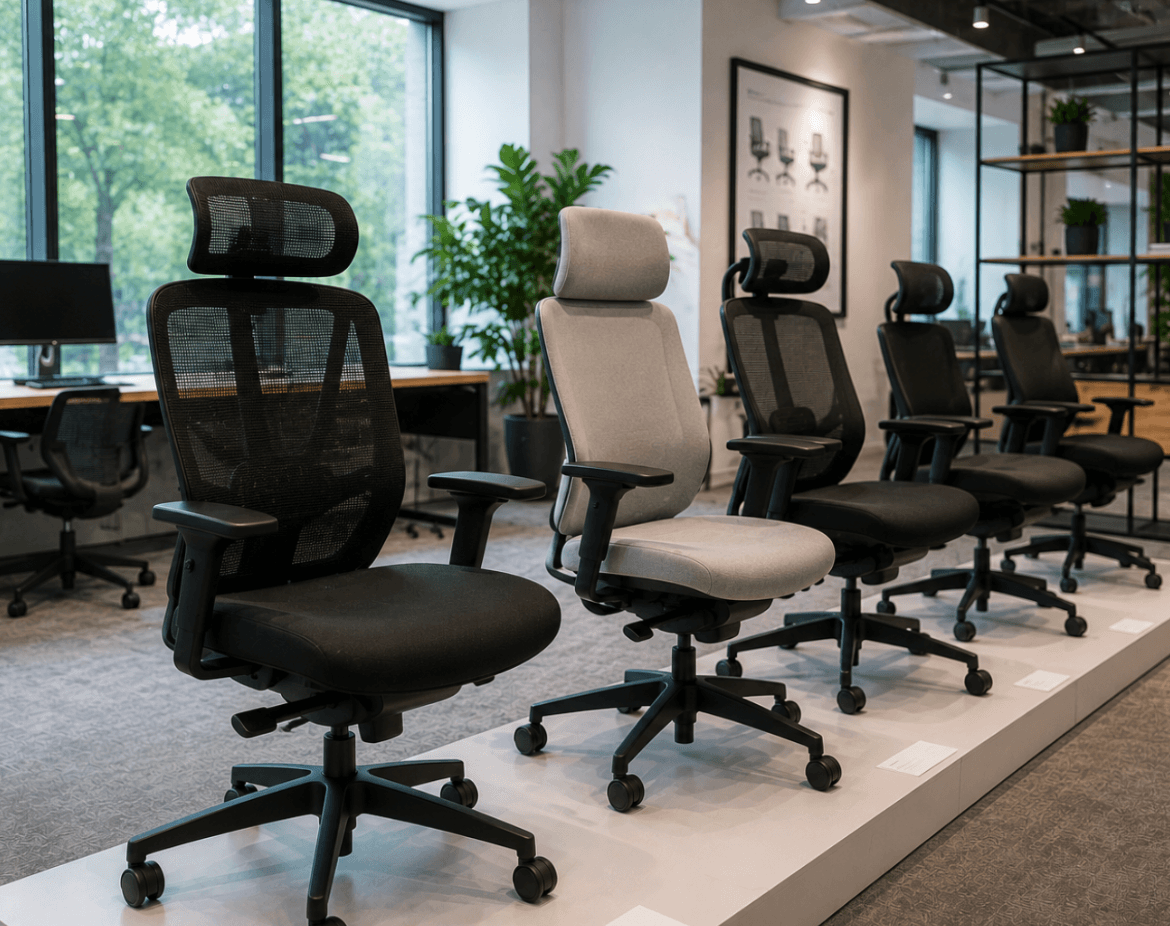
Mesh back office chairs are often chosen for everyday desk work where people stay seated for longer periods. The mesh back allows air to move more freely, which helps users stay cooler, especially in busy or warm offices. That breathable design is usually the main reason people choose this type of chair.
Many mesh office chairs also include a reasonable level of adjustment, but not all. Just because a chair has a mesh back don’t assume it has the best ergonomic adjustments.
Mesh back office chairs are often chosen for aesthetic reasons. If you looking for ergonomic benefits you need to make sure these options are included with the chosen chair. So ask for some advice.
Executive Leather Office Chairs

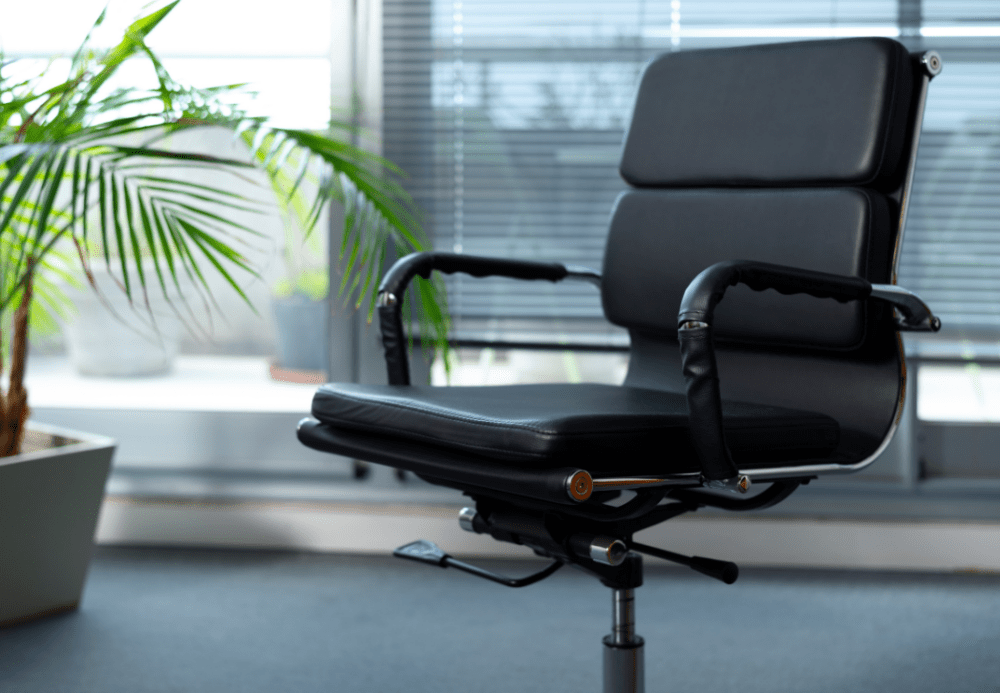
Executive leather office chairs are usually selected for their appearance as much as their comfort. With high backs, thicker cushioning, and a more solid build, these chairs make a strong visual statement. They are commonly found in senior offices and client-facing rooms.
In terms of feel, executive office chairs are often comfortable for meetings and shorter periods of desk work. They suit roles where time is split between sitting, meetings, and calls. Adjustment options vary, though they are often simpler than what you would find on task-focused seating.
For all-day desk use, these chairs may not suit everyone. Still, when presentation and comfort both matter, executive leather office chairs can be the right fit in the right space.
Task Chairs
Task chairs are designed for people who spend most of their working day at a desk. What sets task chairs apart is adjustability. These chairs are built to adapt to the user rather than forcing the user to adapt to the chair.
Most task chairs allow adjustments to seat height, back position, and arm support. Some also offer fine-tuning for posture and movement. This flexibility is useful in offices where different people may use the same chair over time, or where workstation assessments have taken place.
For roles involving long hours at a screen, task chairs usually provide better day-to-day comfort than standard or executive seating. They might not draw much attention visually, yet they are often the most practical option when comfort, well-being, and lifespan all matter.
Stool Chairs and Drafting Chairs
Stool chairs and drafting chairs are made for desks that sit higher than average. These chairs are often paired with standing desks, lab benches, studios, or service counters where people move between sitting and standing.
You will usually see features like a taller seat height range and a foot ring for support. The seating position encourages an upright posture, which helps when working at raised surfaces. Comfort is still considered, though movement and access tend to take priority.
These chairs are not typically used across an entire office. However, in specialist environments, they are often the most sensible solution.
Guest Chairs and Visitor Seating
Guest chairs and visitor seating are designed for short-term use rather than full working days. They are most commonly found in reception areas, meeting rooms, and breakout spaces where people sit briefly.
Comfort still matters, though deep adjustment is rarely needed. Instead, these chairs focus on being easy to sit on and durable enough to handle frequent use. Materials and frame strength are usually more important here than flexibility.
Choosing visitor seating often means balancing comfort with longevity. The right choice helps shared spaces feel welcoming while avoiding frequent replacements.
Below is a quick comparison to help bring the main types of office chairs together.
| Type of office chair | Best For | Usage Time | Adjustability |
| Standard office chairs | Light use desks and training rooms | Short periods | Low |
| Mesh back office chairs | Everyday desk roles and shared offices | Medium to long hours | Varies |
| Executive office chairs | Senior offices and meetings | Short to medium periods | Low to medium |
| Task chairs | All day desk work | Long hours | High |
| Stool and drafting chairs | High desks and specialist environments | Variable | Medium |
| Guest and visitor seating | Reception and meeting spaces | Short periods | Very low |
If you are reviewing seating options and want advice tailored to how your team actually works, you can contact us to talk through the options.